
Splash the Otter Works Like Scent Dogs, Helping to Solve Search and Recovery Missions in Florida’s Murky Waters
A clay brick buried in lakebed mud helped close a 33-year-old murder case. Investigators had already searched the area. A cadaver dog had alerted at the water’s edge, but the trail disappeared once it moved below the surface. When the brick was recovered, investigators matched it to the victim’s injuries. Authorities later sent it to a lab, where human DNA was recovered from traces of blood.
You’d expect a diver or a detective to have made the find. Instead, it was an otter named Splash.
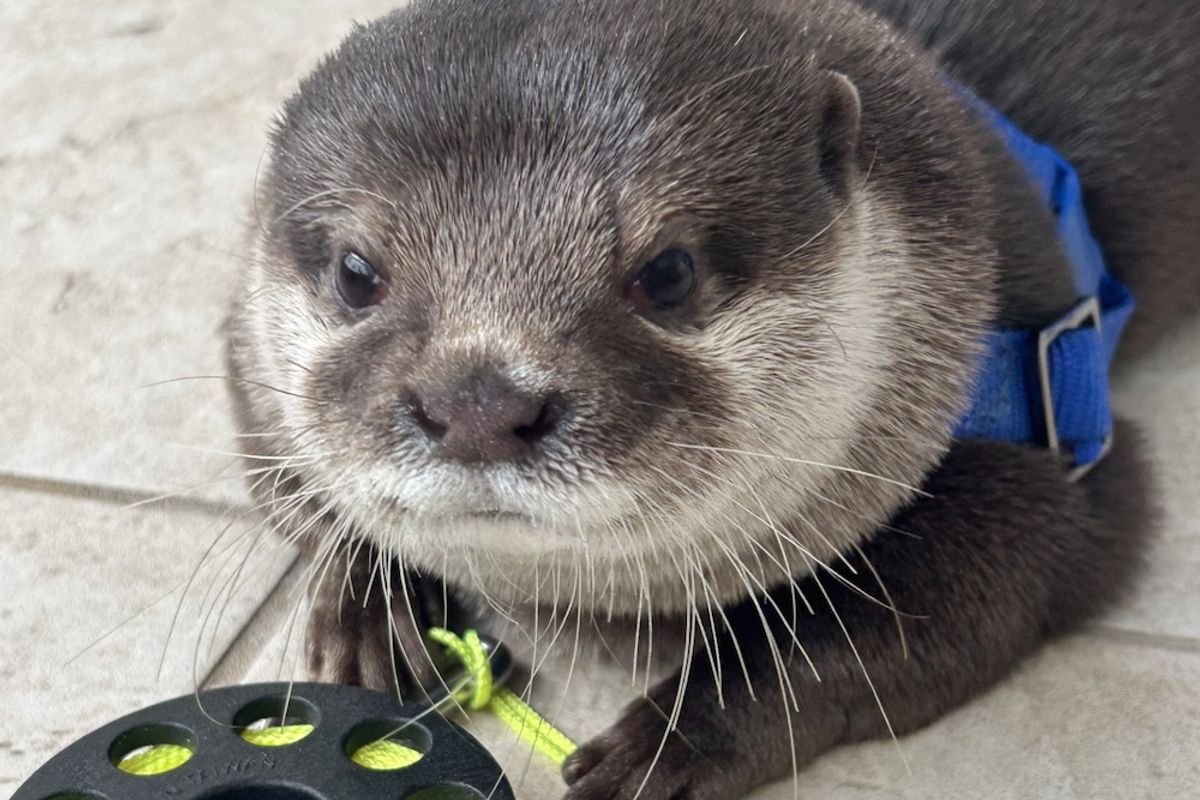
Splash is a trained North American river otter that helps locate submerged evidence, including human remains. He works alongside handler Michael Hadsell as part of Peace River K9 Search & Rescue, following scent underwater in places where visibility is low and currents can quickly disperse it.
“I had seen otters being trained and used for fishing [..] I read an article about how otters use their sense of taste/smell to hunt underwater. A lightbulb went off in my head, and I started to look into this. I have trained scent dogs for 46 years- how hard could it be? Was I in for a fun ride,” Hadsell told Discover.
How Splash the Otter Was Trained for Underwater Search and Recovery
Splash’s training adapts scent-detection techniques for an environment where smell doesn’t behave the way it does on land, according to the American Animal Hospital Association. In water, scent can spread with currents, settle into sediment, and linger in ways that make it difficult to trace back to a single source.
Otters rely heavily on their whiskers, which are highly sensitive to movement and changes in the water. Hadsell describes them as working almost like a sonar system, helping Splash detect disturbances as he moves through a search area.
Splash also uses bubbles to refine his search. By releasing them and then drawing them back in, he’s able to capture and taste the scent in the water.

Splash, the otter.
(Image Courtesy of Michael Hadsell)
Early on, Hadsell trained Splash using a simple setup: a few balls in the water, only one carrying a scent. Each time he picked the right one, he was rewarded.
Read More: Giant Otter Gives Birth to Triplets at Chester Zoo — A Rare Success for the Endangered Species
How Splash Signals a Find
Once Splash picks up on something, the shift in his behavior is easy to recognize.
“The two alerts: If he deploys from the shore or boat, he will return, circle wildly, and squeak, letting me know I need to come with him. He then leads me back down to the source,” Hadsell explained.
Underwater, the signal becomes more direct.
“If I am in SCUBA gear, he will return and start grabbing at my mask. I then attach a line to his harness. Splash will return to the target, and I follow the line,” Hadsell told Discover.
Splash often works alongside one of Hadsell’s detection dogs, which first pick up scent at the surface. Once an area is identified, Splash is sent in to follow it underwater and narrow the search.

Splash the otter with Michael Hadsell.
(Image Courtesy of Michael Hadsell)
According to the American Animal Hospital Association, each successful alert is rewarded with fish, often salmon. When he’s found something, he becomes noticeably more vocal, surfacing quickly and pushing for that reward.
Life With Splash
Outside of search work, Splash’s routine is far less specialized.
“Splash lives in the house with us and has free rein. He gets up at sunrise and goes to bed with me at sunset. He gets along with the dogs just great,” Hadsell shared with Discover.
Splash was donated to Hadsell as a young pup and raised in his home and backyard.
“He has become a real sweet boy and a joy to travel and work with. He is just one of the team now,” Hadsell added.
Read More: While Cute and Playful, River Otters Can Attack Humans
Article Sources
Our writers at Discovermagazine.com use peer-reviewed studies and high-quality sources for our articles, and our editors review for scientific accuracy and editorial standards. Review the sources used below for this article: