
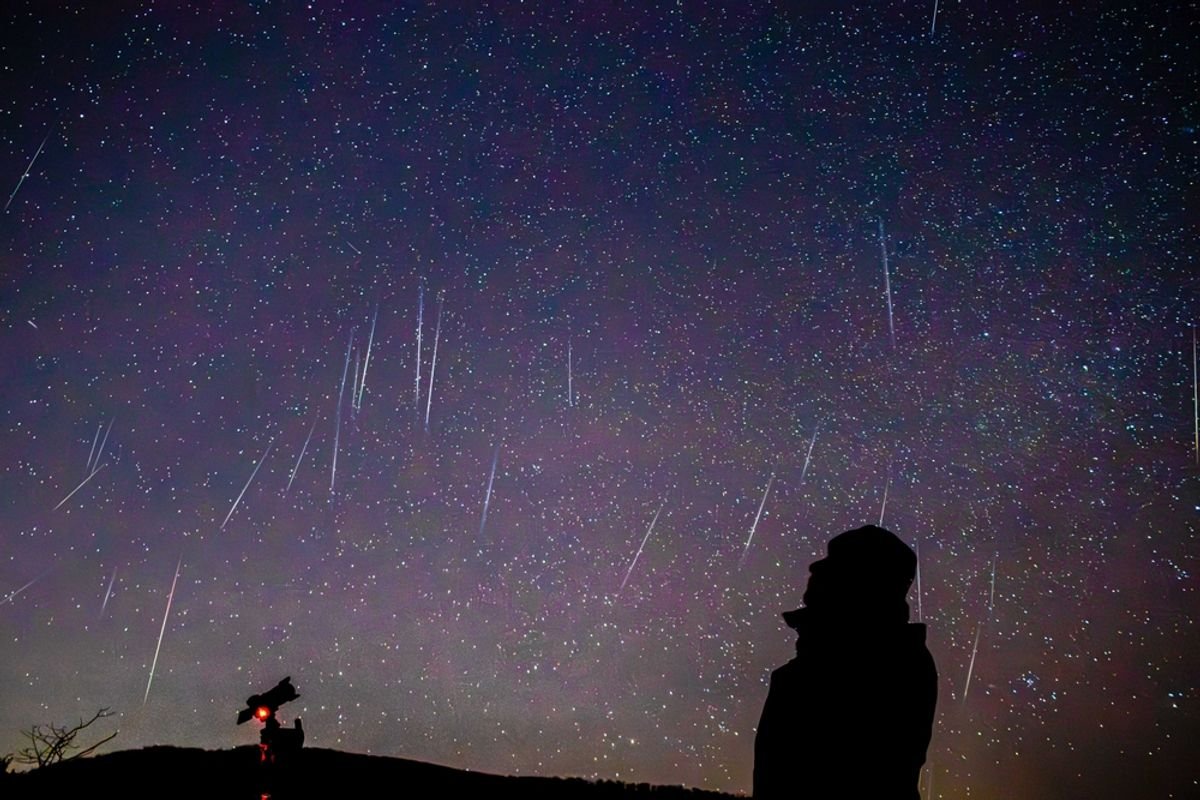
The Lyrid Meteor Shower Is About to Peak — How to Catch the First Notable Spring Shower of 2026

As winter’s chill begins to melt away and warmer weather arrives, so too does the first major meteor shower of spring, especially in the Northern Hemisphere. Wednesday, April 15, 2026, marks the first day of the Lyrid meteor shower, and it is expected to last until April 29, 2026.
Though the meteor shower begins on April 15, it won’t peak until about April 21, 2026, or April 22, 2026. Here are some of the best ways to catch this meteor shower and what viewers may expect to see as the Lyrids ramp up.
The Best Time to See the Lyrid Meteor Shower
Night sky viewers in the Northern Hemisphere can expect the Lyrid meteor shower to peak between the late evening of April 21, 2026, and about dawn on April 22, 2026, according to EarthSky.
Viewers in the Southern Hemisphere, however, may have difficulty spotting any meteors because the Lyrid meteor shower’s radiant point sits further north in the sky’s dome. Because of this, there will be fewer meteors, but it still may be possible to see some.
The evening of April 21 into April 22 will offer some of the best viewing conditions, as the moon will be a waning crescent and will set late at night, creating optimal dark skies.
Read More: An Asteroid Just Streaked Over Antarctica, Becoming the Second Closest Flyby Ever Recorded
What Can You Expect to See From the Lyrid Meteor Shower?
During the peak of the Lyrid meteor shower, night sky viewers may see about 10 to 15 meteors per hour. In the past, the Lyrids have been known to produce unexpected meteor surges, with up to 100 meteors falling per hour. It is unclear if it will occur this time, but keep a keen eye on the sky in case it does.
The Lyrids are typically bright and colorful, leading to a spectacular show. They are also known to sometimes produce fireballs — extra bright meteors that can outshine Venus, according to EarthSky. It is even possible for this shower to produce meteor trains, or a trail of ionized gas that can stay illuminated in the sky for a few moments before fading. These are easier to see under a dark, moonless sky.
What Is the Parent of the Lyrid Meteor Shower?
The Lyrid meteor shower is a result of Comet Thatcher, which was first identified in 1861. However, it will be a long time before the comet reaches perihelion again (its closest point to the sun).
According to EarthSky, the comet’s next perihelion will be in 2283. Until then, we can still see the debris from its tail every April in the form of the Lyrids.
Something unique about Comet Thatcher and the Lyrid meteor shower is that every 60 years, there is a large meteor burst from this shower. During these outbursts, the shower can produce 100 meteors per hour. The next outburst is expected to happen in 2042.
How to Watch the Lyrid Meteor Shower
The best way to view the Lyrid meteor shower is to find a location without light pollution, typically far from cities. Once you’ve found a safe spot, be prepared to wait.
Since it is spring, the weather may be colder, depending on where you are. Packing a blanket or a comfy chair will help make the viewing more comfortable. Also, keep from looking at your phone screen or other devices to help your eyes adjust to the dark. You should be able to see the meteors with the naked eye.
Once situated, look up towards the star Vega within the constellation Lyra, which will be the radiant point of the shower (where the meteors will appear to come from). By around midnight, depending on where you are, the constellation will be high enough in the sky that any meteors that come from it could leave bright streaks across the sky.
For those in the Southern Hemisphere, the constellation does not rise high in the sky, so viewing the meteor shower could be difficult, although it’s still possible to spot them.
Read More: Source Uncovered for the Famous Geminids Meteor Shower
Article Sources
Our writers at Discovermagazine.com use peer-reviewed studies and high-quality sources for our articles, and our editors review for scientific accuracy and editorial standards. Review the sources used below for this article: