
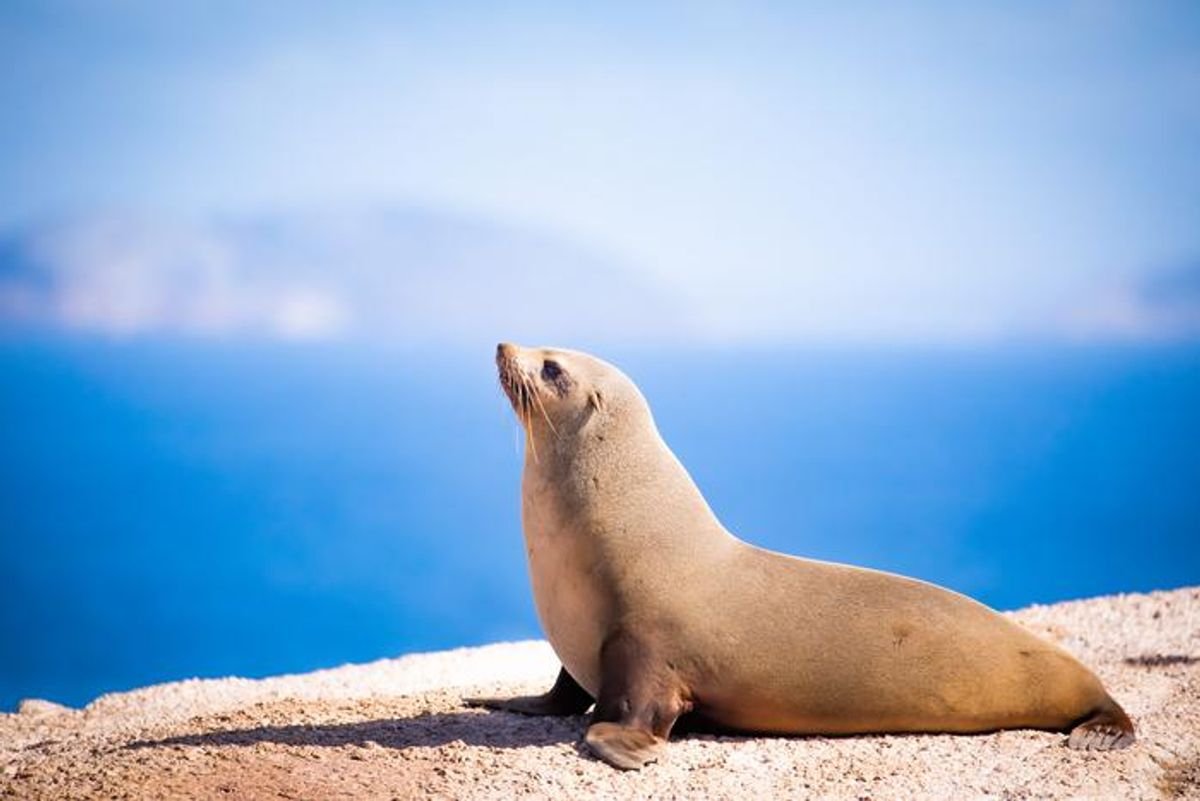
Seals’ Heart Rates Peak Hours After Coming Ashore — Helping Them Recover From Deep Dives

Seals are surprisingly speedy underwater, outpacing even the most elite Olympic swimmers. On land, they appear to prefer to take things at a slower pace.
Only, according to a study recently published in Frontiers in Physiology, this time spent out of the water may not be quite as restful as it first appears. Research shows that the heart rate of fur seals peaks six to eight hours after they return to land, when their heart rate peaks around 80 beats per minute.
Melissa Walker, an Associate Research Fellow at Deakin University in Australia, described this response as a “payback for some of the physiological costs of foraging at sea.”
“Physiological recovery from oxygen debt is more protracted, complex, and occurs over much longer timescales than previously understood, with the elevated heart rate on land likely helping to support a delayed recovery,” Walker explained in a statement.
The Physiological Cost Of Diving
Seals spend a large portion of their time at sea, hunting for food. But while necessary, diving is a physically taxing behavior, not least because foraging underwater requires spending time in low-oxygen environments. The activity can trigger anaerobic metabolism — energy production that occurs without oxygen — that results in a buildup of lactic acid and other metabolic byproducts.
Seals spend significant time swimming near the surface, which helps them recover from the stress of diving. But this, in and of itself, say researchers, might not be enough to fully recuperate and pay back the oxygen debt they have accumulated during the dives.
Read More: Seals’ Intricate and Sensitive Whiskers Could One Day Help Robotics Navigate In the Dark
Tracking Seal Heartbeats
For the study, the researchers measured the heart rate of six Cape fur seals (Arctocephalus pusillus pusillus) and eight Australian fur seals (A. pusillus doriferus), looking for changes as the seals moved between land and sea.
According to the study authors, heart rate profiles can offer valuable insight into how shifts in behavior shape physiological demands, as heart rate tracks oxygen consumption and energy expenditure.
Heartbeat measurements were taken every 10 seconds for up to 8.2 days, enabling the researchers to record entire at-sea-to-on-land cycles. A single cycle lasted approximately 5.5 days for Cape fur seals and 3.8 days for Australian fur seals. The bulk of this time was spent at sea, most of which (60 to 70 percent) was spent at the surface.
Heart Rate At Sea Versus Heart Rate On Land
There were notable differences between the two subspecies, which, while closely related, display slightly different food-gathering strategies. Cape fur seals, found near Africa’s southern and southwestern coast, hunt in the open ocean. Australian fur seals, in contrast, forage on the sea floor.
Deeper dives were observed among Cape fur seals, with dives reaching around 623 feet (190 meters) below the sea surface. During this time, their heart rate could drop to as low as 10 beats per minute for brief periods (less than a minute).
Australian fur seals performed shorter dives (276 feet, or 84 meters, on average) but could maintain heart rates of 20 to 30 beats per minute for 300 seconds.
These findings were largely consistent with previous research. However, the data produced on shore was more unexpected. Rather than remaining steady, heart rate fluctuated over time, only reaching its peak of 81 beats per minute (Cape fur seals) and 84 beats per minute (Australian fur seals) six to eight hours after returning to land.
Paying Back An Oxygen Debt
The researchers suggest that the faster heartbeat on land may help repay an oxygen debt accumulated while foraging at sea.
“A key benefit of such high heart rates on land may be that seals can prioritize foraging while at sea, focusing on acquiring food and avoiding predators, and then allocate energy to processing and recovery once they return to land,” Walker said in a statement.
Many questions remain — including how various factors contribute to this delayed recovery time and what mechanisms drive this physiological response — that the team hopes to explore in the future.
Read More: These Seals Remember Their Old Rivals by Voice — Even After a Year at Sea
Article Sources
Our writers at Discovermagazine.com use peer-reviewed studies and high-quality sources for our articles, and our editors review for scientific accuracy and editorial standards. Review the sources used below for this article: