
Rare Birth of Cotton-Top Tamarin Monkey Twins Is a Conservation Win at the Lake Superior Zoo in Minnesota
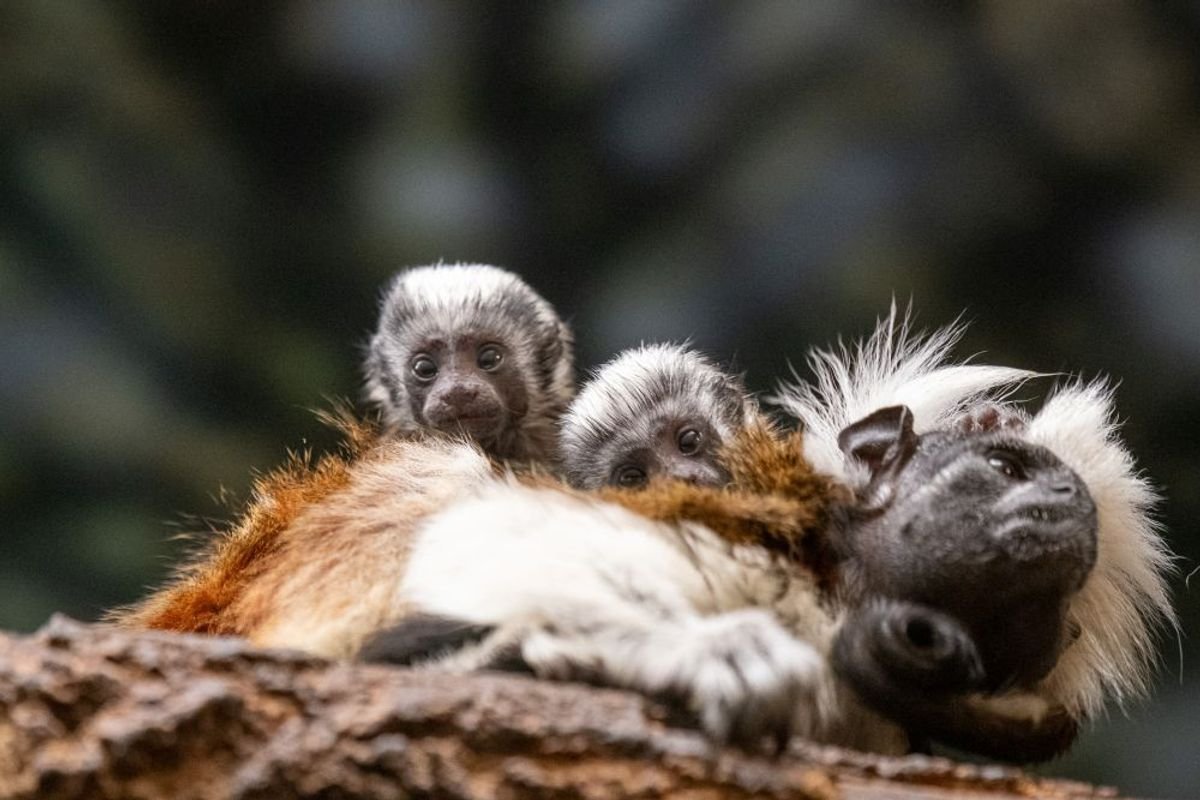
Twin cotton-top tamarin monkeys were recently born, not in their native home of Colombia, but at the Lake Superior Zoo in Duluth, Minnesota. Born on April 14, 2026, the twins are the fifth successful litter from parents Mira and Dino, where at least one infant survived.
The birth of these monkeys ushers in a major conservation win for a critically endangered species, as they are among the world’s rarest primates, and infants have only about a 50 percent survival rate, according to a statement from the Lake Superior Zoo.
The Lake Superior Zoo boasts an extensive conservation program, including a national Species Survival Plan (SSP), which helps manage species breeding, repopulation, and genetic diversity. Find out more about this tiny monkey species, why they’re so endangered, and what the Lake Superior Zoo is doing to help the cotton-top tamarin thrive.
What are Cotton-Top Tamarin Monkeys?
Cotton-top tamarin monkeys are small primates that mostly live in trees. Their native home is the forests of northwestern Colombia, and they prefer tropical and semi-dry climates, according to the Smithsonian’s National Zoo and Conservation Biology Institute.

Cotton-top tamarin monkeys at Lake Superior Zoo.
(Image Courtesy of Heidi Beal, Lake Superior Zoo)
Weighing in at only about one pound, they are among the smallest primate species and measure about 7 to 9 inches long, with their tails measuring about 10 inches. They are easy to recognize for their fluffy white manes that start in the center of their forehead and travel to the nape of their necks. When threatened, cotton-top tamarins can puff out their white mane to make themselves look even larger.
These monkeys are very social creatures, often sleeping together in groups and traveling in troops of 2 to about 10 individuals. According to the Lake Superior Zoo, these group dynamics are important, especially when it comes to raising young.
Parenting is a learned behavior, something Dino is helping to teach his older offspring by raising his new twins. During this time, the twins’ siblings will be instrumental in caring for them. Their mother, Mira, was the youngest of her siblings, so she didn’t have the same opportunities to raise young as Dino, who was one of the older siblings, did.
As they say, raising children takes a village, and it seems like Dino and Mira have a great support system around them.
Unfortunately, though, cotton-top tamarin numbers in the wild are dwindling.
Read More: Rare White Bison Calf Born At Iowa Wildlife Refuge
Why Are Cotton-Top Tamarins Critically Endangered?
According to the Smithsonian’s National Zoo and Conservation Biology Institute, cotton-top tamarins are one of the most endangered primates in the world. This is mostly due to deforestation and habitat loss. These small primates are also often victims of the illegal pet trade and have been used for medical research.

Cotton-top tamarin monkeys at Lake Superior Zoo.
(Image Courtesy of Heidi Beal at Lake Superior Zoo)
In the 1960s, it’s estimated that over 20,000 cotton-top tamarins were captured and sent to the U.S. for medical testing and research, according to the Oakland Zoo. This practice continued for over a decade until the species was declared endangered in 1973.
Even though medical testing in the U.S. came to a halt on these primates, they are still often illegally sold as pets. According to the press statement from the Lake Superior Zoo, it’s estimated that only 2,000 to 6,000 cotton-top tamarins still live in the wild.
Cotton-Top Tamarin Conservation Efforts
While the cotton-top tamarin remains endangered, there is still some hope. The Lake Superior Zoo, along with many others across the U.S., is working to help this adorable species thrive and regrow. The SSP program, through the Association of Zoos and Aquariums (AZA), helps identify issues impacting a population, then comes up with comprehensive solutions to help preserve a species.
The Lake Superior Zoo, much like the Oakland Zoo, also raises money and donates it to programs like Proyecto Titi, a conservation program that works together with communities in Colombia to gather plastic waste and recycle it into fence posts so that vital trees don’t need to be harvested for fencing. Their efforts help keep the environment clean and preserve the cotton-top tamarin’s habitat.
Read More: Giant Otter Gives Birth to Triplets at Chester Zoo — A Rare Success for the Endangered Species
Article Sources
Our writers at Discovermagazine.com use peer-reviewed studies and high-quality sources for our articles, and our editors review for scientific accuracy and editorial standards. Review the sources used below for this article: