
New Northern White Rhino Embryo Created as Only Two Females Remain

Only two northern white rhinos remain on Earth, and both are female. With no way to reproduce naturally, the subspecies now depends entirely on assisted reproduction to survive. At the start of 2026, researchers successfully created one more embryo using eggs collected from Fatu, one of the females.
The total now stands at 39, a small but meaningful step in an effort to rebuild a population that can no longer sustain itself.
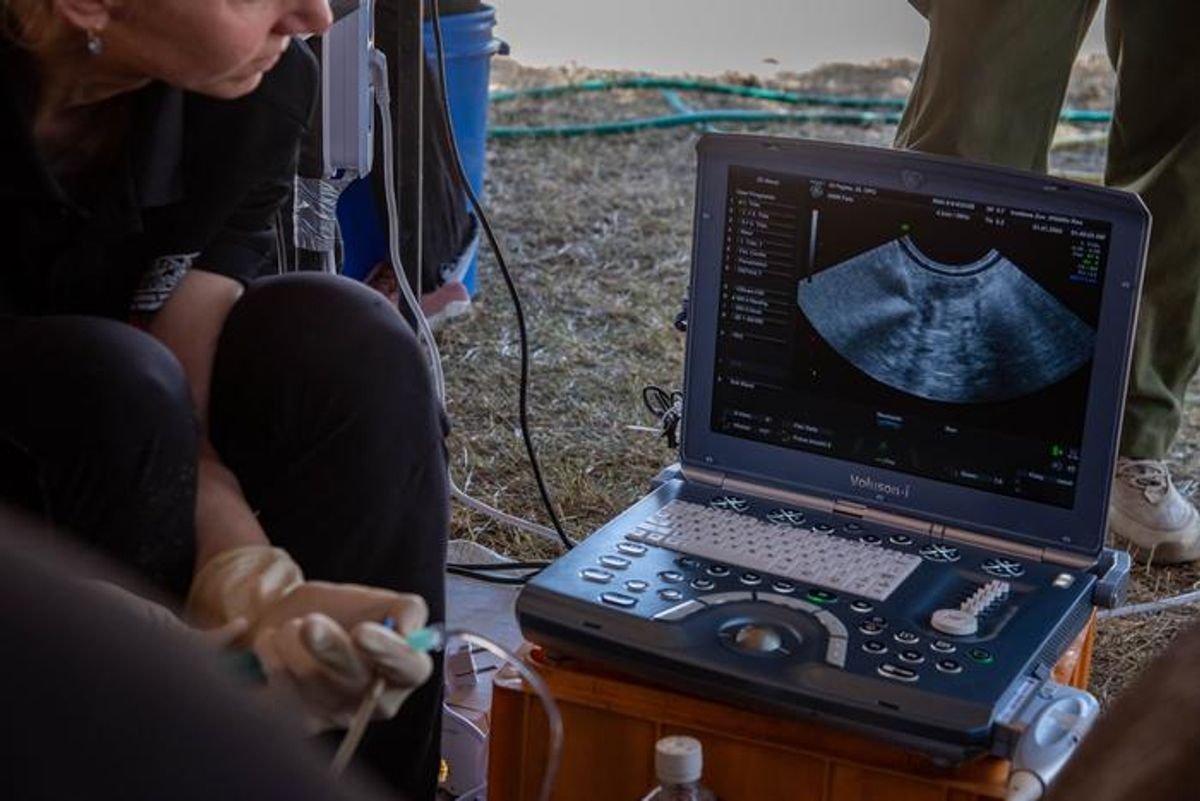
The work is led by the BioRescue Consortium, an international collaboration working to prevent the subspecies from disappearing entirely. Scientists collect egg cells from northern white rhinos, fertilize them in the lab using preserved sperm from deceased males, and develop embryos for transfer.
Those embryos are implanted into southern white rhinos, a closely related subspecies, in hopes of achieving a successful pregnancy and eventually restoring a viable population. The approach and its implications for conservation are also explored in a recent study published in the journal PLOS ONE.
Why Saving the Northern White Rhino Is So Difficult
With no surviving males and only two females left, the northern white rhino is considered functionally extinct. That means recovery is no longer possible without human intervention.
The approach being used relies on assisted reproductive technologies, or ART, methods that involve handling reproductive cells or embryos outside the body to produce new individuals. While these techniques are widely used in some settings, their application in wildlife conservation is still relatively new.
Egg collection, fertilization, and embryo transfer all require careful timing and specialized expertise. Even when procedures are successful, the outcome is uncertain. The small number of remaining animals and limited genetic material make each attempt high stakes.
At the same time, the goal is not just to produce individuals, but to rebuild a genetically viable population. That requires using preserved biological material from animals that are no longer alive, adding another layer of difficulty to an already complex process.
Read more: Can Scientists Revive Ancient Frozen Animals?
Building Northern White Rhino Embryos
The latest embryo was created from eggs collected from Fatu at Ol Pejeta Conservancy, where the last two northern white rhinos live under constant protection.
So far, only a small number of embryo transfers have been carried out, and none have resulted in a long-term pregnancy.
Progress is slow, but each attempt adds to a growing understanding of how these techniques work in rhinos. Researchers continue to refine the process by adjusting hormone timing, improving embryo handling, and learning how best to support early-stage pregnancies.
Beyond immediate results, the work is building a foundation. By developing and testing these techniques, a framework is being created that could be applied to other species facing similar risks.
Why The Embryos Raise Bigger Questions for Conservation
Assisted reproductive technologies are increasingly seen as a tool that can support traditional approaches like habitat protection and breeding programs, rather than replace them. For species that can no longer recover on their own, they may represent a final option.
At the same time, their use raises important questions. Because these methods involve direct intervention in animal reproduction, concerns about animal welfare and ethical oversight are central to how they are understood and accepted.
Public awareness also plays a role. While many people recognize visible threats like poaching, other drivers of species decline are often less well understood. Improving communication around those issues may be key to building long-term support for conservation efforts.
For now, the northern white rhino’s future is still uncertain. But the work underway could shape how scientists try to save other species on the edge of extinction.
Read more: With Bushy Hair, This Engineered Woolly Mouse Could Help Revive the Woolly Mammoth
Article Sources
Our writers at Discovermagazine.com use peer-reviewed studies and high-quality sources for our articles, and our editors review for scientific accuracy and editorial standards. Review the sources used below for this article: