
Largest Ever Elephant Genome Study Reveals a Hidden Crisis — and a Path to Better Conservation
The largest genomic study of African elephants ever conducted has revealed how the biological history of these massive mammals has been shaped by their long-distance migrations. Authors say their findings also show that restrictions on elephants’ movements due to habitat loss are impacting the animals at the genomic level.
“Our study shows that until recently, elephants have been connected across vast distances. This freedom of movement has created genetic robustness because the populations have intermingled. Today, the picture is different. Elephants are living in a world where space is more and more restricted, and some populations are becoming isolated,” said Patrícia Pečnerová, a geneticist at the University of Copenhagen and Lund University and co-author of the study, in a statement.
An international team published the research in Nature Communications.
Read More: The First Asian Elephant Calf Is Born After a 25-Year Wait at the Smithsonian National Zoo
Analyzing Elephant Genomes

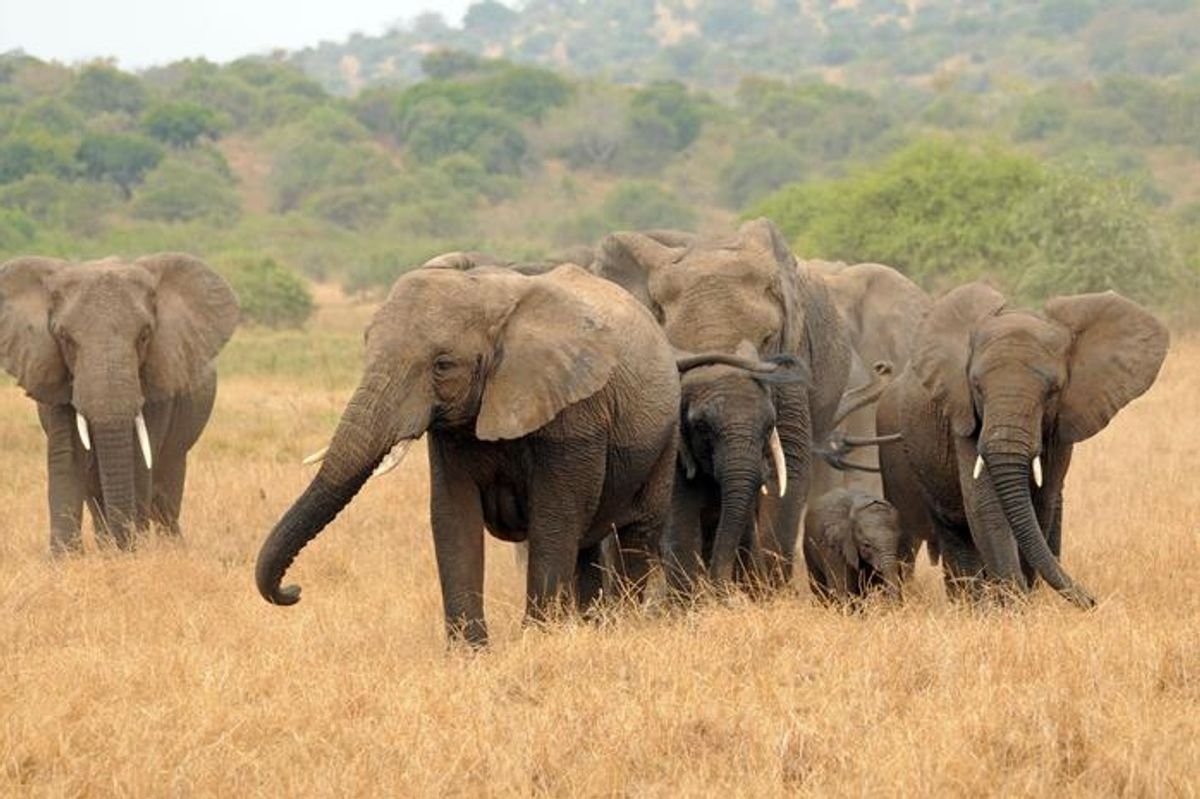
(Image Credit: Laura Bertola)
For the new research, scientists analyzed 232 elephant genomes. In 2010, scientists first recognized that African elephants comprise two distinct species: the African bush (or savanna) elephant and the African forest elephant, according to a study in PLOS Biology. This new study is the first genomic effort to map the continent’s elephant population since this split was recognized, and it records genomes from elephants in 17 countries.
The research team analyzed genomes stored more than 30 years previously. This rich data source began to reveal the genomic differences between Africa’s elephants. Some animals, such as those found between Eritrea and Ethiopia, were physically and genetically isolated. This led to high rates of inbreeding, increasing the risk of harmful mutations spreading throughout the population.
Isolation didn’t always cause these problems. Human settlements hem in bush elephants in West Africa. These animals are also inbred but are at lower risk due to contributions from nearby forest elephant populations, which can interbreed with bush elephants.
However, this interbreeding could cause its own issues, the authors warned. The two species are genetically distinct; over 85 percent of total elephant genetic variation is attributable to interspecific differences.
“Given this history, gene flow between the species is unlikely to be beneficial, and hybrid elephants should be avoided for translocations,” said Alfred Roca, a geneticist at the University of Illinois Urbana-Champaign and study co-author, in the press release.
Guiding More Effective Elephant Conservation
There was more positive news from southern Africa. Here, the vast Kavango–Zambezi Transfrontier Conservation Area, one of the world’s largest nature reserves, provides a safe area of 520,000 square kilometers (over 200,000 square miles) where elephants can travel and exchange genes. As a result, the animals here are genetically diverse.
The authors explained that maintaining the landscape and ensuring that elephants can move safely across countries and regions is an underappreciated aspect of conservation revealed by the new analysis.
“By identifying distinct population units and levels of gene flow, this research can guide more effective conservation strategies, including habitat management, corridor protection, and translocation decisions. In addition, genomic tools and data that we have generated can support wildlife forensics by helping to trace the origin of confiscated ivory, thereby strengthening efforts to combat illegal wildlife trade,” said Charles Masembe and Vincent Muwanika, evolutionary scientists at Makerere University in Uganda and co-authors of the study, in the press release.
“By integrating genomics into conservation education and planning, we can better safeguard elephant populations for future generations, ensuring their ecological role and long-term survival in rapidly changing environments,” they concluded in the press release.
Read More: Elephants Travel Smart to Conserve Energy on Their Journeys
Article Sources
Our writers at Discovermagazine.com use peer-reviewed studies and high-quality sources for our articles, and our editors review for scientific accuracy and editorial standards. Review the sources used below for this article: