
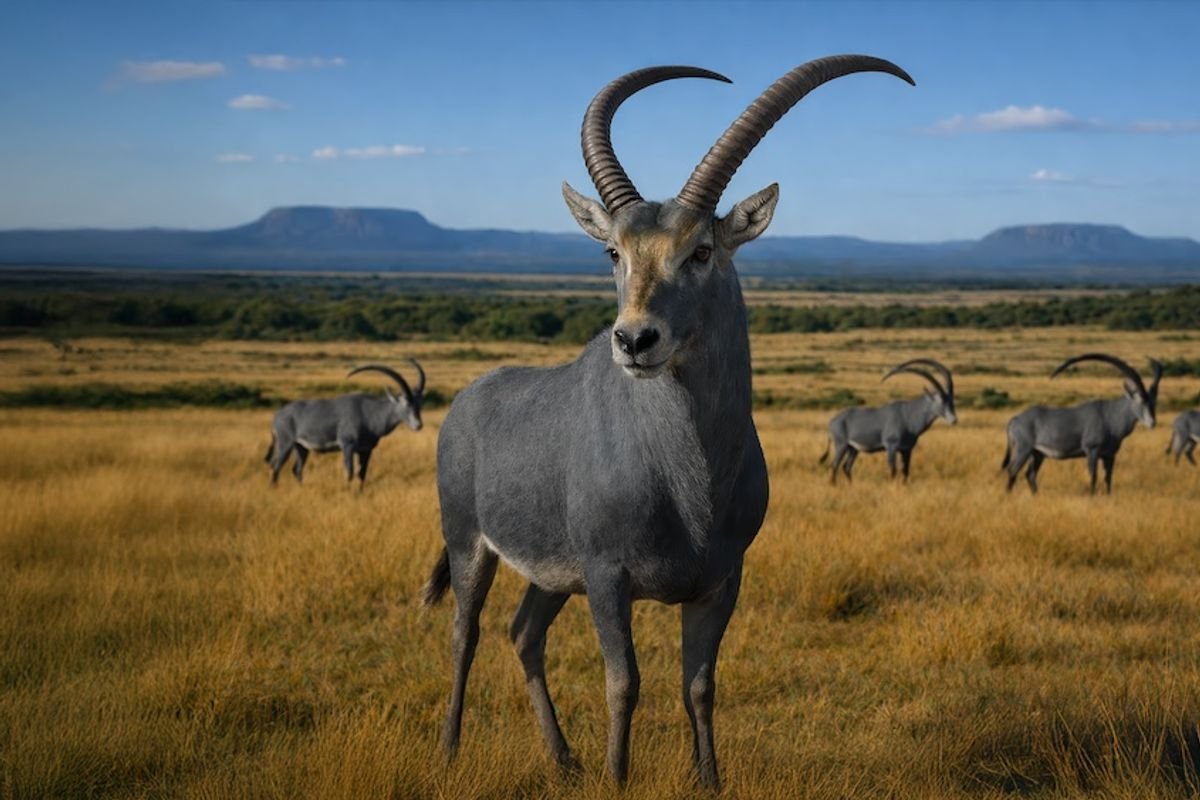
Colossal Plans De-Extinction Project for the Bluebuck — and an Effort to Help Save African Antelope Populations
Colossal Biosciences, the company pushing for the de-extinction of the woolly mammoth and dire wolf, has just announced its plans to bring an antelope called the bluebuck back from extinction. The bluebuck, which disappeared at the end of the 18th century, is now the sixth extinct species that Colossal is hoping to revive with genome editing technology.
Colossal’s bluebuck de-extinction project began in 2024, and since then, the company says that it has already made several breakthroughs. The team now aims to bring the bluebuck’s features — most notably, its silvery-blue coat — back to life by introducing its genetic variants into existing stem cells from a close relative, the roan antelope.
“The bluebuck represents a pivotal step forward for Colossal and conservation, marking our first major focus on antelope conservation — one we can now pursue because of major developments with the necessary technologies,” said Ben Lamm, co-founder and CEO of Colossal Biosciences, in a statement.
The Bluebuck’s Extinction in South Africa
The bluebuck is believed to have gone extinct around 1799 or 1800, becoming the first large African mammal to be driven to extinction by humans in recorded history, according to Colossal. The antelope once roamed along the coast of South Africa, grazing on grasses in the Fynbos, a lush biome that’s home to thousands of unique flowering plant species.

Bluebuck in South Africa.
(Image Courtesy of Colossal Biosciences)
When European colonizers arrived in South Africa in the 17th century, the bluebuck may have already been low in numbers due to the enduring effects of sea level change starting 10,000 years ago, which likely disrupted the antelope’s migration patterns, according to the Natural History Museum in London. Colonial expansion and overhunting by Europeans, however, were the final nails in the coffin for the bluebuck.
Read More: Emperor Penguins Added to IUCN Red List — Their Population Could Drop 50 Percent by 2080
Restoring Bluebuck Traits in De-extinction Efforts
After more than two centuries since its extinction, the bluebuck may now have a chance at a comeback thanks to Colossal’s aspirations. Colossal first laid the foundation for its bluebuck de-extinction project once scientists had generated a genome from a historical bluebuck sample housed in the Swedish Museum of Natural History.
This feat, which was detailed in a 2024 Current Biology study, made it possible for Colossal to identify the genetic differences between the bluebuck and its two closest living relatives: the roan and sable antelopes. From this genome, the team has pinpointed genetic variants that gave the bluebuck its most notable physical features, including its smaller body size, white facial pattern, and gray-blue coloration.

Horned oryx.
(Image Courtesy of Colossal Biosciences)
Following up on the 2024 study, Colossal has created the world’s first induced pluripotent stem cells (iPSCs) from roan antelope, which has been designated as the primary genomic reference and cellular surrogate for the de-extinction project.
The team will imbue specific bluebuck genetic variants into these cells, which can be differentiated into nearly any tissue in the body. By introducing the edited cells into different tissue types — skin, muscle, and pigment-producing melanocytes — they can test how genomic changes affect biology and development without needing to produce a living animal.
Saving Antelopes in South Africa
With the bluebuck de-extinction project, Colossal also plans to support the 29 antelope species that are currently threatened with extinction. One way they hope to accomplish this is with newly developed ovum pickup techniques that collect oocytes (immature egg cells from females) from live animals, which can facilitate conservation breeding for shrinking antelope populations.

Roan antelope.
(Image Courtesy of Colossal Biosciences)
In addition, Colossal has partnered with South African conservation organization Endangered Wildlife Trust and nonprofit Advanced Conservation Strategies to create a strategy for bluebuck rewilding in South Africa by considering the socio-environmental impacts of this project and key factors like reintroduction sites and population viability. The de-extinction project will also allow Colossal to uphold other endangered antelope populations with genetic material that is safeguarded in biobanks set up by the company.
“For too long, antelope conservation has lacked the biotechnology infrastructure that other species take for granted,” said Matt James, chief animal officer at Colossal. “The bluebuck project is changing that fundamentally. The reproductive technologies, genomic tools, and biobanking capabilities we’re building don’t stop with one species, they create a platform that can serve every threatened antelope on Earth. We’re not just working to bring back what’s been lost. We’re building the tools to make sure we never lose them again.”
Read More: New Northern White Rhino Embryo Created as Only Two Females Remain
Article Sources
Our writers at Discovermagazine.com use peer-reviewed studies and high-quality sources for our articles, and our editors review for scientific accuracy and editorial standards. Review the sources used below for this article: