
A Galaxy Cluster’s Sloshing Spiral Reveals the Story Behind a Chaotic Collision That Began Four Billion Years Ago

The galaxy cluster Abell 2029 may seem calm and collected at first glance, but a closer look at its features reveals a rowdy past. Recent observations of Abell 2029 have shown that it once collided with a smaller galaxy cluster about 4 billion years ago. The aftermath of this run-in can still be seen today in a “sloshing” spiral of hot gas that was formed from gravitational whiplash.
In a December 2025 study published in The Astrophysical Journal, data collected by NASA’s Chandra X-ray Observatory have helped researchers dig into the past of Abell 2029. This data suggests that a smaller galaxy cluster previously crossed paths with Abell 2029, leaving behind a few noteworthy features. Along with the spiral structure, Chandra observed a “bay” feature in the cluster’s hot gas and a “splash” of cooler gas, both remnants of the collision.
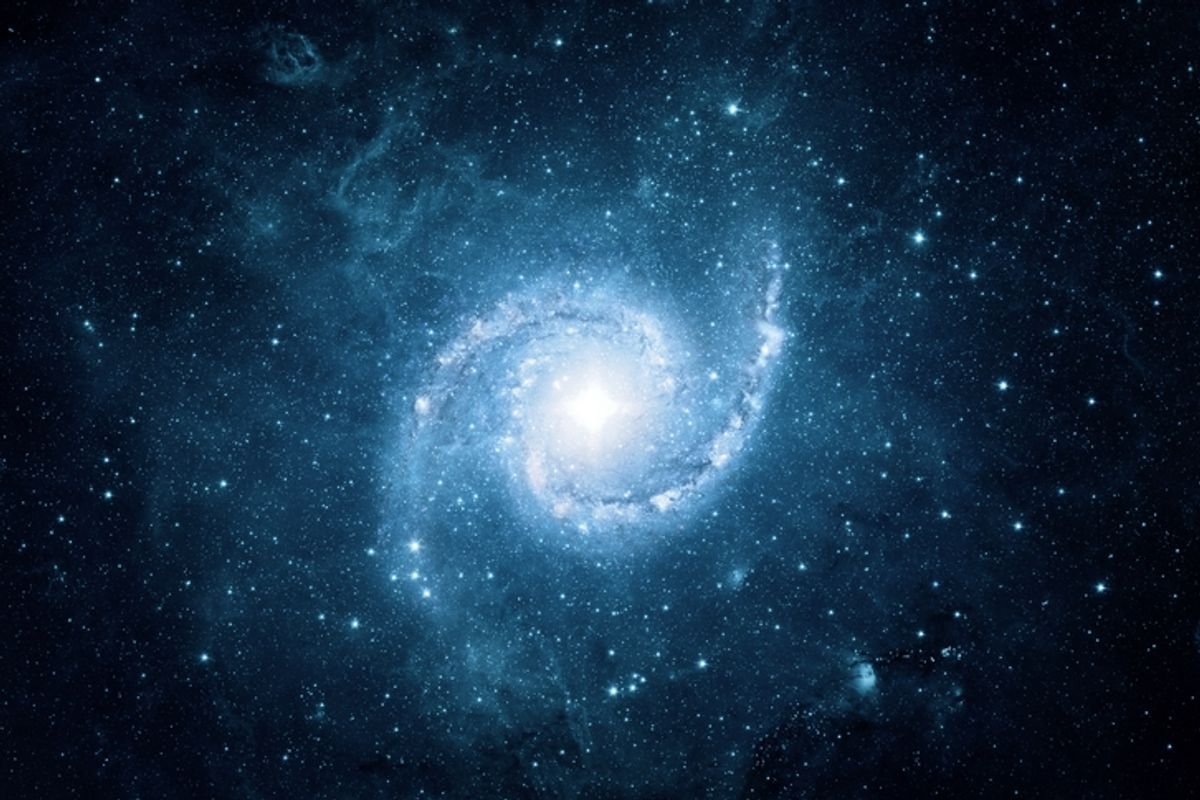
Chandra also released a composite image of Abell 2029, displaying its seashell-like shape. The spiral — neon blue in color from the X-ray gas that Chandra observed — is one of the longest ever seen, extending two million light-years from the cluster’s core, according to a statement from the Chandra X-ray Observatory.
Read More: Potential Ice on the Moon Is Good News for Lunar Exploration or Habitation
Abell 2029’s Chaotic Collision
Abell 2029 — located about 1 billion light-years away in the constellation Virgo — is often described as “the most relaxed cluster in the universe” due to the undisturbed nature of the hot gas that envelops its thousands of galaxies. According to Chandra, the cluster also contains an amount of dark matter equivalent to more than a hundred trillion suns.
The gas, which is heated to millions of degrees and bound to the cluster by the gravity of dark matter, emits X-rays that can be captured by observatories with X-ray telescopes like Chandra.
Based on the recent observations of these X-rays, Chandra uncovered the spiral shape of Abell 2029, which likely formed when gas in the cluster sloshed to the side when it was hit by another cluster that was about 10 times less massive — the researchers compare this sloshing to the way that wine moves in a wine glass. Then, after the gas was pulled sideways following the first collision, gravity pulled the smaller cluster back in for a second collision.
Abell 2029 Collision Makes a Splash
The double collision left Abell 2029 with several other features that now accompany its spiral structure. After the smaller cluster clashed with Abell 2029 a second time, it created a wake material that became the “splash” region. The collision also appears to have produced a shockwave in the cluster’s superheated gas.
Finally, a “bay” area may have been shaped by the outer parts of Abell 2029’s spiral overlapping with gas that was stripped away from the smaller cluster after the impact — the authors of the December 2025 study, however, believe there could be other explanations for the bay.
A Snapshot of a Blue Spiral
To capture the spiral shape and distinctive features of Abell 2029, researchers examined gas that does not appear symmetrical; most of the cluster’s gas, according to Chandra, is symmetrical and is shaped somewhat like an oval.
The researchers removed, or “subtracted,” the symmetrical gas from the original X-ray image that Chandra took. This resulted in a subtracted image showing the remaining gas, taking the form of spiral, splash, and bay features.
The researchers combined the subtracted image with the original to create a composite image that shows the blue spiral rotating around the center of Abell 2029.
Read More: What Is the Biggest Object in the Universe? Most Likely Galaxy Clusters
Article Sources
Our writers at Discovermagazine.com use peer-reviewed studies and high-quality sources for our articles, and our editors review for scientific accuracy and editorial standards. Review the sources used below for this article: