
700-Year-Old Mummy Reveals Bacterium That Causes Scarlet Fever in the Americas Before Europeans

One of the primary things that Europeans brought over to the Americas after colonization was disease. From smallpox to influenza, pathogens carried over on European ships devastated Indigenous populations who lacked the necessary immunity to survive them. But long before European ships reached the Americas, a dangerous bacterium may have already been circulating.
In a new study, published in Nature Communications, researchers identified Streptococcus pyogenes — the bacterium responsible for illnesses like scarlet fever — in a pre-Colombian Bolivian mummy. They also successfully reconstructed the genome of this centuries-old pathogen, offering a fresh look into its deep evolutionary past.
The finding challenges long-held assumptions that Europeans introduced scarlet fever to the Americas and signifies “something like the beginning of a new era” for the study of infectious diseases, according to Frank Maixner, director of the Eurac Research Institute for Mummy Studies.
Ancient Scarlet Fever Bacterium Found in a Mummified Skull
The discovery started with a naturally mummified individual housed at the National Museum of Archaeology in La Paz, Bolivia. The remains belonged to a young man who lived between 1283 C.E. and 1383 C.E., centuries before European contact.
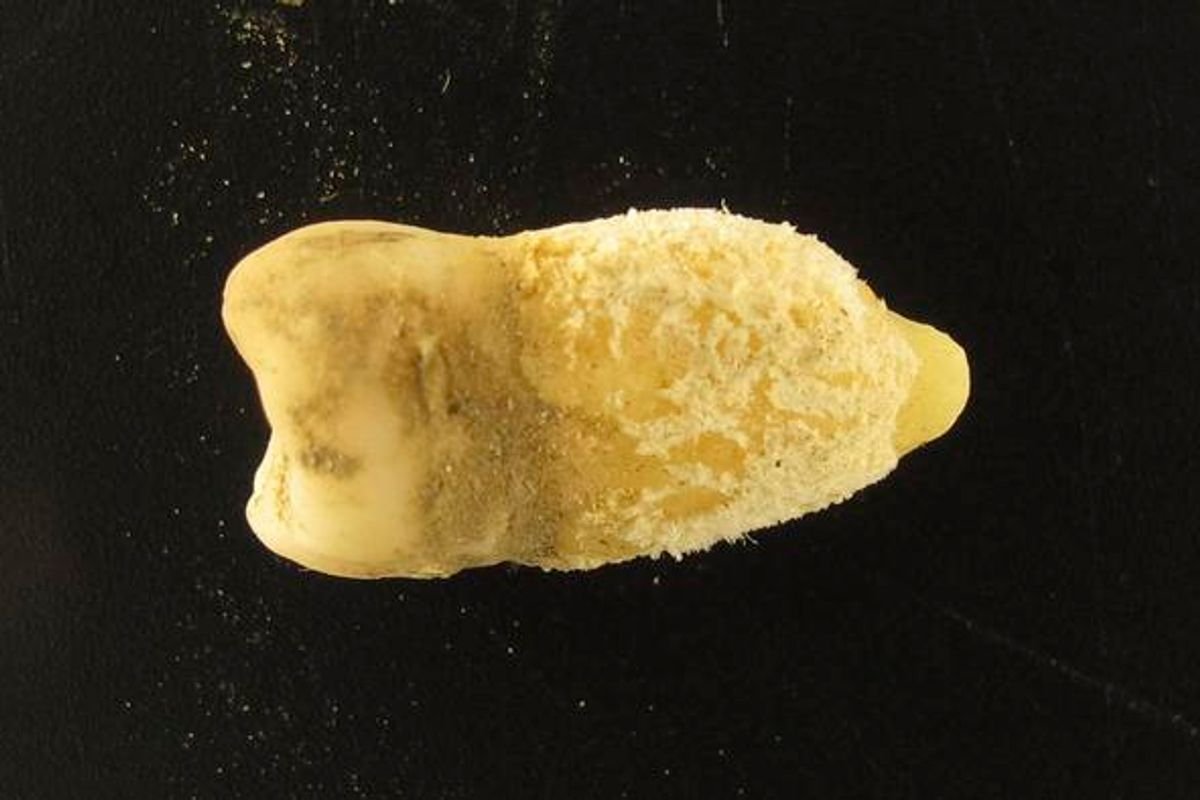
Researchers extracted genetic material from a single tooth. Teeth often act as biological time capsules, preserving traces of pathogens that once circulated in the bloodstream.
Within that sample, scientists detected Streptococcus pyogenes, a globally widespread bacterium known for causing a range of conditions, from mild throat infections to severe diseases like scarlet fever and toxic shock syndrome.
“We weren’t looking for this pathogen specifically,” explained Maixner in a press release. “When conducting genetic analyses of mummies, we approach the work with an open mind, analyzing not only human genetic material but also the DNA of the numerous microorganisms present in human remains.”
Despite its historical significance as a leading cause of childhood death, the evolutionary origins of scarlet fever have remained largely unclear — until now.
Read More: How Large-Scale Human Migration Reshaped Europe More Than a Thousand Years Ago
How Researchers Reconstructed a Centuries-Old Genome
To piece together the Streptococcus pyogenes genome, researchers used a technique called de-novo assembly, which is a method that reconstructs DNA sequences from countless tiny fragments without relying on a reference genome.
“You can think of it like putting together a puzzle without knowing the picture on the box,” said Mohamed Sarhan, one of the first authors of the study.
This approach is especially valuable for ancient DNA, which is often highly fragmented. For this study, the mummy’s preservation — thanks to the cold, dry environments of the Bolivian highlands — also helped keep the DNA in a condition where it could be analyzed.
“The DNA’s excellent preservation enabled us to reconstruct a nearly complete genome, yielding a wealth of information and demonstrating, for example, that the bacterium was already capable of causing disease: the ancient strain carried many — though not all — of the pathogenic genes found in modern Streptococcus pyogenes strains,” explained Guido Valverde, the other first author of the study.
What Did Scientists Discover About This Ancient Pathogen?
The reconstructed genome revealed that this ancient strain closely resembles modern versions of Streptococcus pyogenes, particularly those associated with throat infections. That similarity suggests the bacterium’s disease-causing capabilities were well-established centuries ago.
Additionally, when researchers expanded their search to other ancient DNA datasets, they uncovered more traces of the bacterium in 35 European samples dating back about 4,000 years. They also identified a closely related Streptococcus species in 200-year-old gorilla remains from Africa.
Genetic analyses also pointed to a key moment in the bacterium’s evolution. Most modern Streptococcus pyogenes lineages appear to have diverged around 5,000 years ago. This period coincides with major shifts in human behavior, as communities became more sedentary and densely populated.
Those conditions likely created the ideal opportunities for transmission, allowing the bacterium to spread more efficiently through close contact and respiratory droplets.
Read More: Ancient DNA Reveals Ibiza Was a Global Crossroads in the Medieval Mediterranean — and a Case of Leprosy
Article Sources
Our writers at Discovermagazine.com use peer-reviewed studies and high-quality sources for our articles, and our editors review for scientific accuracy and editorial standards. Review the sources used below for this article: