
5,000-Year-Old Pots Reveal Diet, Dairy Cooking, and Possible Early Wine in the Bronze Age
Meals from 5,000 years ago don’t usually leave much behind. But in one settlement in present-day Azerbaijan, traces of what people cooked, drank, and stored have survived inside pottery.
At the site of Qaraçinar, vessels dating back to roughly 2900 B.C.E. to 2600 B.C.E. offer a look at daily life in the Bronze Age. By analyzing residues preserved in ceramic vessels, researchers reconstructed what people were eating and how they were preparing it.
The results, published in the Proceedings of the National Academy of Sciences, point to a varied diet that included dairy, meat, plant products, and grape-based drinks, possibly early forms of wine. The findings also show that different types of pottery were used for specific purposes.
What Ancient Pots Reveal About Bronze Age Diets
Researchers analyzed residues from 52 ceramic pots, with organic compounds preserved in roughly 73 percent of them, an unusually high success rate that allowed for the detailed reconstruction of diet and food use.

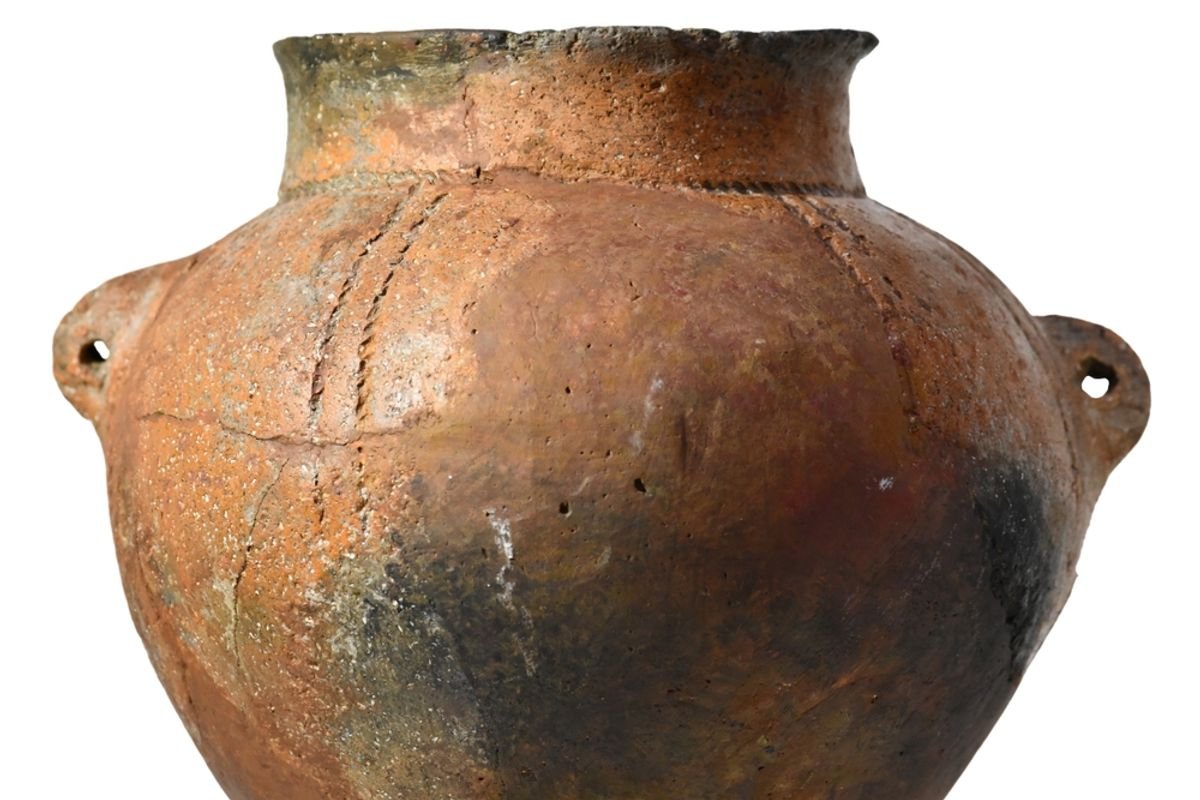
Bronze Age burnished jars from Qaraçinar, Azerbaijan.
(Image Credit: Giulio Palumbi)
More than half of the vessels contained fruit markers, including evidence of grape-derived products. In some cases, the chemical signatures point to ripe grape products such as wine, vinegar, or syrup, while others hint at mixtures with different fruits or less processed forms. This indicates that grapes were used in multiple ways.
Dairy was just as central, as residues show not only the presence of milk products, but also repeated heating and processing, indicating that dairy was actively cooked rather than just stored.
This points to a mixed agropastoral diet built on livestock like sheep and cattle alongside plant foods and fruits.
Read More: Ancient DNA Uncovers Startling Family Secret of a 3,500-Year-Old Bronze Age Community
Pottery Function Reveals a Structured System of Cooking and Use
Coarse, monochrome pottery frequently shows soot, fire exposure, and chemical markers known as ketones — compounds that form when animal fats are heated at high temperatures or cooked repeatedly. This means the vessels were most likely used for intensive, repeated cooking, not just occasional heating.
Many were reused for both heated and unheated contents.
In contrast, the distinctive red-black burnished vessels — a hallmark of the Kura–Araxes culture — show little evidence of heat exposure. Instead, they are closely associated with grape-based products and dairy and were likely used for serving or consuming liquids rather than cooking.
Evidence Points to Fermentation, Flavoring, and Food Processing
In several vessels, dairy and fruit residues appear together, raising the possibility of fermentation or recipe-based preparation, where ingredients were intentionally mixed rather than used separately.
There is also evidence of conifer (Pinaceae) resins, which may have been used not only to seal pottery but also to flavor or preserve food and drink. Their presence points to efforts to modify taste and extend shelf life.
Some of these materials may not have been locally available, hinting at the possibility of resource movement or exchange, even within largely local subsistence systems.
At the same time, these practices appear to have been part of everyday life rather than elite consumption. Unlike in contemporaneous urban societies, where grape products could be high-status imports, the evidence here reflects locally sourced ingredients used in routine ways.
Overall, the study shows that food preparation in this community involved more than basic cooking. It included processing, preservation, and transformation, shaped by environment, habit, and shared cultural practices.
Read More: Rare Remains Provide Insights Into Bronze Age Burials, Diet, and Society
Article Sources
Our writers at Discovermagazine.com use peer-reviewed studies and high-quality sources for our articles, and our editors review for scientific accuracy and editorial standards. Review the sources used below for this article: