
146,000-Year-Old Butchering Tools Reveal Creativity May Have Helped Ancient Humans Adapt to the Ice Age
The Ice Age was not supposed to be a time of innovation. But buried among animal bones in central China, archaeologists found evidence that some ancient humans may have become more technologically sophisticated and creative during one of the harshest climates they ever faced.
In a new study published in the Journal of Human Evolution, researchers re-dated tools from the Lingjing archaeological site and discovered they were crafted roughly 146,000 years ago during an Ice Age. The revised date places these toolmakers in a much more unforgiving environment than archaeologists once thought.
“People often imagine creativity as something that flourishes in good times,” said Yuchao Zhao, lead author of the paper, in a press release. “Finding out that these stone tools were made during a harsh ice age tells a different story. Hard times can force us to adapt.”
Read More: Ice Age Humans Played Dice — And May Have Been Gambling 12,000 Years Ago
Ancient Stone Tools Reveal Unexpected Ice Age Innovation

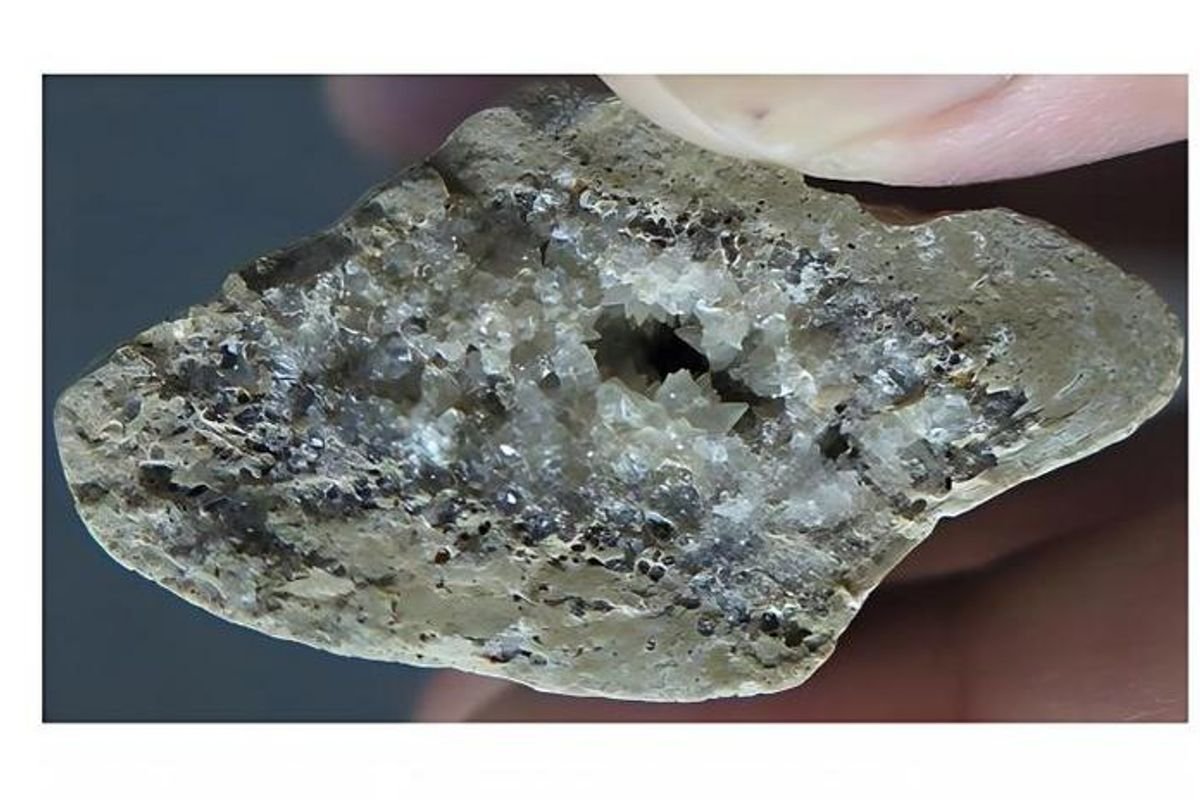
146,000-year-old stone cores used to make butcher’s tools
(Image Credit: Yuchao Zhao)
A team discovered the tools at Lingjing, a site in central China once occupied by Homo juluensis, an ancient human group that shared traits with both archaic East Asian humans and Neanderthals. Researchers believe modern humans may have interacted with them at some point.
Archaeologists assumed ancient humans in East Asia had not developed stone-tool technologies as sophisticated as those seen in Europe or Africa during the late Middle Pleistocene. But the Lingjing artifacts challenge that. According to the researchers, these tools represent some of the earliest known sophisticated centripetal flaking systems identified in eastern Asia. Lingjing also yielded engraved bone fragments and formal bone tools.
Some of the cores were shaped evenly on both sides, while others were designed more strategically. One side served as the striking surface, while the other was prepared to produce sharp flakes. Rather than simply striking stones apart, the toolmakers appear to have managed the shape of the cores over multiple stages, maintaining the angles needed to keep producing useful cutting edges.
“This was not casual flake production, but a technology that required planning, precision, and a deep understanding of stone properties and fracture mechanics,” said Zhao. “The underlying logic of this system — and the cognitive abilities it reflects — shows important similarities to Middle Paleolithic technologies often associated with Neanderthals in Europe and with human ancestors in Africa.”
Researchers also noted that the stone material was likely transported from riverbeds roughly 6 miles away, suggesting these toolmakers were selective about the raw materials they used.
How Tiny Crystals Revealed the Tools’ True Age
The revised age came from an unlikely source: crystals hidden inside an animal bone.
Archaeologists believe Lingjing functioned primarily as a butchering site where animals such as deer were processed near a spring, rather than as a permanent settlement. Among the remains, researchers found a rib bone containing calcite crystals. Those crystals held trace amounts of uranium, which naturally decays into thorium over time, allowing scientists to estimate the crystal’s age.
“The calcite crystals inside the bone acted like a natural clock, allowing us to refine the age of the site,” said Zhao.
Earlier estimates placed the tools at roughly 126,000 years old. The revised dating pushed them back another 20,000 years into a much colder Ice Age environment.
Rather than being a luxury of easier times, the new timeline hints that creativity may have helped ancient humans survive some of the most difficult conditions they faced.
“Altogether, this research reveals a much richer story of innovation, intelligence, and human evolution in East Asia,” concluded Zhao.
Read More: 75,000-Year-Old Treasure Trove of Ice Age Animal Remains Provides Snapshot of a Lost World
Article Sources
Our writers at Discovermagazine.com use peer-reviewed studies and high-quality sources for our articles, and our editors review for scientific accuracy and editorial standards. Review the sources used below for this article: