
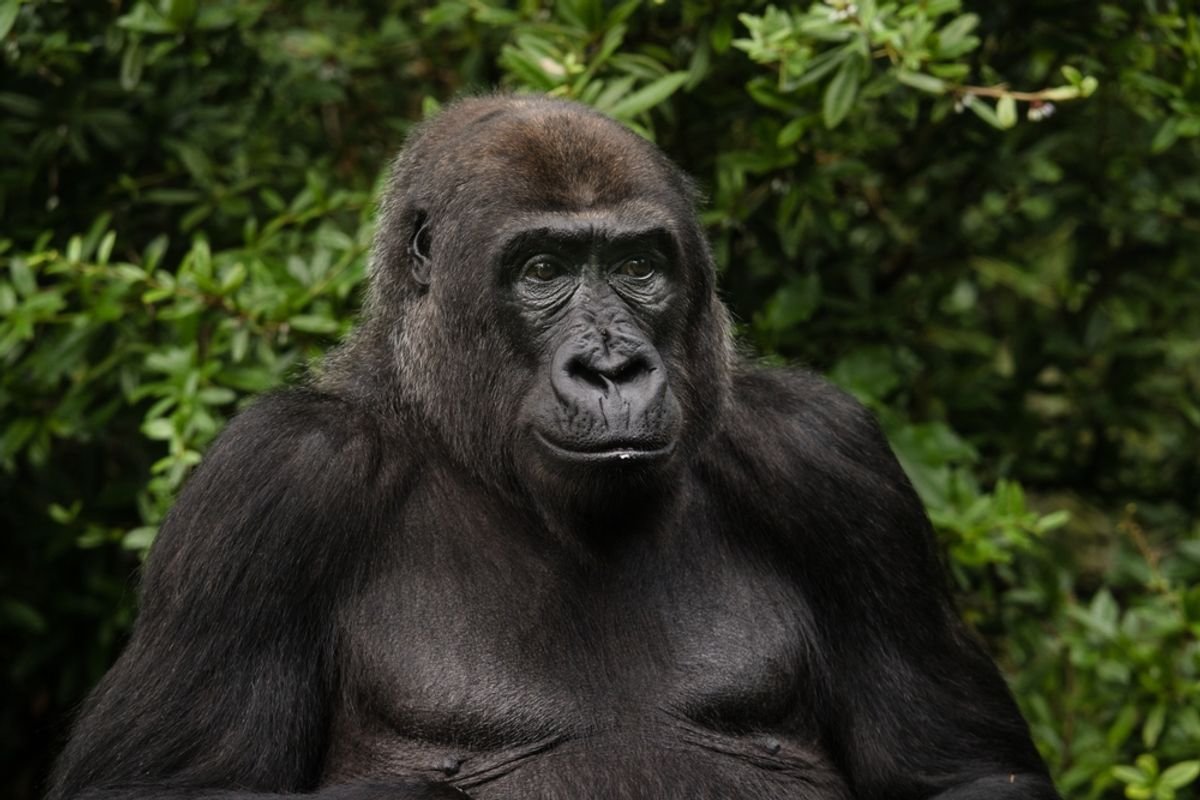
World’s Oldest Gorilla Turns 69 — What Lady Fatou Reveals About Animal Longevity

Besides their mission to support animal conservation, research, and public education, zoos also provide safe, tightly monitored spaces where animals can grow exceptionally old, reaching ages they would rarely, if ever, achieve in the wild.
Such is the case for Lady Fatou, who was certified in 2025 by Guinness World Records as the oldest living gorilla in the world and celebrated her 69th birthday on April 13, 2026, at her home in the Berlin Zoo. The staff made sure to make it count by gifting her a colorful vegetable basket filled with all her favorites.
Lady Fatou’s origin story and legacy are a great example of how species-appropriate care can help animals thrive in captivity. Keep reading to learn more about this senior zoo resident and Fatou’s unconventional journey to Germany’s capital over 60 years ago.
The World’s Oldest Gorilla’s Eventful Biography
According to the Associated Press (AP), the world’s oldest gorilla was likely born somewhere in West Africa before being brought to Europe in the luggage of a French sailor arriving in Marseille in 1959. Struggling to cover his bar tab, he offered the gorilla as payment to the landlady. This eventually led Fatou to Berlin, where she arrived at around two years old, via a French animal trader.
Two decades later, Fatou gave birth to her daughter Dufte, who passed away in 2001. But Fatou’s lineage is still going strong: her granddaughter M’penzi lives with her at the Berlin Zoo, and Fatou has at least three great-great-great-grandchildren, as reported by Deutsche Welle (DW).
Zoo staff designated April 13 as her birthday, as her exact birth date is unknown — a common practice for wild-born animals. After Ingo, a 75-year-old flamingo, died in 2024, Fatou became the oldest resident at the Berlin Zoo, according to AP.
Read More: The First Asian Elephant Calf Is Born After a 25-Year Wait at the Smithsonian National Zoo
Animals Grow Older in Captivity
A study published in 2016 in Scientific Reports quantified this phenomenon. As described in the report, over 80 percent of mammal species live longer in zoos than in their wild habitats. This isn’t surprising, as animals in captivity face fewer environmental stressors and receive consistent, species-appropriate care, along with medical treatment when needed.
Alongside Fatou, many other zoo animals have gained fame for their old age. The Asian elephant Lin Wang, from Taipei Zoo, lived to be 86 and far surpassed the typical elephant lifespan of around 50 years. The giant tortoise Adwaita reached a whopping 255 years old at the Zoological Garden in Kolkata in 2006. Meanwhile, Jonathan, a 193-year-old tortoise from the Seychelles, is considered the oldest living terrestrial animal today.
But not just zoos harbor the environments that allow animals to reach unusually old ages. Our house pets can also achieve unexpected longevity. Take Creme Puff, a mixed tabby cat who lived to 38 years old.
A Birthday Present for a Gorilla
To properly celebrate their oldest resident, zoo staff prepared a giant, colorful veggie basket for Lady Fatou, filled with cherry tomatoes, beets, leeks, and lettuce. Since she has lost all her teeth, her food is cooked beforehand.
Her old age has also brought arthritis and hearing loss. To accommodate her needs, Fatou enjoys a private enclosure, separate from the more rowdy gorillas, along with dedicated care from several staff members.
As noted by AP, Christian Aust, the Berlin Zoo’s primate supervisor, reports that Fatou is friendly with her zookeepers, though a little stubborn at times.
Read More: Chimpanzees Have a Violent Reputation — But They Aren’t More Aggressive Than Bonobos
Article Sources
Our writers at Discovermagazine.com use peer-reviewed studies and high-quality sources for our articles, and our editors review for scientific accuracy and editorial standards. Review the sources used below for this article: