
There May Only Be About 100 Rice’s Whales Left in the Gulf of Mexico — Why This Species Is So Endangered

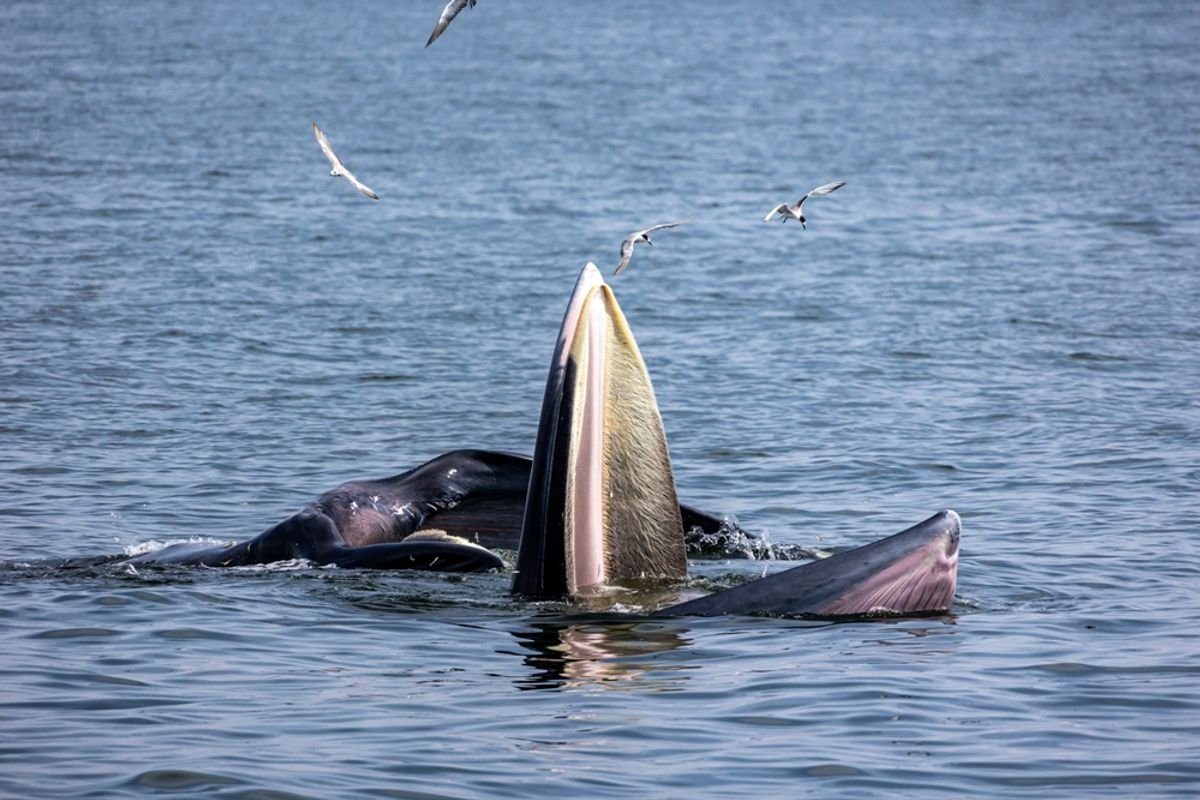
The Rice’s whale (Balaenoptera ricei) is a remarkable and unique species of baleen whale. While other whales go on long migrations, feeding in cold waters then traveling to warm waters to breed, Rice’s whales live year-round in the northern Gulf of Mexico, mostly in the area near the De Soto Canyon off the Florida-Alabama border, and occasionally in the waters off Louisiana and Texas. There has been some evidence of them in waters off Mexico as well.
The species was named Rice’s whale after Dale Rice, the scientist who, in 1965, confirmed that this group of whales lives full-time in the Gulf of Mexico.
Today, there are fewer than 100 of these endangered whales still alive — some counts say only about 50 — making it one of the world’s most endangered species of baleen whale.
The Decline of Rice’s Whale
Previously thought to be a population of Bryde’s (pronounced Broodus) whale, Rice’s whale was determined to be a distinct species in 2021, after an individual was stranded on the Florida coast, allowing researchers to closely examine the animal’s physical features, according to a study in Marine Mammal Science.
They discovered that, while very similar to the Bryde’s whale, the skull’s morphology was quite different, Jeremy Kiszka, a marine ecologist at Florida International University who studies marine mammals, explained.
Genetic analysis confirmed it. These year-round residents of the Gulf are a distinct species. Kiszka described these animals as designed for speed, with slender bodies and pointed pectoral fins. As whales go, they’re not very big — about 39 to 45 feet (12 to 14 meters) long. But they are graceful and, as he puts it, “very mysterious.”
“I don’t think this species has ever been very abundant,” Kiszka told Discover. “The Gulf of Mexico is a very small place.”
But in any case, their numbers have declined due to human activities. One of those was the 2010 Deepwater Horizon Oil spill.
“Perhaps a third of the population was killed by the oil spill,” Kiszka said.
In addition, fisheries, gas and oil exploration, and extensive shipping in the Gulf make life difficult for these whales.
Read More: The Rice’s Whale: How This New Whale Species Is Fighting for Survival
Why Their Numbers Are Dwindling
But there are other reasons for the diminished numbers of the Rice’s whale. One factor is their lifestyle. Mike Heithaus, a marine ecologist at Florida International University and a fellow of FIU’s Tropical Conservation Institute, explains that, unlike other whales, which move in a fairly wide range of depths, Rice’s whales spend most of their time between 328 and 1312 feet (100 and 400 meters) deep. They’re also picky eaters.
During the day, they dive near the sea floor to feed; at night, they spend most of their time within 50 feet of the surface. This means they’re especially vulnerable to vessel collisions, Heithaus explained. And ship traffic in the Gulf is high, increasing the risk of collisions.
Plastic ingestion and interactions with fishing gear are problems, too. A recent decision to exempt the Gulf of Mexico’s oil and gas industry from requirements of the Endangered Species Act could further endanger these whales (and other endangered animals in the Gulf), according to NPR.
“It’s just a suite of issues and threats affecting the species,” Heithaus told Discover.
And the situation is dire. The National Marine Fisheries Service, a part of NOAA, estimates that the loss of one whale per year could threaten the entire species.
Protecting the Whales and Habitats
But the Rice’s whales have friends. Researchers are working to learn more about the habits of these mysterious whales. The more we know, the easier it will be for people to voluntarily change their behavior to help protect themselves, according to Heithaus.
“People are not going out of their way to harm these animals. We need to provide everybody all the information we can to make the decisions they need to help develop an adaptive management plan to protect whales while allowing businesses to do what they need to do, too,” Heithaus said.
And that brings us to one advantage of these animals’ unique lifestyle.
“When you have this very narrow habitat band, you know where they are, so it’s not like you have to be on the lookout for them everywhere,” said Heithaus to Discover. “That’s the kind of information that can help inform policy, or just individual behavior by ships.”
Read More: The Pygmy Right Whale Was the Family Weirdo, and it Never Went Extinct
Article Sources
Our writers at Discovermagazine.com use peer-reviewed studies and high-quality sources for our articles, and our editors review for scientific accuracy and editorial standards. Review the sources used below for this article: