
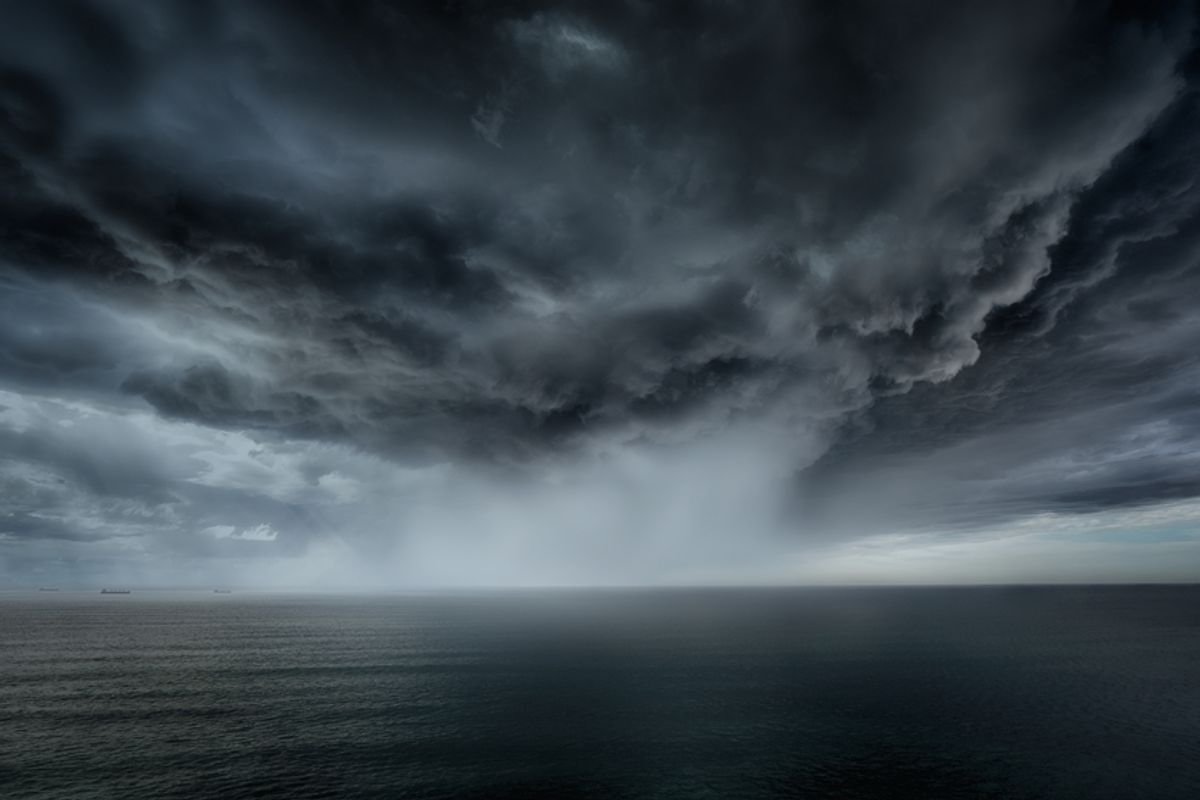
The Carnian Pluvial Event Was Way More Than Just 2 Million Years of Rainfall

Key Takeaways from the Carnian Pluvial Event
- The Carnian Pluvial Event is often thought of as a period of rain that lasted for 2 million years, but it is a little more complicated than that.
- It’s a moment in time on our planet when there was excess rain, which helped shape biodiversity and give rise to dinosaurs.
- A series of volcanic eruptions during the Carnian Pluvial Event may have also caused global changes.
The Carnian Pluvial Event is often referred to as “That time when it rained for two million years,” but the truth is more complex and less certain than the stories about that time suggest. But whatever the climate, the Carnian was a pivotal time in Earth’s history.
The Carnian Stage began during the Triassic Period, which lasted from about 252 million to 201 million years ago, according to the National Park Service. At that time, all of Earth’s major landmasses were combined into one supercontinent called Pangea, a huge landmass that extended nearly from pole to pole. The climate was different, too.
“Seasonality would be more extreme than what we’re used to, because it wouldn’t be buffered by continents being surrounded by water,” Paul Olsen told Discover, though he added that the extent of those extremes is debatable.
Actually, a lot is debatable about the Carnian, according to Olsen, a paleontologist who studies ecosystem evolution and climate change over geological time. “The Carnian is a real problem,” he said. “We don’t know it well.”
What Was The Carnian Pluvial Event?
The oft-told, somewhat simplified story is that during the Carnian, Pangea’s climate changed abruptly (or at least abruptly in geologic time). It began to rain all across the planet, and that rain lasted one to two million years, creating diversification and making room for the dinosaurs to take over.
It’s a cool story, and in broad strokes mostly accurate. But it’s not clear that it rained everywhere at the same time.
“It’s supposed to be a global wet period,” said Olsen. “When you make a statement like that, you’ve got to know those wet periods that you’re looking at are all the same age. If you’re off by even two million years in one place, it’s not happening at the same time.”
And those dates could be off by two million years or even more. There’s just not enough data on that period to know for sure. While research is growing, there’s still more to study during this time in Earth’s history.
Read More: Massive Volcanic Eruptions Might Have Opened the Door for the Rise of Dinosaurs
What Happened During the Carnian Pluvial Event?
But what’s even stranger is that we don’t know where everything was in the Carnian. Pangea drifted around.
“It’s very unclear precisely where the continents were during that time,” Olsen told Discover.
If you start in the Carnian in South America, by the late Triassic, that place has drifted from the continent’s humid temperate regions into its arid belt. It’s drier, yes. But that’s not because the climate has changed, but because the land has moved. It’s like leaving home on a sunny day and arriving at your destination in pouring rain. The weather hasn’t changed in either place. It’s still sunny at your house. You’ve just traveled to a rainy area.
Still, there’s no doubt that a lot was changing during this period. The earliest dinosaurs appeared during the Carnian, though most of them are known from what’s now South America. At the end of the Triassic, an enormous series of volcanic eruptions, the Central Atlantic Magmatic Province, or CAMP, covered over 5.5 million square miles (about 15 million square kilometers) according to Olsen’s calculations, in what was near planetary-scale volcanism.
These eruptions led to a mass extinction, according to a study in PNAS.
What Did The Carnian Pluvial Event Lead To?
The extinction was almost certainly caused not by lava but by the climatic effects of the eruptions, Olsen said.
CO2 levels doubled or even tripled. During each eruption, there were also volcanic winters, when volcanic ash and aerosols in the atmosphere rapidly cooled the Earth’s surface. The effect of these winters was even more profound than the warming.
“A doubling of CO2 would raise global temperatures by three to five degrees, while one of these giant volcanic winters could drop the temperature 10 or 15 degrees, completely overwhelming the effects of global warming for a short period of time,” Olsen said. “In total, these CAMP eruptions lasted about a million years, but most of the damage was done in the beginning. Everything that was sensitive to those volcanic winters and the associated really warm times was already extinct from the first.”
Again, because of the lack of data, it’s difficult to know exactly how much or what was lost, but by the end of the Triassic, Earth had experienced a mass extinction event. Most dinosaurs survived, though. And during the next two periods, the Jurassic and the Cretaceous, they established themselves and gave the era its common moniker: The Age of the Dinosaurs, according to a Nature study.
Read More: The 5 Mass Extinctions That Have Swept Our Planet
Article Sources
Our writers at Discovermagazine.com use peer-reviewed studies and high-quality sources for our articles, and our editors review for scientific accuracy and editorial standards. Review the sources used below for this article: