
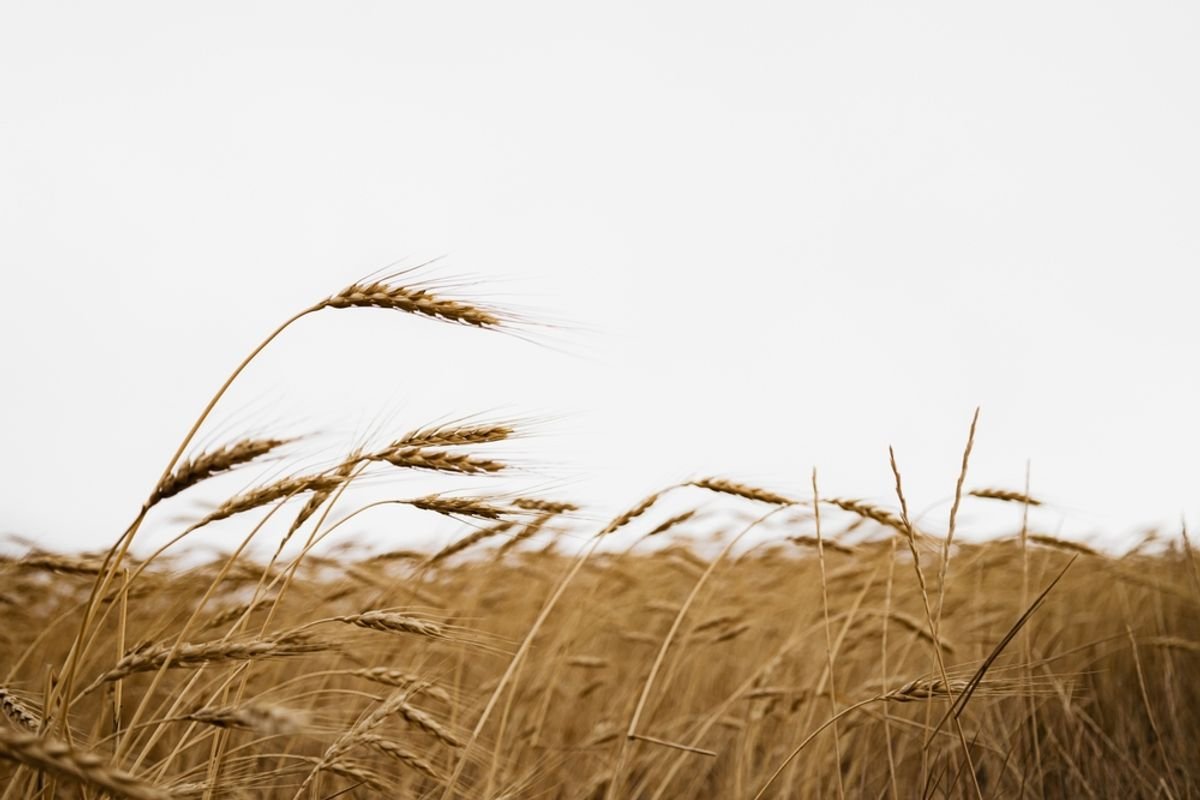
Neolithic Farmers Were Cultivating Bread Wheat in Georgia 8,000 Years Ago
From pita to San Francisco sourdough, bread wheat (or common wheat) comprises 95 percent of all wheat consumed, making it one of the most important cereal crops in the world today.
Now, researchers have identified the oldest known physical evidence of bread wheat (Triticum aestivum) at a Neolithic site in southern Georgia, showing the crop was being cultivated as early as the sixth millennium B.C.E. The paper has been published in the Proceedings of the National Academy of Sciences (PNAS).
“It is the first documented evidence of bread wheat,” David Lordkipanidze, General Director of the Georgian National Museum, told Discover. “Our ancestors were hunter-gatherers, and they were becoming farmers, which is a big shift in human history. Here we can see the evidence.”
Read More: What Was the Neolithic Revolution, and How Did It Change Human Societies?
A Center Of Bread Wheat Domestication

Wheat spike impression in a Neolithic mudbrick
(Image Credit: David Lordkipanidze)
Previous studies have analyzed bread wheat’s genes and concluded it may have emerged sometime around 8,000 years ago as a result of a hybridization between free-threshing wheat (Triticum aestivum-durum) and wild goatgrass (Aegilops tauschii).
It was thought that the hybridization occurred somewhere in the South Caucasus and the Southwest Caspian area — in what is today Georgia, Azerbaijan, and Armenia — as this is where wild goatgrass originated. Now, new research offers direct archeological evidence supporting these conclusions, showing that bread wheat was being cultivated in this region at this time.
The discovery of fossilized grains at two Neolithic sites in modern-day Georgia, Gadachrili Gora and Shulaveris Gora, makes the region “one of the centers of bread wheat domestication,” co-author Nana Rusishvili of the Georgian National Museum said in a statement.
For the study, grains and plant remains were excavated from the site and examined. By analyzing their form and comparing the fossilized grain to modern grain, the researchers were able to identify T. aestivum as well as other food types, including hulled barley, lentils, and bitter vetch.
One problem the team encountered during the study was distinguishing bread wheat from the very similar-looking durum wheat. To overcome the hurdle, the team looked at rachis segments — the stem at the head of the wheat plant — which can be used to separate the two species.
Radiocarbon dating methods were then used to determine the age of the remains. The results suggest that bread wheat grains were cultivated at the beginning of the sixth millennium (5922 to 5832 B.C.E. and 5808 to 5747 B.C.E.), making them the earliest known physical examples of the grain.
“The Caucasus have long been seen as a ‘peripheral’ region — a source of raw materials, and a passive recipient of the more ‘advanced’ cultures of the greater Near East,” Stephen Batiuk from the University of Toronto said in a statement.
“Our research challenges this narrative, highlighting that the Caucasus is an important region where key innovations to the development of the Near Eastern World, and by extension our current ways of life, were first created.”
A Culture Of Bread And Wine

Neolithic sickle
(Image Credit: David Lordkipanidze)
The Neolithic farmers tending to the sites belonged to the Shulaveri-Shomutepe culture. Archaeologists have uncovered circular mudbrick structures thought to be houses as well as stone tools and pottery, some of which appear to be decorated with images of grapes, people, and serpents.
The researchers describe this period as one of experimentation. Agriculture was being adopted, but practices such as crop rotation, fertilization, and proper drainage were not yet understood. Villagers would often move and set up shop somewhere else once the land became less productive, returning to older sites after a period and once the soils had replenished.
As previous research has shown, bread wheat is not the only modern essential that appears to have been consumed at the site. An earlier study published in PNAS described evidence of wine-making that, again, dates back to the turn of the sixth millennium B.C.E.
“This is the first place where you have this pairing of both bread wheat and wine,” Lordkipanidze explained.
Read More: Archeological Farming Finds Shows Connection Between Oldest Known Civilizations and Newer Mediterranean Ones
Article Sources
Our writers at Discovermagazine.com use peer-reviewed studies and high-quality sources for our articles, and our editors review for scientific accuracy and editorial standards. Review the sources used below for this article: