
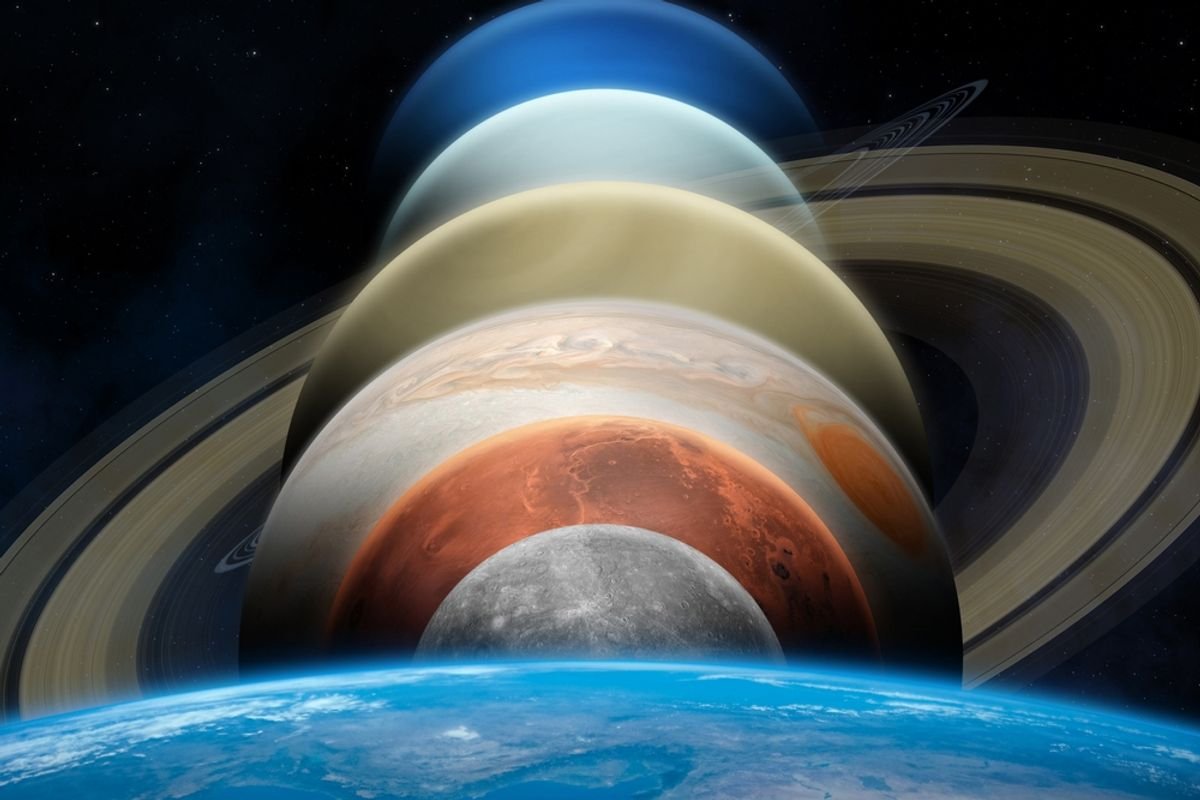
How To See Mercury, Mars, Saturn, and Neptune’s Planetary Parade This April 2026

From April 16-23, 2026, Mercury, Mars, Saturn, and Neptune will align in the sky. This planetary parade will be visible before dawn, peaking in the early hours of April 18-20, 2026.
What is a planetary parade, and why should it be important to amateur astronomers everywhere?
The April 2026 Planetary Parade
On mornings of April 16 to April 23, roughly 30 minutes before sunrise (if you are in the Northern hemisphere) or between 60 and 90 minutes before sunrise (if you are in the Southern hemisphere), look to the low eastern sky. Mercury, Mars, Saturn, and Neptune will appear along the same path the Sun takes across the sky, reported StarWalk.
According to Star Walk, it should be possible to see Mercury, Mars, and Saturn with the naked eye, while Neptune will require a telescope. Neptune will be the highest of the planets above the horizon, which will help with visibility.
The other three planets should be close together in a triangle on the mornings from April 16 to April 19. On April 20, Mercury, Mars, and Saturn will form a diagonal line, then revert to their previous pyramid shape during April 21 to April 23.
If conditions are cloudy on one of these nights, it is still worth heading out again on subsequent days if the sky clears.
Read More: The Lyrid Meteor Shower Is About to Peak — How to Catch the First Notable Spring Shower of 2026
What Is a Planetary Parade?
On any given night, at least one of the planets in our solar system is usually visible from Earth. Sometimes, two or three planets make an appearance. It’s only on special occasions that four or more planets are visible. These events are called planetary parades or alignments, according to NASA. Larger alignments occur only every few years.
Planetary parades always occur along a line across the night sky. This line is the ecliptic, the plane in which planets orbit the Sun. Imagine the Earth is positioned inside a vast circular racetrack with multiple lanes. The planets we see lining up are in different lanes of the track, which are often very, very far apart – but from our perspective during planetary parades, they appear close together in space.
These events are special because they give us the chance to see multiple planets at once with the naked eye. Going to a location with minimal light pollution and a clear view of the horizon should maximize your chances of seeing multiple planets.
The April 2026 planetary parade follows February’s parade, according to the BBC, in which six planets – the four you can see next week, plus Uranus and Venus. A seven-planet parade, including Jupiter, appeared in February 2025. This likely won’t repeat until 2040.
Read more: Seven Planets Will Soon Align, Creating a Planet Parade in the Sky
Article Sources
Our writers at Discovermagazine.com use peer-reviewed studies and high-quality sources for our articles, and our editors review for scientific accuracy and editorial standards. Review the sources used below for this article: