How Does a CRM Impact Business Revenues? 10 Proven Ways CRM Increases Sales and Growth
 By Seema Parmar
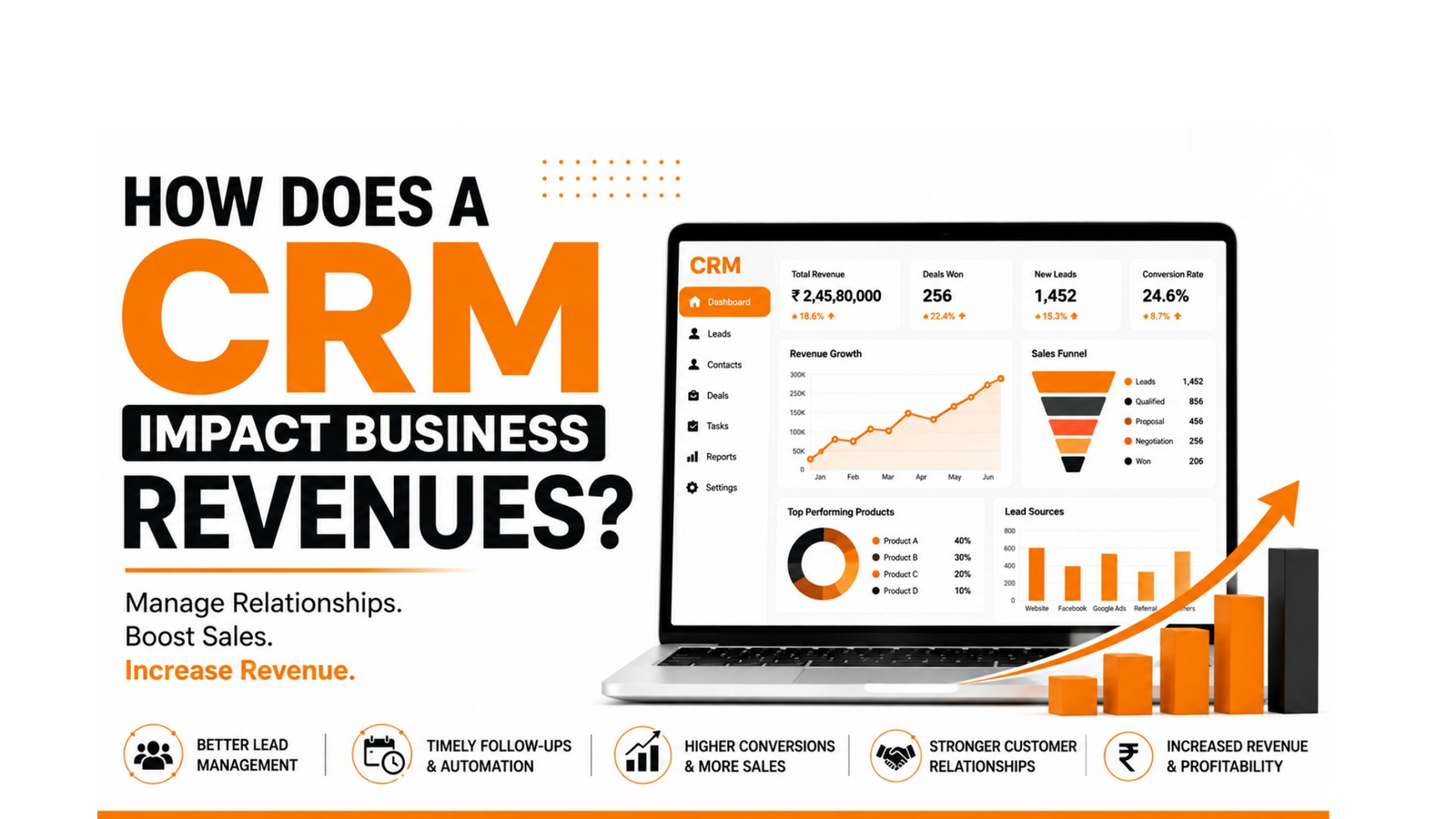
How Does a CRM Impact Business Revenues? 10 Proven Ways CRM Increases Sales and Growth
In today's competitive business environment, generating leads is no longer the biggest challenge. The real challenge is managing those leads effectively, nurturing customer relationships, and converting opportunities into revenue. This is where a Customer Relationship Management (CRM) system becomes a powerful business growth tool.
Many businesses invest significant amounts in marketing, advertising, and lead generation but still struggle to achieve consistent revenue growth. The primary reason is often poor lead management, delayed follow-ups, scattered customer data, and a lack of visibility into the sales process.
A CRM solves these challenges by helping businesses organize customer information, streamline sales activities, automate follow-ups, and improve customer engagement. Let's explore how a CRM directly impacts business revenues and why it has become an essential tool for modern businesses.
What is a CRM?
CRM stands for Customer Relationship Management. It is a software solution designed to help businesses manage customer interactions, sales pipelines, leads, follow-ups, and customer data from a single platform.
Instead of managing customer information through spreadsheets, notebooks, emails, or multiple applications, a CRM centralizes everything, making it easier for teams to collaborate and manage the entire customer journey.
How CRM Directly Impacts Business Revenue
1. Prevents Lead Leakage
Every missed lead represents lost revenue. Businesses often spend thousands on marketing campaigns but fail to follow up with every enquiry.
A CRM captures, organizes, and tracks all incoming leads, ensuring that no potential customer is forgotten.
Benefits:
- Centralized lead management
- Automated lead assignment
- Better tracking of enquiries
- Reduced chances of missed opportunities
Revenue Impact:
More leads receive timely attention, resulting in higher conversion rates and increased sales.
2. Improves Follow-Up Efficiency
Following up at the right time can make the difference between winning and losing a customer.
A CRM helps sales teams:
- Schedule follow-up reminders
- Track communication history
- Automate notifications
- Monitor customer responses
Revenue Impact:
Timely follow-ups significantly improve the chances of converting prospects into paying customers.
3. Increases Sales Team Productivity
Sales teams often spend a large portion of their time on administrative tasks rather than selling.
A CRM automates repetitive activities such as:
- Data entry
- Task management
- Follow-up scheduling
- Sales reporting
Revenue Impact:
Sales professionals spend more time engaging with prospects and closing deals, leading to higher revenue generation.
4. Enhances Customer Retention
Acquiring a new customer can cost significantly more than retaining an existing one.
CRM systems help businesses maintain strong customer relationships through:
- Personalized communication
- Renewal reminders
- Customer support tracking
- Regular engagement activities
Revenue Impact:
Higher customer retention leads to increased repeat business and improved customer lifetime value.
5. Provides Better Sales Visibility
Without clear visibility into the sales pipeline, businesses often struggle to identify bottlenecks and opportunities.
A CRM offers:
- Real-time sales dashboards
- Pipeline tracking
- Team performance monitoring
- Revenue forecasting
Revenue Impact:
Business owners can make faster and more informed decisions that improve sales performance.
6. Improves Lead Prioritization
Not every lead is ready to buy immediately. Some prospects require nurturing before they make a purchase decision.
CRM systems help categorize leads into:
- Hot Leads
- Warm Leads
- Cold Leads
- Existing Customers
Revenue Impact:
Sales teams focus on high-priority opportunities, increasing efficiency and conversion rates.
7. Strengthens Customer Experience
Modern customers expect businesses to understand their needs and provide personalized experiences.
A CRM stores complete customer interaction history, including:
- Previous conversations
- Purchase records
- Service requests
- Customer preferences
Revenue Impact:
Improved customer experiences lead to higher satisfaction, repeat purchases, and referrals.
8. Automates Business Processes
Automation is one of the most valuable features of a CRM system.
Tasks that can be automated include:
- Lead assignments
- Follow-up reminders
- Email notifications
- Sales activity tracking
- Customer communication
Revenue Impact:
Automation reduces manual work, minimizes errors, and allows businesses to scale efficiently.
9. Improves Marketing ROI
Businesses often struggle to identify which marketing channels generate the best results.
A CRM helps track:
- Lead sources
- Campaign performance
- Conversion rates
- Cost per lead
- Revenue generated by each campaign
Revenue Impact:
Marketing budgets can be allocated more effectively, resulting in higher returns on investment.
10. Supports Data-Driven Decision Making
Successful businesses rely on accurate data rather than assumptions.
CRM reports provide insights into:
- Sales trends
- Customer behavior
- Team performance
- Product demand
- Revenue opportunities
Revenue Impact:
Better business decisions lead to sustainable growth and increased profitability.
Real-Life Revenue Example
Imagine a company generates 1,000 leads every month.
Without CRM:
- Conversion Rate: 5%
- Customers Acquired: 50
With CRM:
- Conversion Rate: 8%
- Customers Acquired: 80
This simple improvement results in 30 additional customers every month without increasing marketing expenses.
Over time, this difference can translate into lakhs or even crores of additional revenue.
Signs Your Business Needs a CRM
You should consider implementing a CRM if:
- Leads are managed through spreadsheets.
- Follow-ups are frequently missed.
- Customer data is scattered across multiple systems.
- Sales performance is difficult to track.
- Team collaboration is inefficient.
- Revenue growth has become inconsistent.
- Customer enquiries are increasing rapidly.
Why Growing Businesses Invest in CRM
Businesses that achieve sustainable growth understand the importance of systems and processes.
A CRM helps organizations:
- Increase sales conversions
- Improve customer relationships
- Reduce lead leakage
- Automate repetitive tasks
- Improve team productivity
- Generate predictable revenue growth
Whether you are a startup, service provider, trader, manufacturer, exporter, or enterprise business, a CRM can help create a more organized and profitable sales process.
Conclusion
A CRM is much more than a customer database. It is a revenue-generating system that helps businesses manage leads, improve follow-ups, strengthen customer relationships, and optimize sales performance.
Companies that use CRM effectively often experience higher conversion rates, improved customer retention, increased team productivity, and better decision-making capabilities.
If your goal is to grow revenue, improve operational efficiency, and create a scalable sales process, implementing a CRM can be one of the most impactful investments for your business.
The businesses that grow fastest are not always the ones generating the most leads—they are the ones managing their leads and customers most effectively. A CRM provides the structure, visibility, and automation needed to turn opportunities into revenue and drive long-term business success.
Written by Seema Parmar
Seema Parmar is the Founder of PickNGrow and a Business Growth Strategist with expertise in digital marketing, lead generation, branding, AI automation, and revenue growth. She helps businesses attract more customers, increase sales, and scale with proven growth strategies.