
Ancient Chinese Royal Tomb Held Spiritual Feather Decoration Made With Glue From Extinct Buffalo

More than 2,000 years ago, someone carefully bound together feathers from brightly colored birds for a royal burial in ancient China. The delicate ornament was meant to survive only long enough to accompany the dead into the afterlife.
Instead, enough of it survived underground for modern scientists to identify the birds it came from, including hoopoes and crossbills — and even trace the glue holding the decoration together to an extinct water buffalo.
The decoration was discovered inside Tomb No. 1 at the Wuwangdun archaeological site in eastern China, a royal mausoleum believed to belong to King Kaolie of the Chu state, who died in 238 B.C.E.
The findings, published in Science Bulletin, show how elite feather decorations were crafted during China’s Warring States period, when feathers carried symbolic and spiritual meaning. Ancient texts describe feathered banners used in ceremonies and beliefs tied to immortality and transcendence, but physical feather remains rarely survive because keratin breaks down easily over time.
Ancient Chinese Feather Decoration Reveals Symbolic Bird Species
Researchers identified feathers from five bird species. These included the hoopoe, silver-breasted broadbill, common crossbill, black-headed grosbeak, and yellow-bellied whistler. Some of those birds likely lived locally, while others may have arrived through long-distance trade networks.
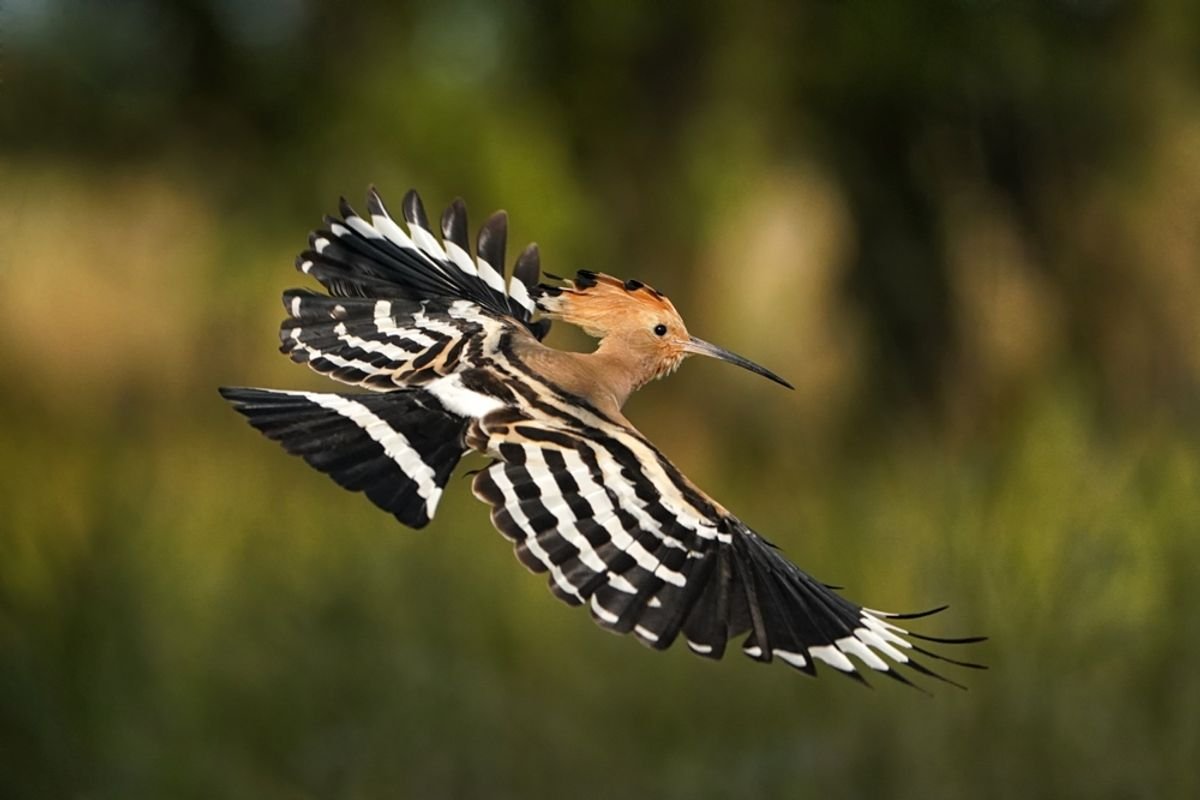
The decoration does not appear to have been assembled from random feathers. Some of the birds may have been chosen for their bright colors and textures, while others carried symbolic meaning. The hoopoe, for example, is known for its dramatic crest and was associated in ancient China with beauty and good fortune. In a royal tomb, those meanings likely mattered as much as the way the feathers looked.
The researchers note that hoopoes also carried symbolic importance beyond China. In ancient Persia and Egypt, the birds were sometimes linked to spirituality and the movement of souls between worlds.
Read More: China’s Ancient Tombs Reveal Links Between Political Stability and Prosperous Landscapes
The Glue Came From An Extinct Buffalo
Researchers also found evidence that the feathers had been bound together using animal glue. At first, the proteins appeared to match modern swamp buffalo. But domestic swamp buffalo are not thought to have arrived in China until centuries after the tomb was built.
To solve the mystery, the team compared the proteins against remains from an extinct species known as the short-horned water buffalo. The match fit far better.
Until now, the latest confirmed remains of the species dated to more than 700 years earlier. If the glue truly came from the short-horned water buffalo, it suggests the animal may have survived longer than previously realized — potentially into the late Warring States period itself.
The discovery could also help researchers answer larger questions about when domestic buffalo spread into China and what happened to native species that once lived there. The team identified specific protein markers capable of distinguishing different buffalo species, which may help future archaeologists study ancient animal remains in better detail.
Reading Ancient Feathers Through Proteins
Because feathers are mostly made of keratin, they don’t usually survive intact in archaeological sites. Even when fragments remain, identifying bird species based on appearance alone can be tricky after centuries underground.
To study the decoration, researchers used a technique known as paleoproteomics, which analyzes tiny surviving fragments of ancient proteins. After removing a microscopic sample from the ornament, the team used mass spectrometry to identify proteins from both bird feathers and the glue used to bind them together.
Ancient proteins do not preserve evenly over time, meaning some original materials may already be lost. Despite this, the surviving traces were enough to reconstruct part of the decoration more than 2,000 years after it was buried inside the Chu royal tomb.
Read More: Over 700 Ancient Chinese Poems Describe the Yangtze Finless Porpoises’ Decline
Article Sources
Our writers at Discovermagazine.com use peer-reviewed studies and high-quality sources for our articles, and our editors review for scientific accuracy and editorial standards. Review the sources used below for this article: