
A Roughly 400-Year-Old Jaw Reveals Scotland’s Earliest Known Evidence of a Gold Dental Bridge

More than 400 years before modern dentistry became a profession, a man in Scotland may have walked around with a gold dental bridge crafted by a jeweler.
Researchers examining human remains from a church in Aberdeen discovered what may be Scotland’s earliest known example of restorative dentistry: a thin gold ligature wrapped around two lower front teeth, likely used to hold a replacement tooth in place. The man lived sometime between 1460 and 1670, according to a study published in the British Dental Journal.
The find adds to evidence that people were attempting surprisingly advanced dental work centuries before modern dentistry. The treatment also shows how much emphasis was placed on appearance in Late Medieval and Early Modern Europe.
“Given the social importance of one’s appearance during the Late Medieval and Early Modern era, as an outward expression of their moral character, it is likely the reasons for undergoing this procedure extended beyond retaining masticatory abilities and oral function,” the researchers wrote in their paper.
Scotland’s Earliest Known Gold Dental Bridge
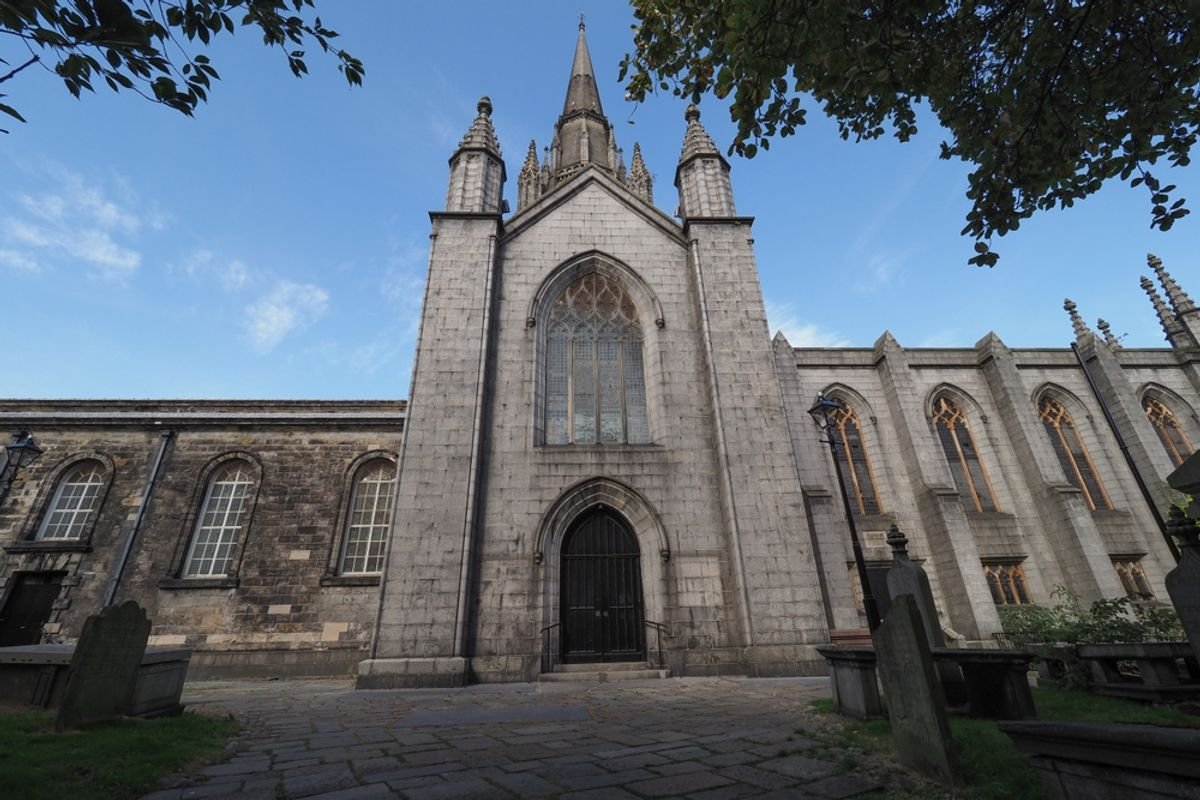
The discovery came from the remains of a middle-aged man buried inside the East Kirk of St. Nicholas, one of Scotland’s largest medieval churches. Archaeologists excavated the site in 2006, recovering the remains of roughly 900 people along with several tons of skeletal material.
Right away, one lower jawbone stood out.
A fine gold wire looped around the man’s right lateral incisor and left central incisor, spanning the gap left by a missing tooth. Researchers think the wire either stabilized a loose tooth or held a replacement tooth in place.
The bridge appears to have been worn for years. One tooth had a groove worn into it where the wire repeatedly rubbed against the root.
The man also had severe dental disease. Several teeth were decayed, including some in which more than half of the visible crown had been destroyed. Tartar had also built up across the teeth.
Read More: 14th Century Tooth Reveals Grim Fate of Edinburgh Teen Killed by the Black Death
Medieval Dentistry Was Often Handled by Barbers and Craftsmen
At the time this man lived, dentistry wasn’t yet a formal profession. People with tooth pain often turned to barbers, barber-surgeons, healers, or specialists known as dentatores. In some cases, traveling “tooth-drawers” performed public extractions while advertising supposedly painless techniques.
Medieval medical texts described the use of gold and silver wire to secure loose or replacement teeth, and these ideas spread through medical manuals across Europe.
Researchers believe a goldsmith likely crafted, and possibly even fitted, based on the materials and craftsmanship involved. Microscopic analysis showed the ligature was made from roughly 20-carat gold alloyed with silver and copper. Tiny tool marks showed the wire had been carefully shaped using metalworking techniques common at the time.
At least 22 goldsmiths operated in Aberdeen during this period, according to historical records.
The procedure was likely expensive and unavailable to most people. Among more than 100 Early Modern burials examined within the church, this was the only instance of dental work.
Ancient Dental Work Dates Back Thousands of Years
The Scottish find is part of a much longer history of early dental work.
People were drilling and filling teeth thousands of years before modern dentistry existed. Researchers referenced possible therapeutic dental work dating back roughly 14,000 years, including drilled teeth from Neolithic Pakistan and a 6,500-year-old tooth filling made with beeswax discovered in Slovenia.
Ancient Egyptians also used gold and silver wires in dental bridges, though some archaeologists think those bridges were added after death as part of the burial rather than actual treatment.
The Aberdeen ligature stands out because it was worn in life — a reminder that even centuries ago, people were willing to endure complex dental work to preserve their smiles.
Read More: 100,000-Year-Old Neanderthal Teeth May Reveal How Early Humans Moved Across Europe
Article Sources
Our writers at Discovermagazine.com use peer-reviewed studies and high-quality sources for our articles, and our editors review for scientific accuracy and editorial standards. Review the sources used below for this article: