
A Forgotten 1949 Recording Turns Out To Be The Oldest-Known Recording of a Whale Song
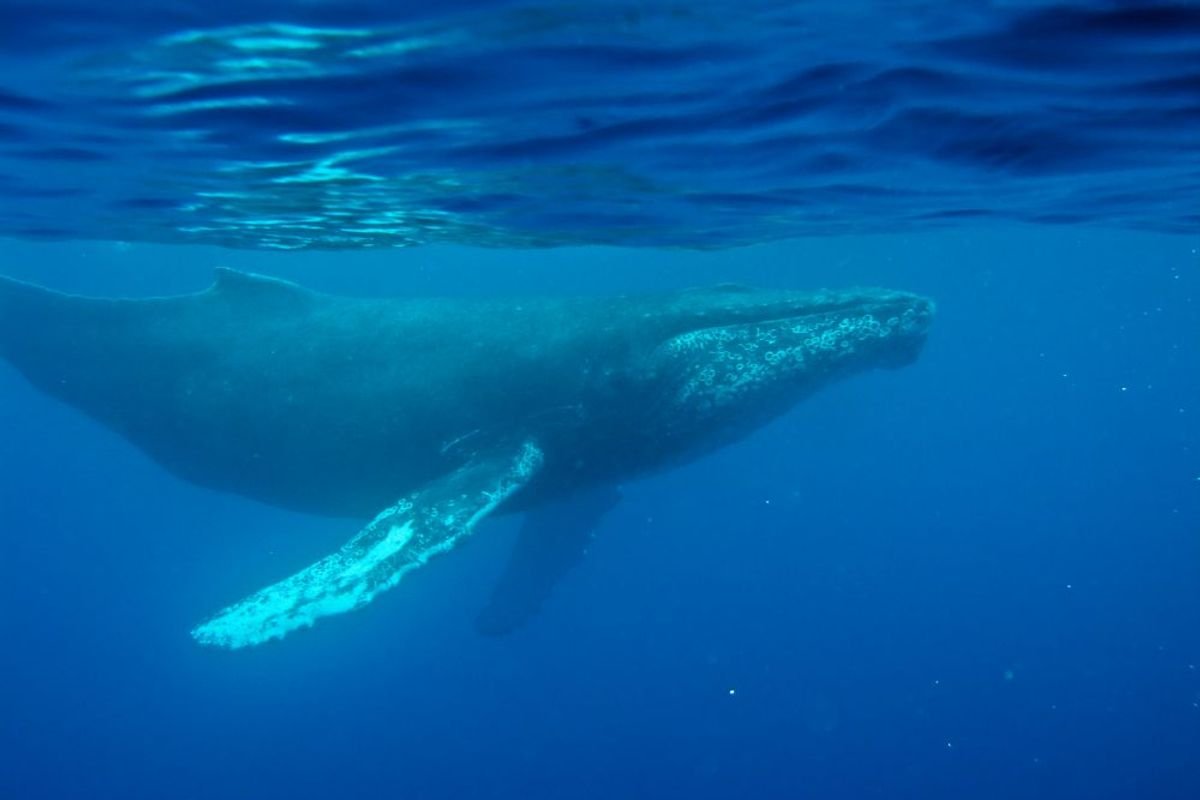
In early 2026, researchers made a remarkable discovery in the archives of the Woods Hole Oceanographic Institution (WHOI): the oldest known recording of a humpback whale song. Recorded on an audograph disc, the recording was made back over 70 years ago on March 7, 1949, near Bermuda.
“This is the earliest known whale song recording that we have,” Ashley Jester, director of Research Data and Library Services at WHOI, who first came across the recording tucked away in the archives, told Discover. “The other recordings from that era are from a little bit later in time.”
This newly discovered autograph recording predates the songs recorded by Navy engineer Frank Watlington in 1964, which allowed biologist Roger Payne to discover the complexity of whale song. These later recordings were released as the popular album Songs of the Humpback Whale in 1970.
Creating Some of the First Whale Song Recordings
Back in 1949, researchers aboard the R/V Atlantis were testing out sonar systems in partnership with the U.S. Office of Naval Research. Technology for recording underwater sounds was still in its infancy at the time, and it was by chance that they picked up the hauntingly beautiful song of the humpback whale. Dutifully, the research team kept and logged the recording.
For Lester, this significant discovery is ultimately a story of scientific curiosity.
“The purpose of the research cruise itself was to do basic scientific research about sonar, because we were really at the early stages of understanding how sound propagated through water,” Jester said.
But, nonetheless, the researchers on board kept the recording running, capturing that whale’s song for the scientific record.
“This represents real scientific curiosity. Folks in the moment making a decision to record data that they didn’t know exactly what it was or what its significance would be,” she added.
Read More: Humpback Whales Are Increasingly Giving Up on Singing
Recording Technology of the Time

The 1949 humpback whale sounds were captured on a Gray Audograph, an office dictation device that etched audio onto thin plastic discs, and were likely recorded using the WHOI “suitcase,” an early experimental underwater acoustic recording system.
(Image Courtesy of Rachel Mann, ©Woods Hole Oceanographic Institution)
Today, researchers use a host of tools such as acoustic buoys and autonomous hydrophones to record the sounds of the ocean. To capture this whale’s song back in 1949, however, the researchers used a waterproofed microphone and a gray audograph — a dictation device — that traced audio onto plastic discs.
They likely used a device known as a “suitcase,” developed by WHOI researchers, to record the audio.
Unlike other recordings from the same period that were recorded on tape and have since deteriorated, the audograph discs stood the test of time, thankfully so for the WHOI team. Experts are excited by the discovery not only for its historic nature but also for its research potential. Today’s oceans are vastly different from those back in the 1940s. A multitude of anthropogenic noise makes the subsurface waters’ soundscape vastly different from that of the 1940s.
A Soundtrack to the Past
The recording, and the others yet to be digitized, could help researchers understand how the oceans, and possibly even species, have changed in the past decades. It’s thought that noise from increased shipping, for example, could have caused a shift in how whales communicate to be heard amongst the underwater din.
“This recording can provide insight into how humpback whale sounds have changed over time, as well as serving as a baseline for measuring how human activity shapes the ocean soundscape,” Laela Sayigh, a marine bioacoustician and senior research specialist at WHOI, said in a press release.
Excitingly, there are over 200 autograph discs in WHOI’s collection that might hold other sounds of the oceans of the near past.
“So far we’ve just listened to three of the digitized files,” said Jester.
In time, the team hopes to listen to more, and it’s hoped that more discoveries of this kind may well be made in the near future as the other discs are analyzed.
For her, it also speaks volumes to the importance of recording and returning to the masses of data stashed away in archives.
“When people say, ‘What is the purpose of an archive and why do we maintain and preserve data?’ It’s exactly for moments like this,” Jester concluded. “Thanks to this, we’ve traveled back in time to hear this whale singing from more than 75 years ago.”
Read More: Have Blue Whales Stopped Singing? Paying Attention to Their Songs Could Benefit Humans, Too
Article Sources
Our writers at Discovermagazine.com use peer-reviewed studies and high-quality sources for our articles, and our editors review for scientific accuracy and editorial standards. Review the sources used below for this article: