
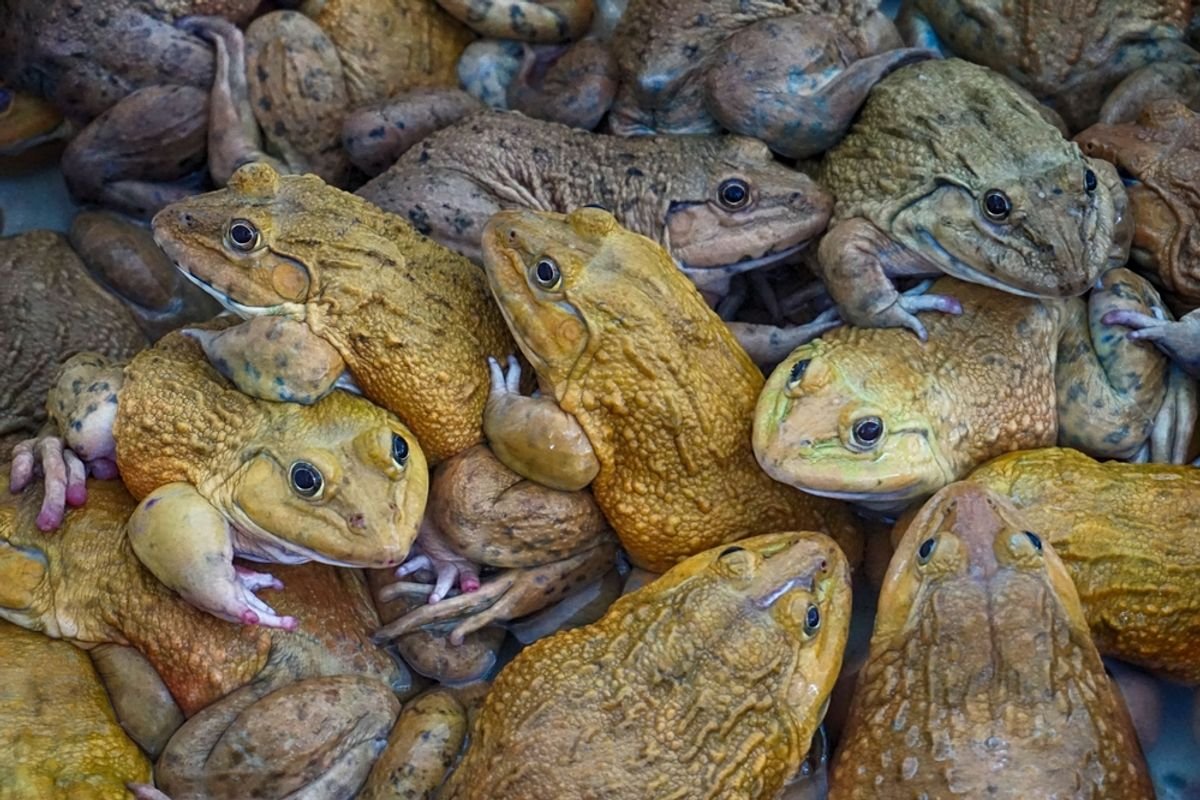
Woman Consumed Eight Frogs Alive to Cure Her Back Pain, and Science Says This May Have Ancient Roots

Unaddressed pain can drive us to the most obscure practices. A recent case of an 82-year-old woman proved that point: inspired by local folktales, she consumed eight live frogs, hoping to relieve her lower back pain.
The story, which ended in a hospital visit for the elderly woman, suffering from severe abdominal pain caused by swallowing the frogs, begs the question: was she completely mistaken, or is there some truth to traditional medicine practices that still influence people today?
Eating Live Frogs Led to Serious Parasitic Infection
As The Telegraph reported, the ailing woman, suffering from a herniated disc, asked her family to find frogs for her without telling them exactly what she had in mind. Driven by pain and desperate for relief, she ate three frogs alive immediately, followed by five more the next day, based on rumors about their painkilling properties.
Unfortunately, shortly after, she had to be hospitalized due to severe abdominal pain. At the hospital in Hangzhou, eastern China, she confided in doctors that she had tried to cure her pain by eating eight live frogs. Tests confirmed she had contracted a parasitic infection.
Luckily, treatment was successful, and the woman was released after two weeks.
Read More: Medical Practitioners Once Used Egyptian Mummy Remains to Treat Ailments
Ingesting Unconventional Animal Parts to Ease Ailments
An odd incident like this might sound rare, but it isn’t entirely unprecedented in China. Since traditional Chinese medicine describes the use of certain amphibians to address a wide range of ailments, some individuals may try alternative methods that have been spread through traditional beliefs.
According to a doctor interviewed by The Telegraph, treating patients, mostly elderly, who’ve tried similar approaches, isn’t uncommon. For example, one woman reportedly ate five live frogs to ease her rheumatism, while a man consumed the same number to boost energy after breaking bones. Both developed serious parasitic infections, including tapeworms.
And it doesn’t end with frogs. Other reports mention the consumption of raw snake or fish gall, live tadpoles, and certain salamanders. One might wonder if this is all just a hoax or if there’s any truth to it.
Amphibian Toxins Inspire Medical Research
The use of frogs and other amphibians for medicinal purposes dates back to ancient times. Any culture with frogs in its environment tends to develop unique traditions involving them. What might sound like magical thinking actually points to a treasure trove of natural compounds with credible pharmaceutical potential.
Amphibians produce a wide array of toxins and other chemicals that humans have harvested for centuries. Modern research has uncovered molecular mechanisms confirming the potential of amphibian compounds for treating pain, inflammatory diseases, and even cancer.
For instance, poison dart frogs produce toxins being explored as potential painkillers and treatments for cancer and Alzheimer’s. Until the 1960s, practitioners even used African clawed frogs to confirm pregnancies.
While amphibians play an important role in medical research and practice, misinformation and the potential risks from toxins warrant caution. Overall, the use of frogs in Chinese medicine has some scientific basis, but not all claims have been scientifically validated. Traditional ingredients used in scientific research are carefully extracted, purified, and tested, and not swallowed whole.
This article is not offering medical advice and should be used for informational purposes only.
Read More: New Species of Frog Named After the Hobbit Author, J.R.R. Tolkien
Article Sources
Our writers at Discovermagazine.com use peer-reviewed studies and high-quality sources for our articles, and our editors review for scientific accuracy and editorial standards. Review the sources used below for this article: