
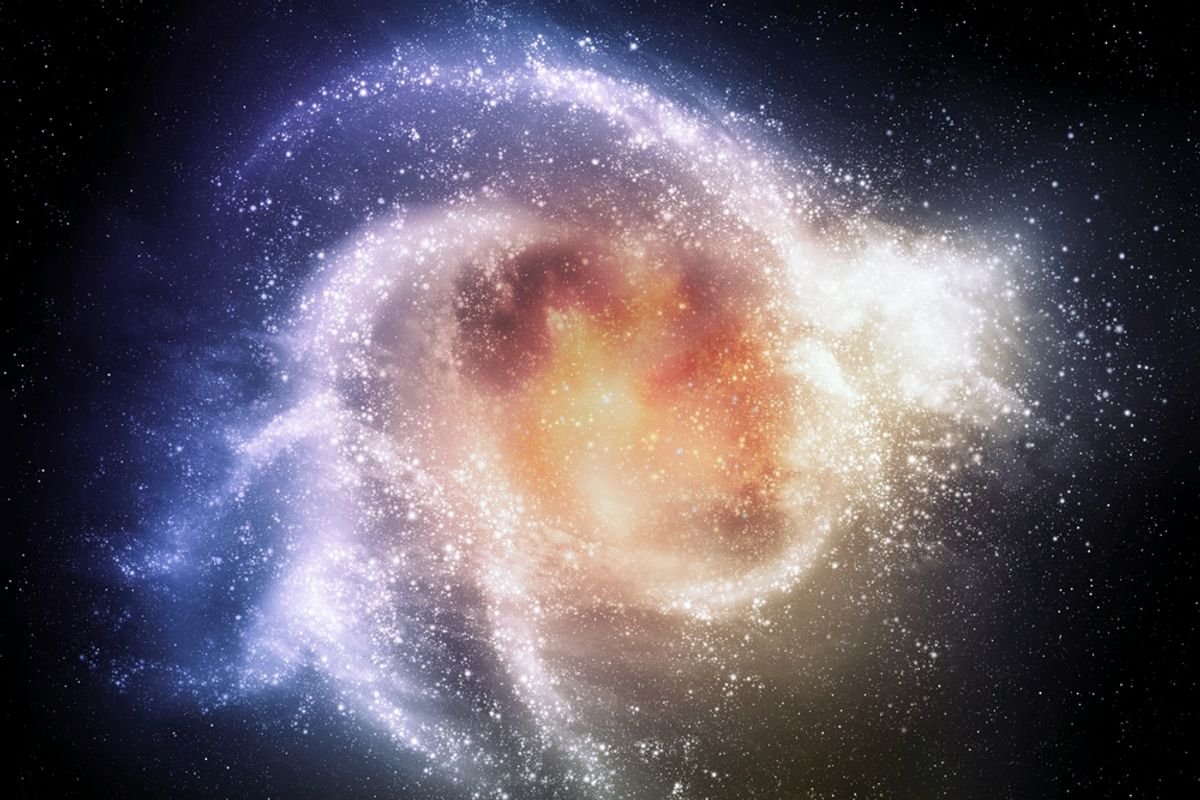
What Is the Biggest Object in the Universe? Most Likely Galaxy Clusters

Key Takeaways on the Biggest Object in the Universe
- The biggest objects in the universe are clusters of galaxies, such as the supercluster we live in right now — and including Abell 370, which was captured in a sprawling glittery space-scape by the Hubble Space Telescope in 2017.
- The largest galaxies can span over a million light-years in diameter, according to NASA. Even bigger than galaxy clusters are superclusters like Laniakea — though these superclusters tend to have weaker gravitational attachments.
Clusters of galaxies, like the one we live in, have the potential to become the biggest objects in the universe.
In our vast cosmic neighborhood, we on Earth occupy a tiny speck in the outlying spiral arms of the Milky Way galaxy. But our Milky Way is merely one of thousands of other galaxies making up a colossal supercluster. This structure spans hundreds of millions of light-years, which scientists have dubbed “Laniakea,” or Hawaiian for “immense heaven.”
Huge events happen constantly in the universe: Scientists have seen supernovae, gamma ray bursts, and black holes colliding and sending ripples through space-time. But what about the biggest objects?
Save the universe itself, among the most gargantuan objects it houses are clusters of galaxies, such as the supercluster we live in right now, according to astrophysicist Alexei Filippenko, who is also a distinguished professor of astronomy at the University of California, Berkeley.
Read More: Watch Out: Objects in the Universe are Bigger than They Appear
What Is the Biggest Object in the Universe?
Scientists in 2010 determined the candidates for the biggest objects in the observable universe would be massive clusters of galaxies — including, at the time, Abell 370, which was captured in a sprawling glittery space-scape by the Hubble Space Telescope in 2017.
“There are clusters of galaxies, which are big groups of galaxies that have thousands or even tens of thousands of galaxies. They might span a few million up to maybe even 10 million light-years in diameter,” Filippenko says.
Though these clusters can contain hundreds to thousands of galaxies, they tend to make up only a small fraction of the matter within a cluster, according to the Harvard & Smithsonian Center for Astrophysics. Stringing together these galaxies is not only their mutual gravitational attraction, but also mostly dark matter.
Dark matter is a mysterious and invisible, attractive force that keeps these galaxies together, one that exerts enough force to even bend the path of passing light.
“We think there’s six times as much dark matter as there is visible matter, and the same thing is true of the galaxies themselves,” Filippenko says. “If it were only the visible stars that made up the [gravitational force], then these galaxies wouldn’t be bound together by gravity. But they are bound.”
How Big Can Galaxies Get?
While galaxies don’t actually comprise a majority of the space inside larger clusters, galaxies themselves also contain a variety of cosmic ingredients: from stars to planets, and gas clouds to space dust.
The largest galaxies can span over a million light-years in diameter, according to NASA. Even bigger than galaxy clusters are superclusters like Laniakea — though these superclusters tend to have weaker gravitational attachments.
Clusters Formed Over Time
After the universe’s fiery beginning almost 14 billion years ago, the distribution of matter following the Big Bang wasn’t uniform. Some regions were left denser than others, with some over-densities spread over a larger swath of space. These over-dense areas sowed the seeds for the formation of superclusters, billions of more years later, as they gradually collected the matter needed to grow.
“Over time, gravity — which can be thought of as that great sculptor of the universe — made the dense regions grow denser, by stealing material from the under-dense regions,” Filippenko says. “Small over-densities could collapse reasonably quickly.”
These clusters are spread throughout the universe, comprising the building blocks of larger cosmic structures and emitting light that astronomers can observe. But much more of the universe is, in fact, invisible, made up of exotic materials like attractive dark matter and then repulsive dark energy.
Why Is 95 Percent of the Universe Invisible?
One of the most significant findings to shape astronomy in recent years is the discovery that the universe’s expansion is not slowing over time, but rather accelerating, and at an increasing rate.
Filippenko was a member of the two separate teams of astronomers who made this Nobel Prize-winning discovery, using the luminosity of supernovae in the distance. When looking at supernovae, which should be emitting certain levels of brightness at their given distance, researchers found that they were dimmer than they should’ve been for where they were.
Based on these observations, scientists determined the supernovae had traveled farther than expected — meaning the fabric of space carrying them must have been growing. As for what force could possibly be responsible for this phenomenon, dark energy came into play.
“We’re held together by electromagnetic forces, and the Earth and Sun are held together by gravity. But at the biggest distances, over 10 million light-years or more, the universe is expanding,” Filippenko says. “And it’s expanding faster and faster because of this dark energy.”
Scientists currently believe that this mysterious dark energy makes up a substantial majority of the universe, causing space to expand outward at an increasing rate over time.
Beyond looking at supernovae, even observing the behavior of superclusters appears to support this theory, Filippenko added. The space between superclusters, and even within them, also appears to be expanding more than it should be. While some expansion might be possible, without dark energy, such expansion would not be that drastic.
“The superclusters are big enough, at 100 million light-years, and sufficiently loosely bound by gravity, that the expansion of the universe should carry them outward and expand them to some degree,” Filippenko says. “But dark energy suffuses these 100 million light-years, so that causes the superclusters to expand faster than they would have.”
Questions Remain About Dark Energy And Matter
Because dark matter and dark energy are completely invisible, scientists are still grappling with the problem of detecting them — and confirming their existence. A number of ideas exist for what they could be. Dark matter, for example, could be the remnants of elementary particles from the Big Bang, while dark energy could originate from some sort of fundamental, background energy in space.
“It could be that these concepts of dark energy and dark matter are completely wrong,” Filippenko says. “It’s conceivable, but they’re the best we have right now as a physical explanation for what we see.”
While trying to confirm the existence of such evasive materials proves to be an ongoing challenge, Filippenko says the pursuit to understand these distant phenomena is valuable in and of itself. Investigating the origins of the universe and what comprises the fabric of space on which we live could lead to other unanticipated discoveries — and in the meantime, he added, it’s one of the most human things to do.
Read More: How Big Is the Observable Universe?
Article Sources
Our writers at Discovermagazine.com use peer-reviewed studies and high-quality sources for our articles, and our editors review for scientific accuracy and editorial standards. Review the sources used below for this article: