
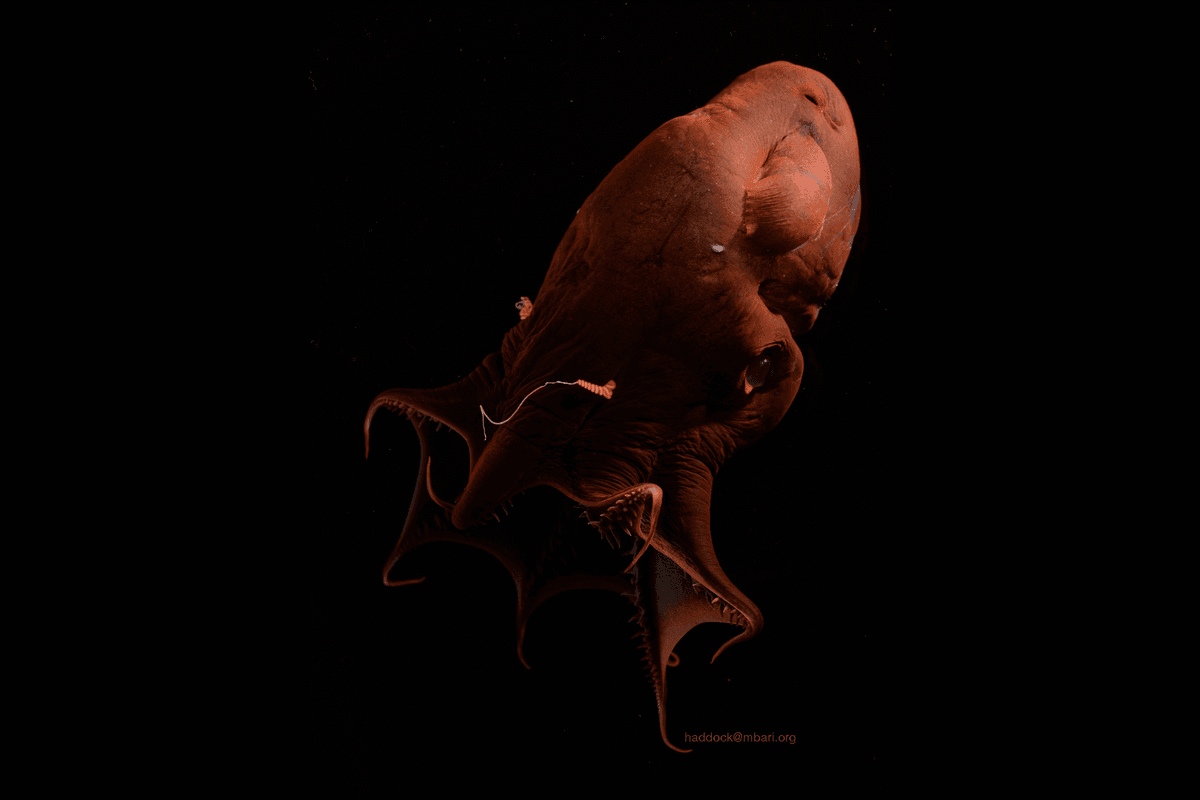
The Vampire Squid Genome Has Helped Explain the Early Evolution of the Cephalopods — Here’s How

According to a new study in iScience, researchers have now sequenced the largest cephalopod genome in history. Generating the genome of the vampire squid (Vampyroteuthis sp.) and comparing it to the genomes of other cephalopods, the team revealed that the species — which has a combination of octopus, squid, and cuttlefish traits — has ancient architecture in its genome, and specifically its chromosomes, indicating that the common ancestor of the modern cephalopods was surprisingly squid-like.
“The vampire squid sits right at the interface between octopuses and squids,” said Oleg Simakov, a study author and biologist at the University of Vienna, according to a press release. “Its genome reveals deep evolutionary secrets on how two strikingly different lineages could emerge from a shared ancestor.”
Read More: Are Octopus Smart? A Look Inside the Brain of an Octopus
The Origins of the Cephalopods
Around 300 million years ago, the ancient ancestors of the modern cephalopods separated into two lineages, including the modern Octopodiformes (octopuses) and the modern Decapodiformes (squids and cuttlefish). But the exact nature of these ancient ancestors, and whether they were more like octopuses or more like squids and cuttlefish, have long stumped scientists.
To help solve the mystery, the authors of the new study turned to the genome of the vampire squid, which is actually classified as an octopus, to explain the evolution of the early cephalopods. Looking closely at the structure of the vampire squid’s chromosomes, the researchers found that the species, which has a mix of characteristics from the octopuses and from the squids and cuttlefish, represents a link between the two lineages, holding on to some of their common ancestors’ chromosomal traits.
“Although it is classified as an octopus, the vampire squid retains a genetic heritage that predates both lineages,” said Emese Tóth, another study author and biologist at the University of Vienna, in the press release. “It gives us a direct look into the earliest stages of cephalopod evolution.”
Read More: The Curious Traits of an Octopus: How Do They Experience the World?
The Ancient Architecture of the Vampire Squid
At around four times the size of the human genome, the vampire squid genome contains an abundance of genetic material. Sifting through that material over the course of their analysis, the team was surprised to see that certain sections of the species’ chromosomal structure were strongly conserved, or saved over time, making the species a “genomic living fossil,” or a modern species that maintains its ancestors’ genetics.
Comparing the vampire squid’s genome to those of other cephalopod species, the researchers then concluded that the species has an ancient, squid-like architecture in its chromosomes. While the majority of modern octopuses lack this structure, thanks to the significant chromosomal reorganizations that have occurred over the course of their evolution, the vampire squid retained this structure over time, offering important insights into the emergence of the cephalopods.
In fact, the researchers added that the study provides strong support for the theory that today’s octopuses, squids, and cuttlefish evolved from a creature that was less like an octopus and more like a squid or a cuttlefish, around 300 million years ago. They also said that their research stresses that the reorganization and restructuring of chromosomes could have contributed to the incredible variety that’s seen in modern cephalopods, which come in all shapes and sizes, from the largest octopus to the smallest cuttlefish, today.
Read More: Do Octopuses Dream? Their Colorful, Skin-Changing Sleep Cycles May Hold the Answer
Article Sources
Our writers at Discovermagazine.com use peer-reviewed studies and high-quality sources for our articles, and our editors review for scientific accuracy and editorial standards. Review the sources used below for this article: