
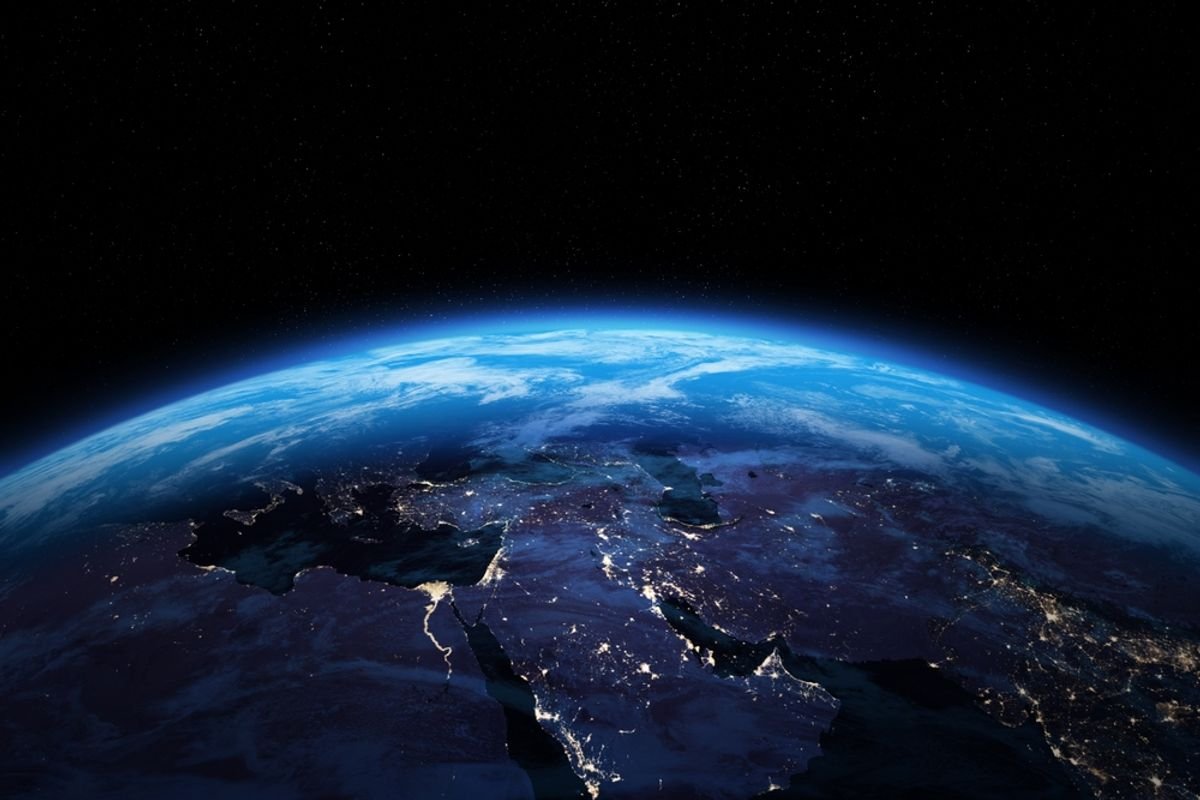
The Earth Is Getting Darker, Which Could Mean Hotter Summers in the Future

For more than two decades, Earth has slowly been growing darker. Using 24 years of data from NASA’s Clouds and Earth’s Radiant Energy System (CERES), researchers have learned that this encroaching darkness is because Earth is reflecting less sunlight, with the most dramatic dimming occurring in the Northern Hemisphere.
Published in the Proceedings of the National Academy of Sciences, this new study highlights an emerging imbalance in the planet’s “radiation budget.” The radiation budget is the delicate balance between the sunlight Earth absorbs and the energy it emits back into space.
Northern and Southern Hemispheres
On average, the Northern and Southern Hemispheres receive about the same amount of incoming solar energy, meaning they should also reflect the same amount. However, the Northern Hemisphere is now absorbing more sunlight and emitting more outgoing longwave radiation (OLR) than its southern counterpart.
According to the research team, this shift is one that atmospheric and ocean currents can no longer fully compensate for.
“The overall increase in longwave radiation cooling in both hemispheres is a result of contributions from temperature and cloud changes partially offset by contributions from changes in water vapor and trace gases,” said the authors in their article.
Read More: Major Blast in Tonga Create Tsunami and Heavy Ash Fall
Why Is Earth Getting Darker?
The key factor behind this global dimming lies in changes to Earth’s albedo. The albedo is a measure of how much sunlight a surface reflects. Light-colored regions like ice, snow, and clouds bounce much of the sun’s energy back into space, while darker surfaces such as forests, oceans, and asphalt absorb it. More reflection means cooler temperatures, and more absorption means warmer temperatures.
The Northern Hemisphere’s rapid darkening can be traced back to changes in its albedo, with declining snow cover and melting sea ice in this area dramatically reducing reflectivity.
In an even more unusual twist, cleaner air in the Northern Hemisphere has negatively affected its albedo. For decades, industrial pollution scattered sunlight and helped form bright, reflective clouds. These tiny airborne particles, known as aerosols, once acted as natural mirrors, bouncing energy back into space.
Thanks to stricter air-quality laws across Europe, North America, and China, the air is cleaner, but it also reflects less sunlight. With fewer aerosols in the atmosphere, the planet absorbs more heat.
In contrast, the Southern Hemisphere has experienced temporary bursts of reflectivity. Major natural events, like Australia’s bushfires and the Hunga Tonga volcanic eruption, have periodically filled the skies with aerosols and increased sunlight reflection.
How Does a Darker Earth Affect Our Future?
These new findings point to an unsettling possibility: Earth’s clouds, long believed to have the ability to automatically offset radiation changes, may not be able to save us from additional warming. Many current climate models work on the assumption that clouds will behave in this expected way and stabilize the planet’s energy balance. However, the new study suggests otherwise.
“Since the Northern Hemisphere darkening (relative to the Southern Hemisphere) due to noncloud property changes is not compensated by cloud changes, this suggests that there may be a limit to clouds’ role in maintaining hemispheric symmetry in albedo,” say the study’s authors.
If that is true, the Northern Hemisphere could continue warming faster than the global average and continue to see more intense and prolonged summers in the years ahead. To combat and prepare for this, researchers suggest climate models may need to be recalibrated to reflect these changes in the clouds’ diminishing role in helping to control Earth’s climate.
Read More: Retreating Ice Has Revealed a New Island in Alaska
Article Sources
Our writers at Discovermagazine.com use peer-reviewed studies and high-quality sources for our articles, and our editors review for scientific accuracy and editorial standards. Review the sources used below for this article: