
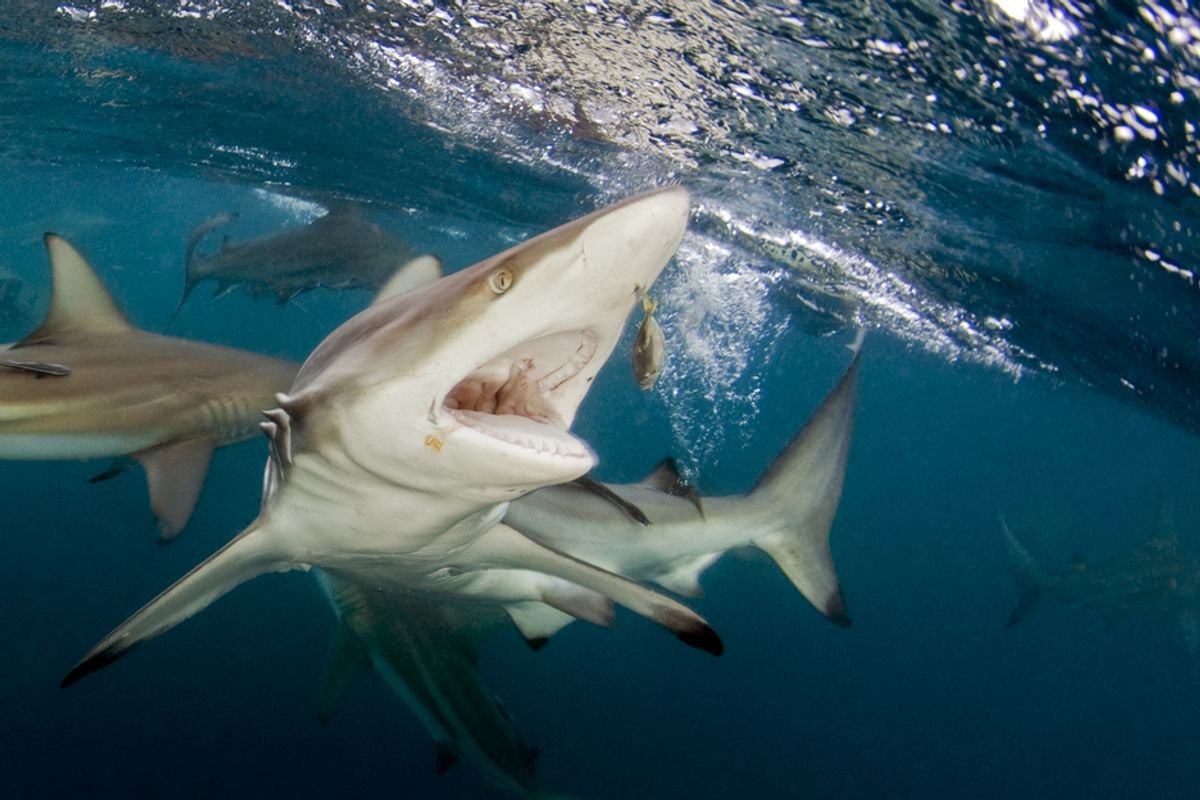
Shark Teeth May Start to Decay as Ocean Water Becomes Increasingly Acidic

A shark’s teeth give it the power to rule the seas, yet these ferocious chompers aren’t built to last in acidic water. As oceans grow more acidic due to climate change, sharks may be left with weakened teeth that lose their edge.
A new study published in Frontiers in Marine Science signals a potential hurdle in sharks’ survival that could become a reality if ocean acidification continues at its current rate. It has shown that when exposed to acidic water, shark teeth deteriorate and become brittle enough to break. Although sharks seem like unstoppable forces of nature, their fate centuries from now may hinge on how acidic the ocean becomes.
Ocean Acidification in the Future
Ocean acidification is one of the most pressing climate change issues, stemming from the surge of atmospheric C02 incited by human activities. Ever since the industrial revolution set the world on this course over 200 years ago, the ocean has become 30 percent more acidic.
And acidification is far from over. The average pH of water across the world’s oceans is around 8.1, but by 2300, the pH is expected to drop to 7.3. This would make the ocean almost 10 times as acidic as it is today.
More acidic water will likely dismantle marine ecosystems in several ways, leaving both predator and prey vulnerable to changes. For instance, sharks may start to exhibit reduced growth rates due to increased levels of C02 in the blood, and the hatching success of some species could be impaired.
Read More: DNA Differences in Great White Sharks Have Instigated an Unsolved Mystery
Shark Teeth’s Weakness to Acidity
Shark teeth have evolved over millions of years to tear through the flesh of all kinds of prey. Whenever their teeth are damaged, sharks can conveniently replace them with new ones. Some species even shed over 30,000 teeth in a lifetime.
Despite how formidable they are, shark teeth have a major weakness in acidic water. The new study aimed to determine what would happen to them when left in water with a similar pH to the expected level by 2300.
To test this, researchers used the teeth of Blacktip reef sharks, a species of requiem shark that inhabits tropical coral reefs. After analyzing approximately 600 teeth collected from an aquarium housing the sharks, they settled on 16 intact and undamaged teeth for their pH experiment. Another 36 were used to measure changes in tooth circumference before and after the experiment.
The teeth were placed in separate tanks for eight weeks, with one group incubated at 8.2 pH and the other incubated at a more acidic 7.3 pH.
The researchers found that after the incubation period, the teeth in the 7.3 pH were significantly more damaged than those in the 8.2 pH. According to a statement on the study, the teeth in the more acidic water had cracks and holes, increased root corrosion, and structural degradation.
Damaging Sharks’ Most Valuable Tool
While the results clearly showed the consequences of acidic water, this study was only conducted on teeth of non-living mineralized tissue. This process may unfold differently in living sharks with teeth regeneration, although the researchers say that replacing damaged teeth would probably have higher energy costs in acidic water.
Since Blacktip reef sharks need to keep their mouths at all times open to breathe, their teeth are always exposed to water. If ocean water becomes more acidic, it could inflict continual damage on their teeth that ultimately impacts their survival.
“Even moderate drops in pH could affect more sensitive species with slow tooth replication circles or have cumulative impacts over time,” said first author Maximilian Baum, a biologist at Heinrich Heine University Düsseldorf, in the press release. “Maintaining ocean pH near the current average of 8.1 could be critical for the physical integrity of predators’ tools.”
Read More: Some Sharks Bite Humans as a Form of Self-Defense
Article Sources
Our writers at Discovermagazine.com use peer-reviewed studies and high-quality sources for our articles, and our editors review for scientific accuracy and editorial standards. Review the sources used below for this article: