
Our Ancestors Used to Make Yogurt Using Live Ants — And the Recipe Still Works

We all have those family recipes that get passed down from generation to generation. From chocolate chip cookies to grandma’s secret spaghetti sauce, these recipes connect us to our past and our loved ones. But some of these family recipes are a little more unique than the rest — like the tradition of using ants to make yogurt.
A new study, published in iScience, chronicles this forgotten way of making yogurt, which originated in the Balkans and Turkey, and involves putting ants into milk. A team of researchers travelled to Bulgaria to learn this traditional yogurt-making technique and tried it out for themselves.
“Giving scientific evidence to these traditions have a deep meaning and purpose, even though they might seem strange and more like a myth, I think that’s really beautiful,” said Leonie Jahn, senior author from the Technical University of Denmark, in a press release.
Read More: Ants Do Poop and They Even Use Toilets to Fertilize Their Own Gardens
Making Yogurt With Ants
Using ants to make yogurt was once a very common practice in the Balkans and Turkey. Luckily for the researchers, a member of their team had family members living in Bulgaria who remembered this tradition and were able to pass along their knowledge and recipe.
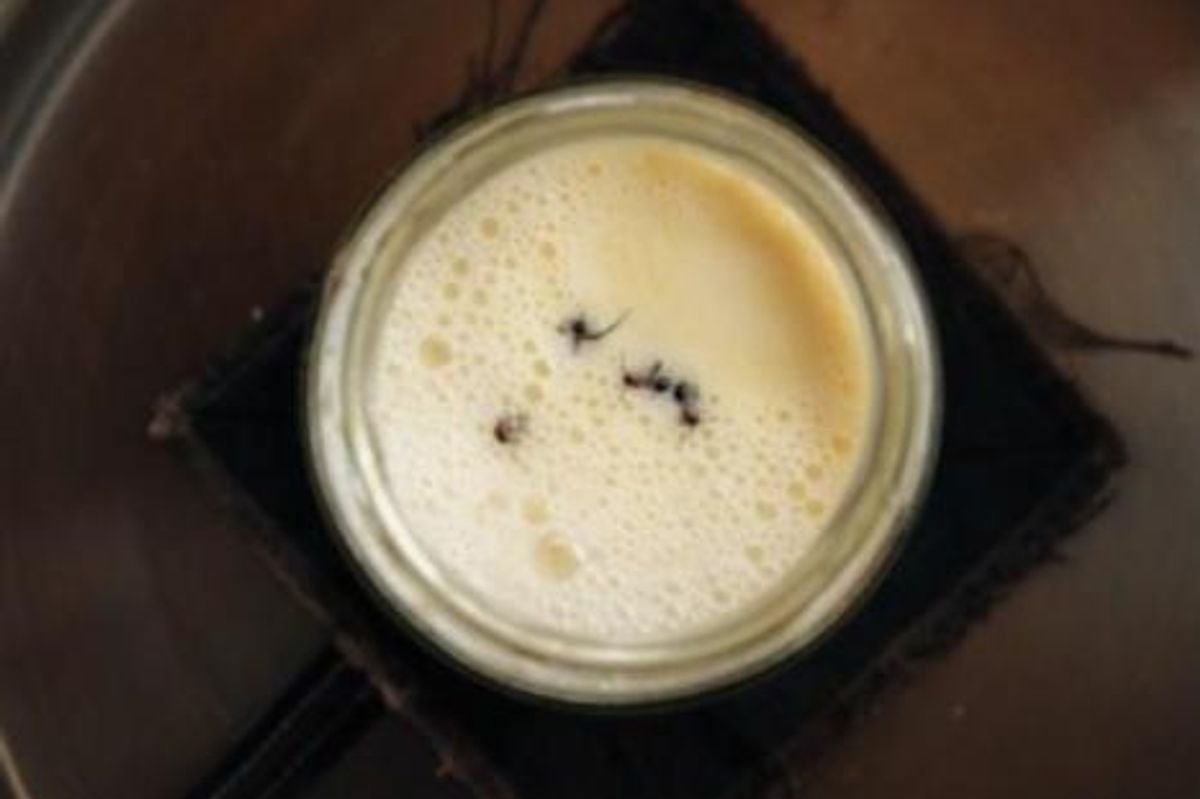
To make the yogurt, researchers put four red wood ants into a jar of warm milk and then placed that jar into an ant mound to ferment overnight. When they went to check on the jar in the morning, the milk was visibly thicker and had started turning sour.
Of course, a taste test was required to complete the experiment. Upon tasting the ant-created yogurt, the team noted that it tasted tangy and herbaceous with a slight flavor of grass-fed fat.
How Do Ants Turn Milk Into Yogurt?
After their Bulgarian experiment, the research team brought the yogurt back to their lab in Denmark to run further tests. The science behind the process points to three things: bacteria, acid, and enzymes.
Red wood ants carry both lactic and acetic acid bacteria. This bacterium is similar to that found in sourdough. When placed in milk, the acids produced by this bacterium help with coagulation. Additionally, formic acid is released as part of the ant’s defense system and creates the perfect environment for yogurt’s microbes to thrive. Along with the microbes, ant enzymes help to break down milk proteins, the result of which is turning milk into yogurt.
“Today’s yogurts are typically made with just two bacterial strains. If you look at traditional yogurt, you have a much bigger biodiversity, varying based on location, households, and season. That brings more flavors, textures, and personality,” said Jahn in the press release.
Bringing Ant Yogurt to the Modern World
After their time in the lab, researchers collaborated with chefs at Denmark’s Alchemist, a two-star Michelin restaurant, to test the possibilities of ant yogurt as a contemporary culinary option. Delicious offerings on the ant yogurt menu included ant-shaped ice cream sandwiches, pungent cheeses, and even craft cocktails with a milk wash.
Although trying an ant yogurt tasting menu may not be at the top of your food bucket list, the researchers find the possibilities for incorporating traditional methods into modern cuisine very exciting.
“I hope people recognize the importance of community and maybe listen a little closer when their grandmother shares a recipe or memory that seems unusual,” said Veronica Sinotte, from the University of Copenhagen, in a press release. “Learning from these practices and creating space for biocultural heritage in our foodways is important.”
Read More: When It Comes to Healing Wounds, Yogurt Could Be a Game-Changer
Article Sources
Our writers at Discovermagazine.com use peer-reviewed studies and high-quality sources for our articles, and our editors review for scientific accuracy and editorial standards. Review the sources used below for this article: