
Orange Rivers in Alaska Signify a Color-Changing Crisis, Exposing Fish to Toxic Metals

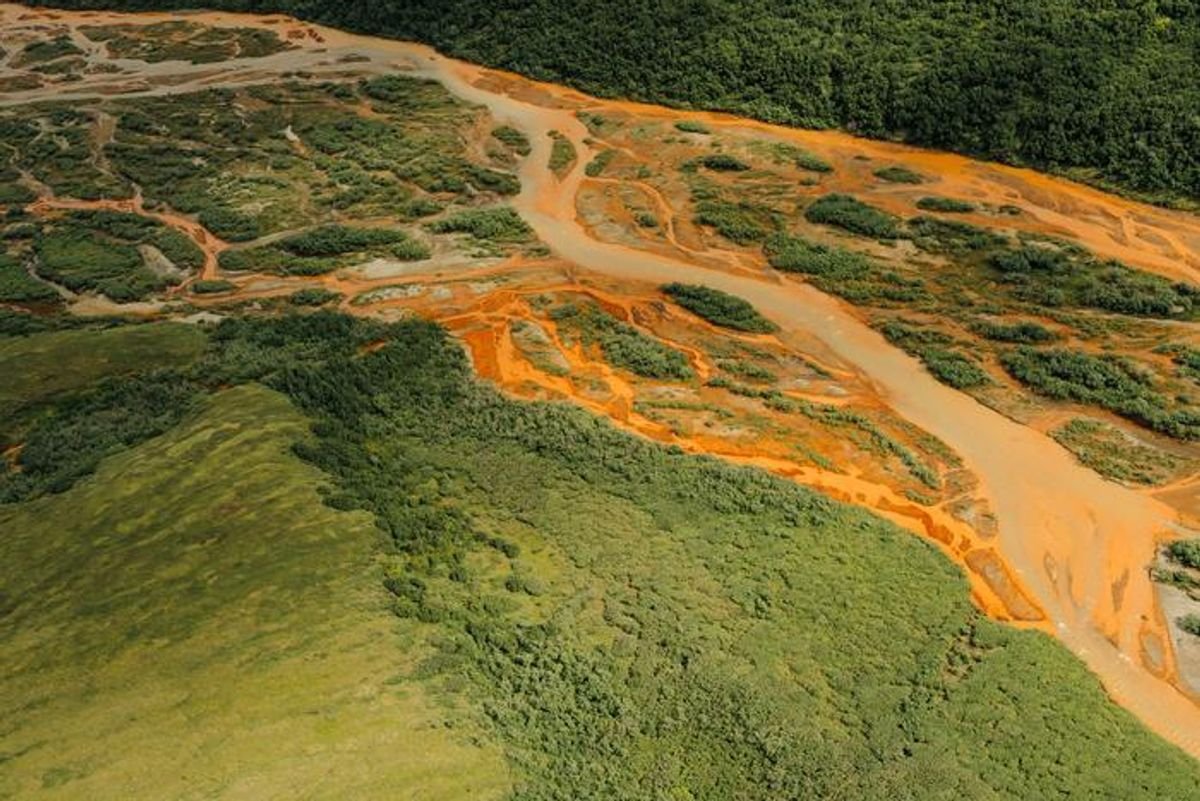
In the northern Alaskan wilderness, a bizarre symptom of climate change is emerging: The rivers there are turning unnaturally orange. This phenomenon paints a worrisome picture for watersheds all across the Arctic, now faced with toxic metals being released by melting permafrost.
A new study published in the Proceedings of the National Academy of Sciences shows how orange rivers may start to become a familiar sight in the Arctic as the planet warms. But for ecosystems like those along the Brooks Range — a mountain range stretching from northern Alaska to Canada’s Yukon Territory — the color change underlies a host of problems.
The Rivers Turning Orange
When the water in a river or stream appears orange, it usually comes as a byproduct of mining activities. Oftentimes, sulfide minerals within abandoned mines are exposed to air and water, causing them to oxidize.
This process, called acid mine drainage (AMD), creates dissolved iron that changes the color of streams as it precipitates to form red, orange, or yellow sediments at the bottom of a stream. AMD also infuses streams with sulfuric acid that dissolves other heavy metals like copper, lead, and mercury into the water.
These rust-colored, highly acidic streams are often found where surface coal mining is prevalent — in the U.S., it occurs mostly in Central Appalachia and the Great Plains.
But much farther north, the orange rivers observed in the Brooks Range have nothing to do with AMD. The color-changing culprit, instead, is melting permafrost.
“This is what acid mine drainage looks like,” said author Tim Lyons, a biogeochemist at the University of California, Riverside, in a statement. “But here, there’s no mine. The permafrost is thawing and changing the chemistry of the landscape.”
Read More: Climate Change Threatens Global Milk Supply, Even On Cooled Dairy Farms
A Toxic Threat to Fish
The new study shows how the thawing of permafrost due to global warming is letting water and oxygen reach sulfide minerals that have been confined underground for thousands of years. The weathering of sulfide-rich rocks is now delivering iron and other metals to rivers, turning them orange just like AMD would.
The new study is centered around the Salmon River, which had clear water up until the summer of 2019, when it began to show signs of discoloration that still persist to this day.
The researchers involved with the study were determined to find out just how toxic the river has become. After three sampling dates between August 2022 and August 2023, they found that the levels of metals in the river’s waters exceeded the EPA’s toxicity thresholds for aquatic life.
Most alarming is the concentration of dissolved cadmium detected in the Salmon River. This metal, normally rare in aquatic ecosystems, is highly toxic to aquatic organisms. It can accumulate on the tissues of fish and trigger neurotoxic effects, leading to erratic behaviors that contribute to mortality. Bears and other mammals that eat fish with high cadmium levels could also suffer from oxidative stress and DNA damage.
Nonstop Melting in the Arctic
The researchers say that current metal concentrations in edible fish tissue aren’t considered hazardous to humans, although the effects on some species may have additional indirect consequences. For example, chum salmon, eaten by many Indigenous communities in the area, may have trouble spawning in gravel beds congested with fine sediment.
Beyond the Salmon River, other Arctic watersheds have already begun to see the effects of permafrost thaw. One 2024 study found that 75 streams in the Brooks Range had recently turned orange and turbid (or cloudy) from an abundance of iron and toxic metals.
With so many potential contamination sources and no infrastructure in place to stop this process from occurring, the pattern of continued permafrost thaw will likely spread to more rivers across the Arctic.
“There are few places left on Earth as untouched as these rivers,” said Lyons. “But even here, far from cities and highways, the fingerprint of global warming is unmistakable. No place is spared.”
Read More: Permafrost Thaw and Wildfires Are Raising CO2 Emissions in Arctic Tundras
Article Sources
Our writers at Discovermagazine.com use peer-reviewed studies and high-quality sources for our articles, and our editors review for scientific accuracy and editorial standards. Review the sources used below for this article: