
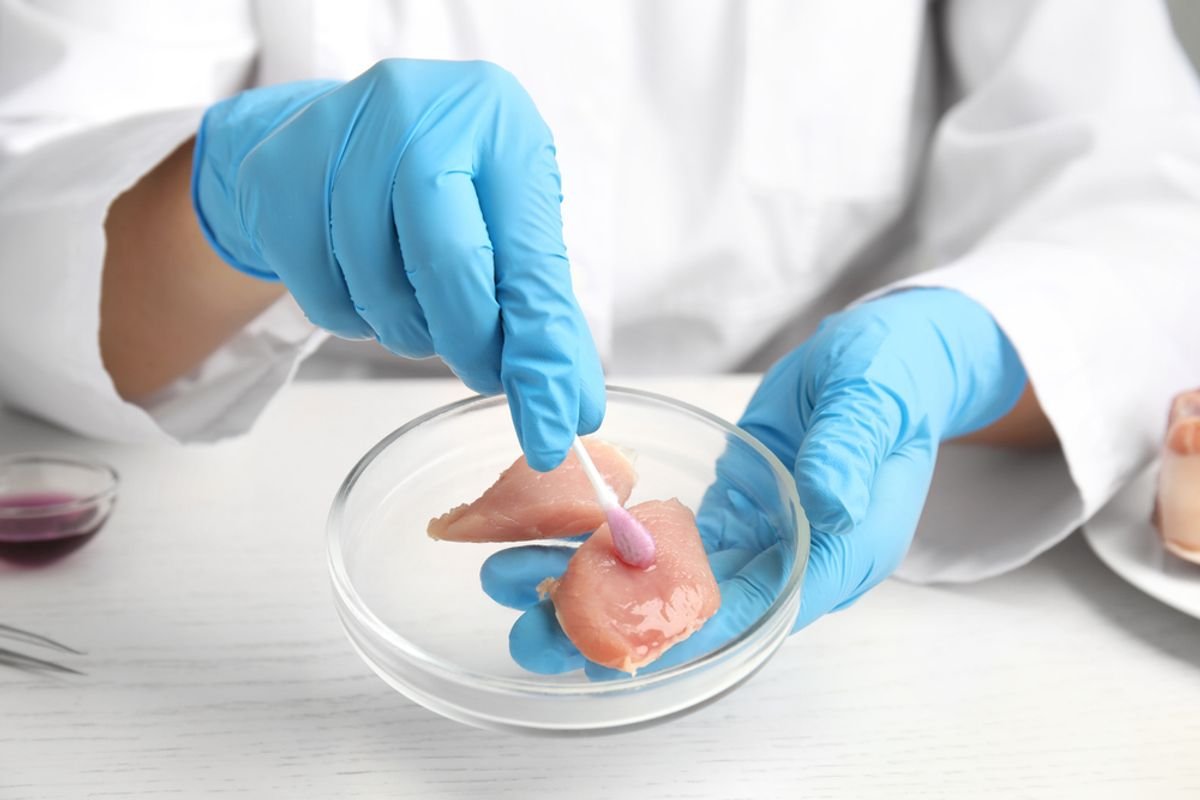
One in Five Urinary Tract Infections Likely Originate From Contaminated Meat

Anybody who’s ever had a urinary tract infection (UTI) would probably agree to try anything to avoid the burning, stinging, and persistently uncomfortable sensations these infections bring. Besides staying on top of personal hygiene, practicing safe food handling might be just as important.
According to a new study from George Washington University and Kaiser Permanente, close to one in five UTIs in Southern California are linked to E. coli strains found in contaminated meat.
“Urinary tract infections have long been considered a personal health issue, but our findings suggest that they are also a food safety problem,” said Lance B. Price, senior study author and professor of environmental and occupational health at George Washington University in a press release.
The findings, published in mBio, also highlight an increased risk for people from low-income neighborhoods and suggest that this trend may be occurring across the U.S.
Bacteria Causing UTIs Found in Contaminated Meat
Common UTI prevention tips include staying hydrated, not delaying urination, using the washroom after sexual intercourse, and maintaining good personal hygiene, along with avoiding irritating products and wearing breathable cotton underwear.
Since they’re so common, mostly affecting women and the elderly, UTIs place a huge burden on healthcare systems and productivity, costing billions every year. Identifying the sources of infection and ways to prevent them is key to reducing that burden for both patients and healthcare providers.
The main culprit behind most UTIs is E. coli bacteria. Although E. coli is usually a harmless part of our microbiome, living peacefully on our skin and in our guts, some strains can cause illness if they end up in the wrong place. Because E. coli is also a frequent food contaminant, especially in raw poultry and other meats, researchers wondered if there could be a hidden link between foodborne strains and UTIs.
Read More: Hungry Bacteria Hunt Their Neighbors With Tiny, Poison-Tipped Harpoons
Common Foodborne UTIs
To find out, the research team isolated E. coli strains from both UTI patients and local retail meat, then compared them using a novel genomic modeling method called a “Bayesian latent class model.”
The results showed that 18 percent of recorded UTIs in the study were caused by E. coli originating from animals, with chicken and turkey harboring most of the high-risk strains. Another striking finding came from demographic data: people from low-income areas were 60 percent more likely to contract foodborne UTIs than those from higher-income neighborhoods.
“This is why we should be investing more, not less, in research about the social determinants of health. Your risk of infection should not depend on your ZIP code,” said Price.
Discoveries like this will likely inspire more research, such as tracing where contaminated meat comes from and expanding studies to other parts of the U.S., to help prevent foodborne infections in the future.
What Consumers Can Do Now
While ongoing research will take time to confirm and expand on these results, consumers can already take a few precautions to lower their risk of foodborne UTIs:
- Buy securely sealed meat and poultry to prevent leakage onto other groceries
- Thoroughly cook all meat and poultry
- Avoid cross-contamination in the kitchen
- Wash hands and surfaces after preparing raw meat
- Advocate for stronger food safety policies that address community disparities
This article is not offering medical advice and should be used for informational purposes only.
Read More: Squatting and Toilet Paper Won’t Protect You from Public Restroom Germs
Article Sources
Our writers at Discovermagazine.com use peer-reviewed studies and high-quality sources for our articles, and our editors review for scientific accuracy and editorial standards. Review the sources used below for this article: