
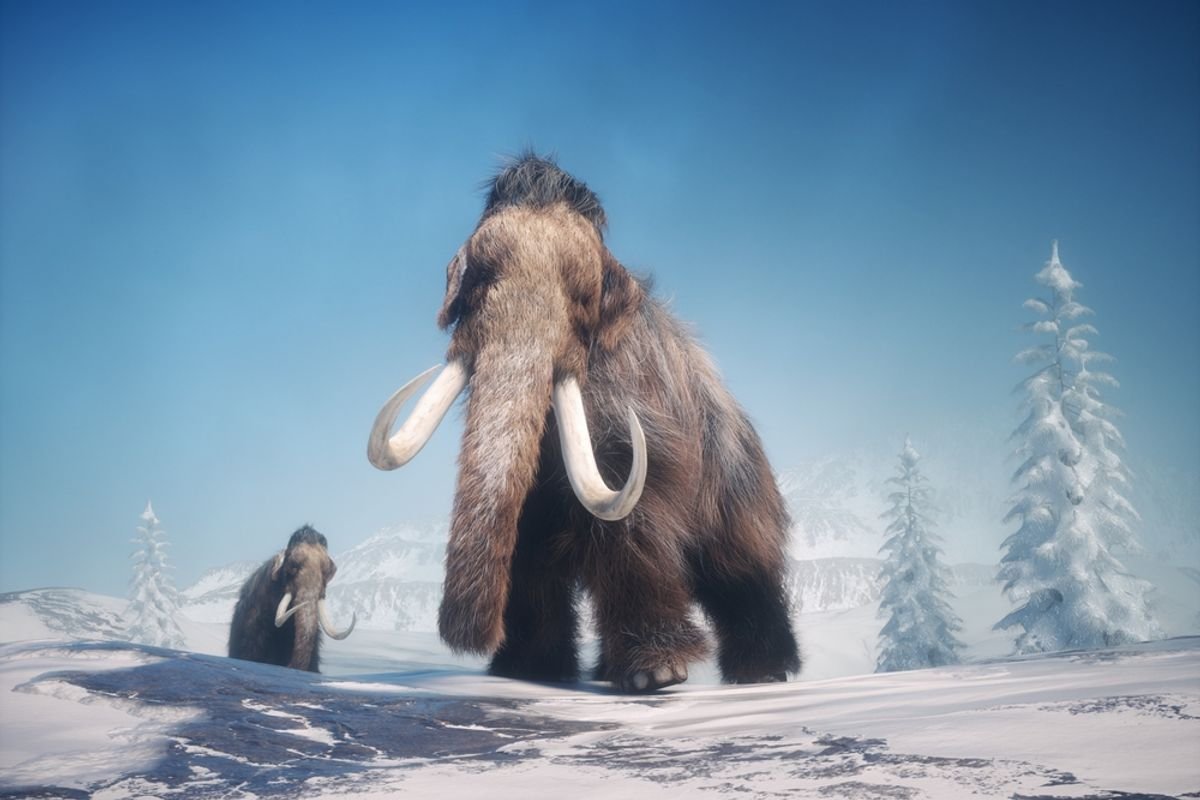
Million-Year-Old Mammoth Tooth Carries Oldest Host-Associated Bacteria DNA Ever Found
Bacteria, the earliest life on Earth, evolved around 4 billion years ago, with the first fossilized traces dating back 3.5 billion years to 3.7 billion years. But fossils alone only hint at the past. To truly understand long-gone organisms, scientists need their genetic blueprint.
DNA, however, is fragile. Due to its chemical instability it doesn’t stand the test of time. Thanks to advances in sequencing technology and exceptionally preserved remains, researchers are now pushing the boundaries of how far back genetic data can reach.
In a new study, scientists from Stockholm University and the Swedish Museum of Natural History recovered the oldest host-associated bacterial DNA ever found, extracted from mammoth teeth more than 1.1 million years old. Published in Cell, the research highlights possible pathogens related to microbes causing disease in elephants, mammoths’ modern cousins.
“This work opens a new chapter in understanding the biology of extinct species. Not only can we study the genomes of mammoths themselves, but we can now begin to explore the microbial communities that lived inside them,” said Love Dalén, professor of Evolutionary Genomics at the Centre for Palaeogenetics, in a press statement.
Understanding Ancient Microbes

Mammoth Tooth
(Image Credit: Photo: Love Dalén)
Usually, most knowledge of ancient microbes comes from DNA preserved in places like permafrost, amber, salt crystals, and deep-sea sediments, or from human remains and artifacts. Because DNA decays quickly, older samples rarely yield results.
Human-microbe studies dominate ancient DNA research, partly because those remains are younger and easier to work with. The oldest DNA to date — about 2 million years old — was recovered from frozen soil in Greenland, offering a glimpse of a long-vanished ecosystem.
The new mammoth analysis takes things further. By recovering bacterial sequences from woolly and steppe mammoths, including one over 1.1 million years old, the team set a new record for ancient host-associated microbial DNA.
Read More: A Freeze-Dried Woolly Mammoth Yields 52,000-Year-Old Chromosomes
Bacterial Strains Identified From Mammoth Samples
After screening and filtering the DNA of 483 mammoth specimen, they identified 310 microbes tied to mammoth tissues. Most were environmental or post-mortem colonizers, but six clades stood out as true host-associated bacteria, including Actinobacillus, Pasteurella, Streptococcus, and Erysipelothrix, of which some of might have been pathogenic.
According to the press release, one of the identified bacterial strains is closely related to a bacterium that still causes fatal outbreaks in African elephants. Elephants are mammoths’ closest living relatives, consequently, the findings raise the possibility that mammoths faced similar infections.
Most strikingly, the researchers reconstructed partial genomes of Erysipelothrix originating from a 1.1-million-year-old steppe mammoth specimen, the oldest host-associated microbial DNA ever recovered.
“Our results push the study of microbial DNA back beyond a million years, opening up new possibilities to explore how host-associated microbes evolved in parallel with their hosts,” said study lead author Benjamin Guinet in the press release.
Microbes That Stayed With Mammoths For a Long Time
“As microbes evolve fast, obtaining reliable DNA data across more than a million years was like following a trail that kept rewriting itself. Our findings show that ancient remains can preserve biological insights far beyond the host genome, offering us perspectives on how microbes influenced adaptation, disease, and extinction in Pleistocene ecosystems,” explained senior author Tom van der Valk in the statement.
While it’s hard to say how exactly these microbes affected mammoth health, the study provides an unprecedented look at the microbiomes of extinct megafauna. The findings indicate that certain microbial lineages lived alongside mammoths for vast stretches of time, persisting across different regions and evolutionary stages.
By showing that even million-year-old animal microbiomes can be recovered, the study opens new paths for exploring how microbes shaped the lives and deaths of ancient species.
Read More: Why the Pygmy Mammoth Stood at Just 5 Feet Tall
Article Sources
Our writers at Discovermagazine.com use peer-reviewed studies and high-quality sources for our articles, and our editors review for scientific accuracy and editorial standards. Review the sources used below for this article: