
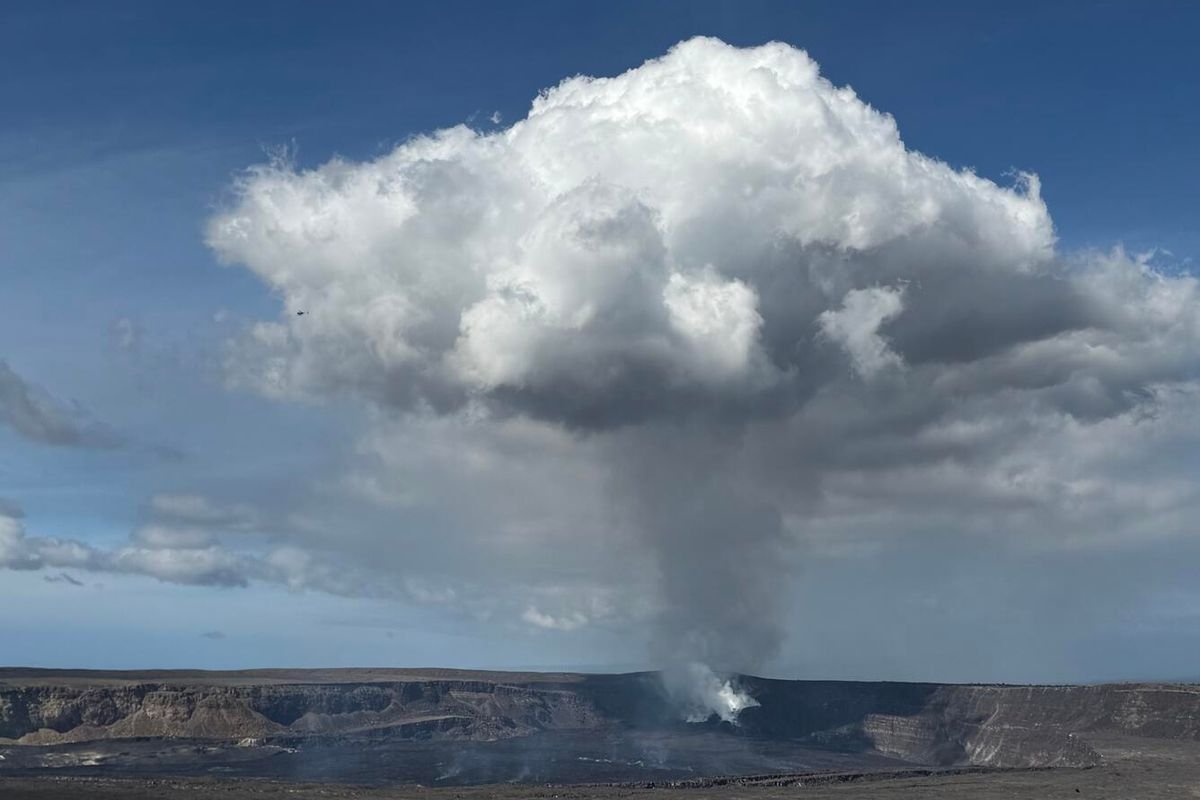
Kīlauea Volcano Releases Over 300-Foot Lava Fountain as it Erupts Again

Hawaii’s Kīlauea volcano released another burst of lava this late August 2025, discharging a fountain for 12.6 hours straight. This is the latest episode in an ongoing eruption that started on Dec. 23, 2024.
Scientists at the U.S. Geological Survey (USGS) Hawaiian Volcano Observatory (HVO) first observed magma rising to the surface and spattering from the north vent of the pit crater Halemaʻumaʻu in the early hours of Saturday morning.
This volcanic activity preceded the start of the 31st episode, which began at 2.04 p.m. HST Saturday afternoon after the observatory detected the presence of lava fountains, which reached 330 feet (100 meters) at their highest. By the time the eruptive episode ended at 2.52 a.m. HST on Saturday August 23, 2025, the volcano had released around 8.4 million cubic meters of lava.
“That’s enough lava to fill about 3,500 Olympic swimming pools,” says Katie Mulliken, geologist and external engagement coordinator at the USGS HVO. The lava remained within the summit caldera and there have been no reports of injuries related to the episode.
What Caused the Kīlauea Eruption, Again
This is the latest in a string of episodes that have been detected since December 2024 and have varied in length, ranging from a few hours to over a week.
“These eruptive episodes are caused by magma being supplied to Kilauea from the hot spot below,” Mulliken explains. Magma amasses in the chambers below the summit, causing pressure to rise. “Eventually, lava erupts and de-pressurizes the system. As magma rises to the surface, magmatic gas rapidly exsolves as bubbles — just like when you open a bottle of soda or champagne,” continues Mulliken.
The gas plays a key role in causing the volcano to release the magma in lava fountains, some of which can extend hundreds of meters into the sky. The maximum length of the lava fountain detected last weekend was 330 feet (100 meters) high but unusually, it leant eastwards at a 45-degree angle.
Scientists have observed similarly “inclined” eruptions on Kīlauea before – once in 1959 and again in 1969 – which have since been attributed to obstructions within the vents that caused the lava to be released at an angle – much like a hose when you cover the opening with a finger.
Read More: Activity at Alaska’s Mount Spurr Suggests That The Volcano Is About To Erupt
The Calm Before the Eruption
Periods of eruptive activity like these have been followed by pauses, some as short as a few days, others lasting more than two weeks. Last weekend’s event was preceded by an episode on August 6, 2025. USGS scientists predict the next episode will occur in the first week of September, though changes to the inflation rate (the swelling caused by magma accumulating in underground reservoirs) could cause a delay.
These episodes can be described as part of the same eruption because lava is released from the same vent, “indicating there is an established plumbing system beneath the surface,” says Mulliken. Even between eruptive episodes, the vents continue to release gas, and magma stirs close to the surface.
As for how long this particular eruption will last, Mulliken explains it depends on how long the volcano can maintain its current equilibrium, which enables it to release pressure accumulated during successive eruptive episodes.
As the eruption continues, geologists at the HVO will continue to monitor its progress. So far, over 130 million cubic meters of lava has been released since the start of the eruption.
Read More: A Zombie Volcano Shows Signs of Activity — Could it Rise From the Grave?
Article Sources
Our writers at Discovermagazine.com use peer-reviewed studies and high-quality sources for our articles, and our editors review for scientific accuracy and editorial standards. Review the sources used below for this article: