
Is a Sun a Star or a Planet? How We Know — and What Could Change

Key Takeaways on if a Sun Is a Star or a Planet
- Is a sun a star or a planet? Current definitions define a star as a body that generates its own energy. While humans have relied on the sun for hundreds of thousands of years, it’s only in the last few centuries that science has agreed on a definition.
- Is the Moon a planet or a star? Like the sun, the moon is not a planet but a natural satellite.
- Modern technology, such as advanced space telescopes, can help us redefine what solar objects are. Pluto, for example, was once considered a planet, but updated information changed the definition of what a planet was, and Pluto has since been demoted to a dwarf planet.
The sun is more than 4.5 billion years old, and early hominins began living under its warmth more than two million years ago. As Homo sapiens evolved, they developed calendars based on the sun as well as an understanding that the Earth and the sun were in rotation.
But what exactly was it? Only in the past few centuries have scientists developed an understanding — and reached agreement — on how to define the sun and the moon. Although these definitions are widely agreed upon, other solar objects have sparked greater controversies.
Read More: If the Color of the Sun Is White, Then Why Does it Appear Yellow?
What Is the Sun?
Is the sun a planet? A star? A solar object?
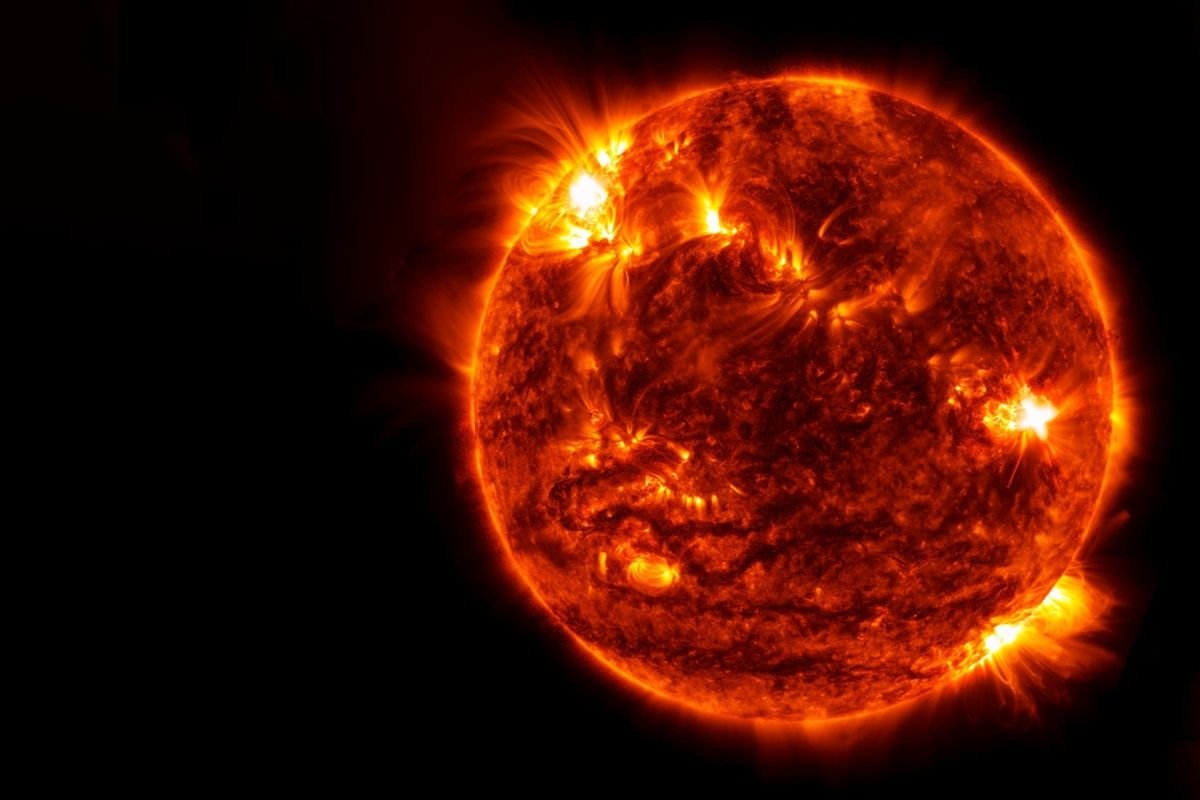
“The sun is a star. The simple definition for a star is that a star makes its own energy,” says Michelle Nichols, an astronomer and director of public observing at the Adler Planetarium in Chicago.
According to NASA, the sun is made up of hydrogen and helium, and it’s the only star in our solar system. It is about 93 million miles away from Earth and has a core temperature above 27 million degrees Fahrenheit.
Although history is filled with different names that different cultures used to describe the sun, naming and definition are now the business of the International Astronomical Union (IAU).
“They have lots of Ph.D. astronomers who serve on different committees, and they come up with those definitions,” Nichols says. “Science is always changing; classifications can also change.”
Is The Moon A Planet Or A Star?
The moon is different, though. “The moon is a natural satellite,” Nichols says. “Our moon is an object that orbits a planet. You can have natural satellites, but they don’t have to orbit planets. An asteroid can have its own natural orbit.”
An artificial satellite is a solar object that is created by humans and launched into space. The Hubble Space Telescope, for example, is a low-earth-orbit telescope that launched in 1990 and sends images of space back to Earth, according to NASA.
Satellites have also been launched into space for global communication and broadcasting. These satellites have increased in number in recent years, causing some scientists to worry that they will disrupt the telescope imagery they rely on to learn more about our galaxy, according to a study in Nature Astronomy.
Read More: Scientists Are Still Pondering These Mysteries of the Moon
Mapping the Night Sky
The IAU was founded in 1919, and one of its purposes was to develop a standard for naming objects in the night sky and classifying them. Up until that point, Nichols said, different astronomers in various countries would have their own names for constellations.
“One astronomer would make a star map, and another astronomer would develop their own. You had this mishmash of maps, and books, and constellations,” Nichols says. “As we started developing telescope capability to find things that weren’t obviously visible before, you develop the need to classify things and to name things.”
After the First World War, the IAU mapped the night sky using the information available at the time. “They developed this standard list of 88 constellations that map out the entire sky,” Nichols says.
Defining Solar Objects
But as telescopes became more sophisticated, astronomers could see further into our solar system, make comparisons, and question whether certain objects truly met classification criteria.
“For decades, we didn’t have a definition of planets. We didn’t need one. You had the nine planets,” Nichols says. “Then in the 1990s, they began finding objects past Pluto. When they found Eris, it happened to be the same size as Pluto. The IAU came up with a definition of a planet. Turns out the way it was written, Pluto didn’t meet all those criteria.”
Pluto was downgraded to a dwarf planet. And although Nichols says there isn’t a debate regarding the classification of the sun or the moon, other solar objects are under scrutiny. One of Pluto’s five moons, for example, is called Charon, and it’s half the size of Pluto.
“For something that is half the size of something else, you’re actually orbiting a center of mass that is between those two objects,” Nichols says.
The definition of planet could have been written so that both Pluto and Charon were considered planets. For now, Pluto is a dwarf planet and Charon is a natural satellite. But as the new high-powered telescope at the Vera C. Rubin Observatory sends back never-before-seen images of the galaxy, scientists may discover new solar objects that require them to rethink old definitions.
Read More: Our Solar System May Have a New Dwarf Planet Orbiting Even Farther Than Pluto
Article Sources
Our writers at Discovermagazine.com use peer-reviewed studies and high-quality sources for our articles, and our editors review for scientific accuracy and editorial standards. Review the sources used below for this article: