
How Eggs Can Harbor Salmonella, Even When They Look Perfectly Clean

Key Takeaways on How Eggs Get Salmonella
- Eggs can get Salmonella from feces or contaminated bedding that move to a chicken’s reproductive tract. The bacteria can colonize where the egg white and shell are formed, contaminating the egg.
- Salmonella poses a persistent risk to poultry farmers despite modern antibiotics and controls. Even touching a tainted surface can turn the eggshell into a vector for disease.
- Cooking exposes the bacteria to heat, which can kill Salmonella. The FDA recommends heating the eggs to an internal temperature of 165 degrees Fahrenheit (roughly 74 degrees Celsius).
At first glance, a clean, unbroken egg seems rather harmless, but a smooth shell can hide some prickly foes.
In August 2025, the Centers for Disease Control and Prevention (CDC) issued a multistate recall of brown eggs after nearly 100 people fell ill, 18 of whom were hospitalized with high-grade fevers, severe diarrhea, and a host of other ailments.
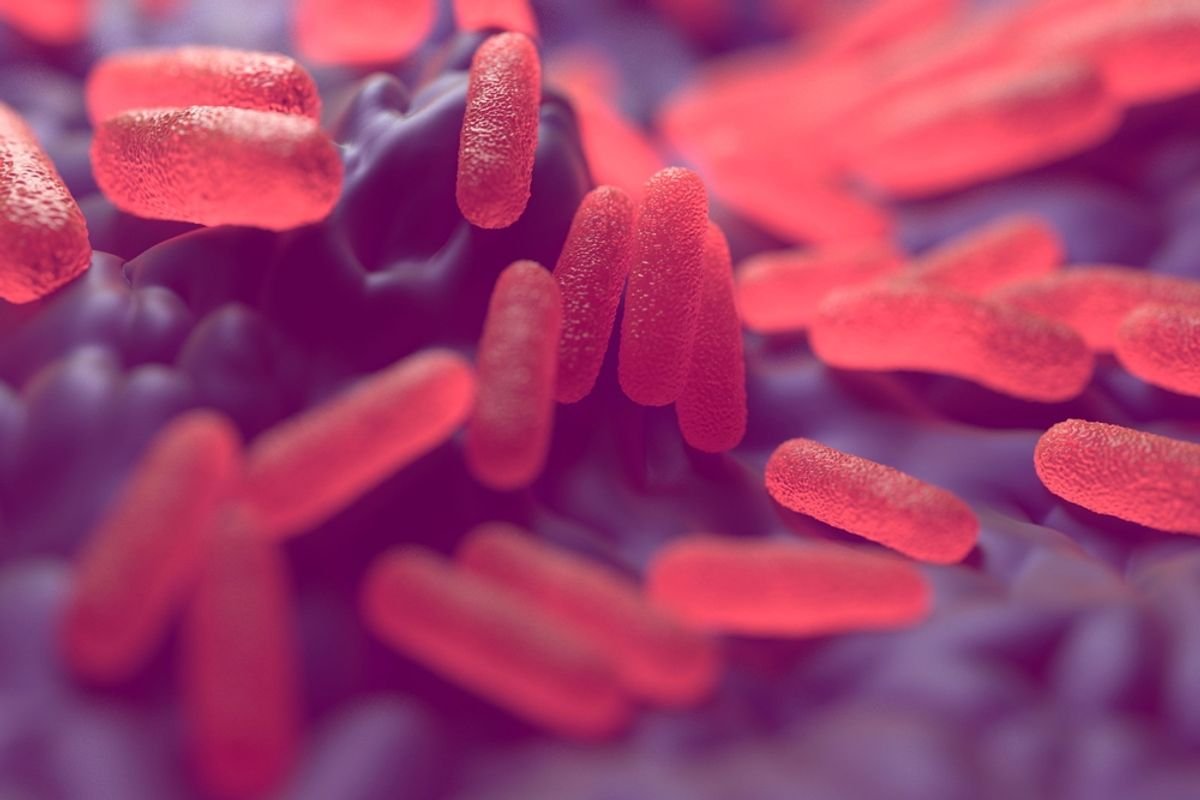
The culprit: a particularly persistent foodborne bacterium known as Salmonella Enteritidis. The microbe thrives in animal guts and raw meat, opportunistically scavenging on any nutrients it comes across and multiplies rapidly.
The patients unfortunate enough to experience its stomach-churning symptoms aren’t rare, either. In a 2010 paper in Clinical Infectious Diseases, researchers estimated that globally Salmonella causes around 93 million cases of infectious diarrhea and over 100,000 deaths worldwide each year.
Despite the bacteria’s impressively infectious track record, it’s hard to imagine the microbe ending up inside a shelled egg. But, as is often the case in nature, life finds a way.
How Do Eggs Get Salmonella?
According to Dr. Alexandra Grote, assistant professor of Infectious Diseases at Northwestern University’s Feinberg School of Medicine, “Salmonella in feces or contaminated bedding can move to the chicken’s reproductive tract,” says Grote. “From there, bacteria may colonize the oviduct, which is where the egg white and shell are formed, leading to contamination before the shell even hardens.”
The microbe’s impressive suite of adaptations allows it to survive in a variety of challenging environments.
“Salmonella is a generalist,” Grote says. “It can use nutrients that other microbes cannot, resist bile and acidic conditions, and compete with the resident microbiota.”
Salmonella is well-known for its Acid Tolerance Response (ATR), enabling it to regulate its internal pH and survive a trip through the stomach. A 2014 study from Current Opinion in Microbiology found that the cells could remodel their outer membrane structure to better resist the salt and acidity of an inflamed gut.
Grote notes that not even the shell of an egg is safe, as the bacteria can produce stress-response proteins and enter a quasi-dormant state to outlast dry conditions. Under the right circumstances, they can migrate inward through tiny pores or cracks on the egg surface.
Salmonella can also craftily manipulate the host’s immune system, exploiting the inflammation response it causes to suppress competitors.
“Salmonella doesn’t always want to multiply quickly,” Grote adds. “It can slow its growth or enter a dormant state. These ‘persister’ bacteria can survive antibiotic and immune attack, only to re-emerge later.”
Read More: What are Different Types of Food Poisoning and How Can You Avoid Them?
How Common Is Salmonella in Eggs?
With all these abilities at its disposal, Salmonella poses a persistent risk to poultry farmers despite modern antibiotics and controls. A 2000 study in the International Journal of Food Microbiology estimated that 1 in 20,000 U.S. eggs may be “internally contaminated” with the bacteria.
Even touching a tainted surface can turn the eggshell into a vector for disease. In their official egg safety guidelines, the U.S. Food and Drug Administration (FDA) emphasizes the importance of purchasing refrigerated egg cartons and storing them below 40 degrees Fahrenheit (4 degrees Celsius) at home.
Can Cooking Eggs Kill Salmonella?
The cold of a refrigerator slows bacterial growth, but it’s the fire of the stove that finishes the job. Fortunately for all humans, Salmonella just can’t seem to beat the heat.
A 2016 paper published in the Journal of Food Science found that prolonged immersion in water around 130 degrees Fahrenheit resulted in a 99.99 percent reduction in live Salmonella cells.
To completely mitigate the threat, the FDA recommends heating the eggs to an internal temperature of 165 degrees Fahrenheit (roughly 74 degrees Celsius).
“Cooking exposes the bacteria to heat, which disrupts them at a molecular level,” Grote says. “Proteins in the bacterial cell unfold and lose their function. The membrane itself becomes leaky. Once these systems collapse the bacteria can no longer survive.”
Some highly specialized microbes like denizens of Yellowstone’s hot springs are adapted to thrive in scalding hot waters, but infectious diseases like Salmonella will die.
So long as the eggs are cooked thoroughly, this hidden menace won’t be a risk, but caution is never a bad idea. If you’re unsure about whether your egg sandwich will cause digestive mayhem, it might be best to err on the side of caution before you could be infected.
This article is not offering medical advice and should be used for informational purposes only.
Read More: With the Spread of Bird Flu, Cooking Eggs with Precaution May be Beneficial
Article Sources
Our writers at Discovermagazine.com use peer-reviewed studies and high-quality sources for our articles, and our editors review for scientific accuracy and editorial standards. Review the sources used below for this article: