
Chemistry in Earth’s Ancient Pools May Unlock the Mystery of Life’s Origins

Life runs on proteins, large chains of amino acids that keep our bodies functioning. Yet for decades, scientists have wondered how they were first created to set biological life in motion 4 billion years ago. Based on a recent experiment that used simple chemistry, the answer may now be in our hands.
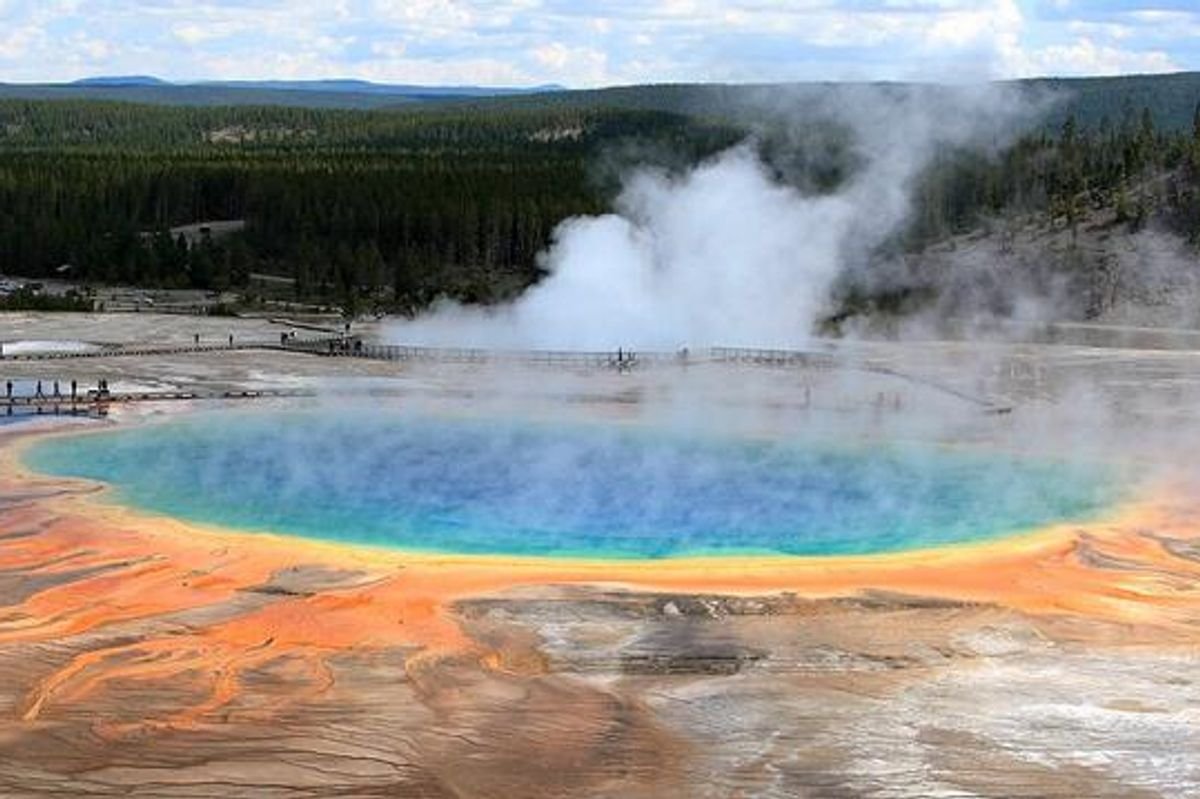
A new study published in Nature has shown how protein synthesis may have been jump-started by a partnership between amino acids and RNA. By partially recreating chemical reactions between these two ingredients of life in water, researchers have made a breakthrough in the quest to understand life’s origins in the primordial lakes and pools of early Earth.
Building Life Out of Amino Acids
Amino acids are commonly referred to as the “building blocks of life.” True to their title, they’re required to create the vital proteins that provide structural support for cells. But while around 500 amino acids have been identified in nature, only 20 of them are used in living organisms to build proteins.
Proteins don’t just sprout from amino acids organically. Rather, RNA (ribonucleic acid) is needed to carry chemical instructions from a cell’s DNA to the ribosome, which then reads the RNA and links together amino acids. As these amino acids are bonded, they set the groundwork for life.
Short chains of amino acids become peptides and slightly longer polypeptides, but things start to escalate when hundreds of amino acids connect to form increasingly complex proteins. These proteins uphold just about every little function in an organism’s body, down to the cellular level.
Read More: Newly Discovered Mars Molecules Resemble Structures Critical for Life on Earth
Providing Energy for Protein Synthesis
How did amino acids start to synthesize proteins in the first place? That’s a question scientists have been pondering for years. The new study, however, has made a big leap in determining what the earliest stage of this process may have looked like 4 billion years ago. The key, researchers found, is how RNA joined with amino acids, which would eventually lead to protein synthesis.
“We have achieved the first part of that complex process, using very simple chemistry in water at neutral pH to link amino acids to RNA. The chemistry is spontaneous, selective, and could have occurred on the early Earth,” said senior author Matthew Powner, a professor of organic chemistry at the University College London, in a statement.
Previous attempts to unite amino acids and RNA, according to the researchers, used highly reactive molecules that would break down in water and cause the amino acids to react with each other rather than attach to RNA.
Hoping to avoid this outcome, the researchers turned to thioester, a high-energy chemical compound that plays a crucial role in biochemical processes like metabolism. Thioesters derive from Coenzyme A, a chemical found in all living cells. There is even one theory of the “thioester world,” which claims that theioesters were the primary energy sources for earliest forms of life.
The First Steps of Life on Earth
To form the thioesters, the amino acids had to react with a sulphur-bearing compound called pantheheine, which can be synthesized in conditions similar to those that existed during the Earth’s early history.
The researchers say that the reactions they facilitated, seen with MRI and mass spectrometry techniques, could have taken place in pools or lakes of water in the early Earth (They wouldn’t have occurred in oceans since the concentrations of chemicals would be too diluted).
These reactions tested in the study demonstrate that thioesters were likely essential in connecting amino acids and RNA, filling in what may have been the very first step in life’s beginning. Future research will have to address the rest of the process, such as how ribosomes developed and how fully-fledged proteins were synthesized once RNA and amino acids joined together.
Read More: Molecules From Space May Have Sparked Life on Earth Billions of Years Ago
Article Sources
Our writers at Discovermagazine.com use peer-reviewed studies and high-quality sources for our articles, and our editors review for scientific accuracy and editorial standards. Review the sources used below for this article: