
A Complete Brain Activity Map Now Exists, Giving us Insight to How We Make Decisions

Nearly all animals with complex nervous systems, including mammals, birds, fish, and reptiles, have brains, yet we’re still very far from fully understanding what parts of the brain do what. That’s partly because certain tasks activate neurons in the brain that work together to solve problems.
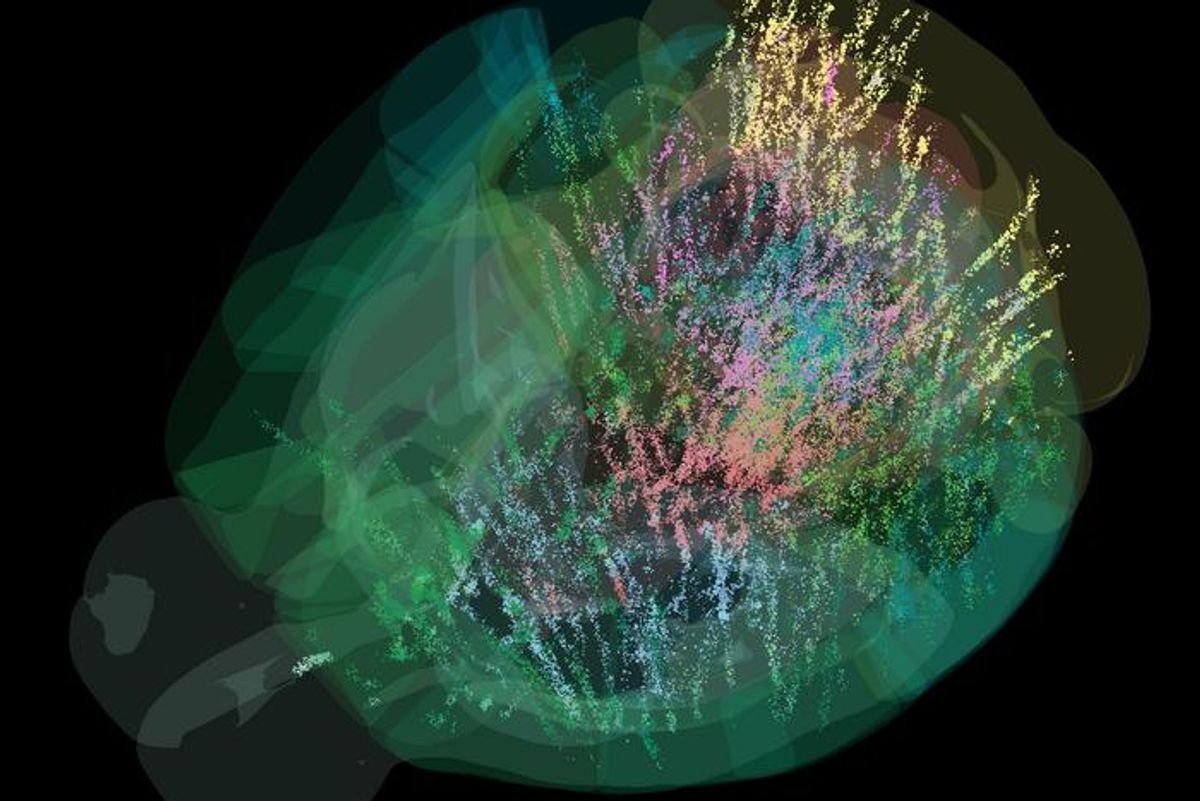
Two studies recently published in Nature document the work of a consortium of 12 laboratories that covered 279 areas of the mouse brain in order to get a better idea of how to map the human brain.
Similarities Between Mouse and Human Brains
For this study, researchers used tiny electrodes attached to the brain to record the activation of hundreds of neurons at a time. Each of the 12 labs ran the exact same experiment, and each recorded a portion of their requisite brain region in 139 mice.
“We can finally get a global view of what’s going on in the brain and see how all the different areas contribute to the task,” says Alexandre Pouget, co-study author, co-founder of International Brain Laboratory, and a professor at the University of Geneva.
The mouse and human brain are similar and different in some really important ways. The human brain is a lot bigger, but there are many similarities, especially with reference to the type of tasks that mice performed as part of the study.
In both humans and mice, light enters the retina, travels to the thalamus, and ultimately reaches cortical and subcortical structures. But there are certain features of the visual systems that mice don’t have, says co-study author Anne K. Churchland and a neuroscientist at the University of California, Los Angeles.
“We were very mindful of mouse and human differences because ultimately we want to make insights that will bear on human health,” says Churchland.
As a result, researchers designed a task that was “reminiscent of” behaviors that humans also do. For the task, mice looked at a screen and used a toy steering wheel to pinpoint an item and bring it to the center of the screen. It was similar to how humans play video games. If the mouse accomplished the task correctly, they earned a reward. Tiny helmets equipped with electrodes showed which part of the brain was included in their decision-making.
How Humans and Mice Make Decisions
Whenever mice make decisions, they combine what they already know about a subject along with sensory details to help them decide. Humans do much the same thing.
For example, if you live in a place where it never rains, you’re more likely not to bring your umbrella even if it’s cloudy outside. And if you live in a place where it rains all the time and it’s cloudy outside, you’re much more likely to make a decision based on prior knowledge to bring your umbrella along.
“It’s the same sensory evidence, but your prior belief is very different,” says Churchland.
The mice’s prior evidence would be how many times the stimulus had occurred on the left rather than the right side, or vice versa. Especially when the task was harder to accomplish, mice would use prior knowledge to predict where the stimuli would appear next.
It’s important to be able to look at more than one part of the brain at a time to be able to see how many parts of the brain are involved in decision-making. Looking at 279 parts of the brain allowed researchers to see which parts of the brain were used to make decisions that engaged a prior belief.
The brain map, which has been in the making for the past seven years, shows that far more areas of the brain are utilized when making simple decisions than scientists previously thought.
“We were surprised by the breadth of areas modulated by the animal’s choice,” says Churchland.
Read More: Understanding Memory Recall and Storage in the Brain
Article Sources
Our writers at Discovermagazine.com use peer-reviewed studies and high-quality sources for our articles, and our editors review for scientific accuracy and editorial standards. Review the sources used below for this article: