
A Comet Explosion May Have Killed Megafauna in North America 13,000 Years Ago

Around 13,000 years ago, North America entered a turbulent period that brought one major change after another. First, the whole continent was hit with drastic cooling out of the blue. Shortly after, over 70 percent of its native megafauna faced extinction, and around the same time, the Clovis culture also vanished from the archaeological record. What could have possibly triggered such a chaotic series of events?
A new study published in PLOS One has come upon evidence that supports a cosmic impact as the potential culprit. This idea — embodied by the Younger Dryas impact hypothesis — has been a hotly debated topic over the years. But now, researchers are saying that shocked quartz found at three Clovis-era archaeological sites in the U.S. represents an ancient comet explosion that may have caused an environmental catastrophe.
Read More: 5 of the Biggest Extraterrestrial Impacts That Moved Oceans and Made Moons
Chaos From a Cold Snap
Although the Last Glacial Maximum began to settle down by 19,000 years ago, the climate in North America abruptly returned to near ice-age conditions during the Younger Dryas, which cooled the continent between 12,900 to 11,600 years ago.
Mass megafauna extinctions began to spread through the continent just as the Younger Dryas started, leading to the disappearance of many mammoths, mastodons, saber-toothed cats, and other species. Even more mysterious is that the Clovis culture — known for making spear point artifacts — disappeared not long after, around 12,750 years ago.
Several theories have come forward to explain why this climate shift happened in the first place. One prominent theory is that an influx of freshwater into the North Atlantic from melting ice sheets prevented warm, tropical waters from flowing north toward the Arctic and cold, polar waters from flowing south toward the equator.
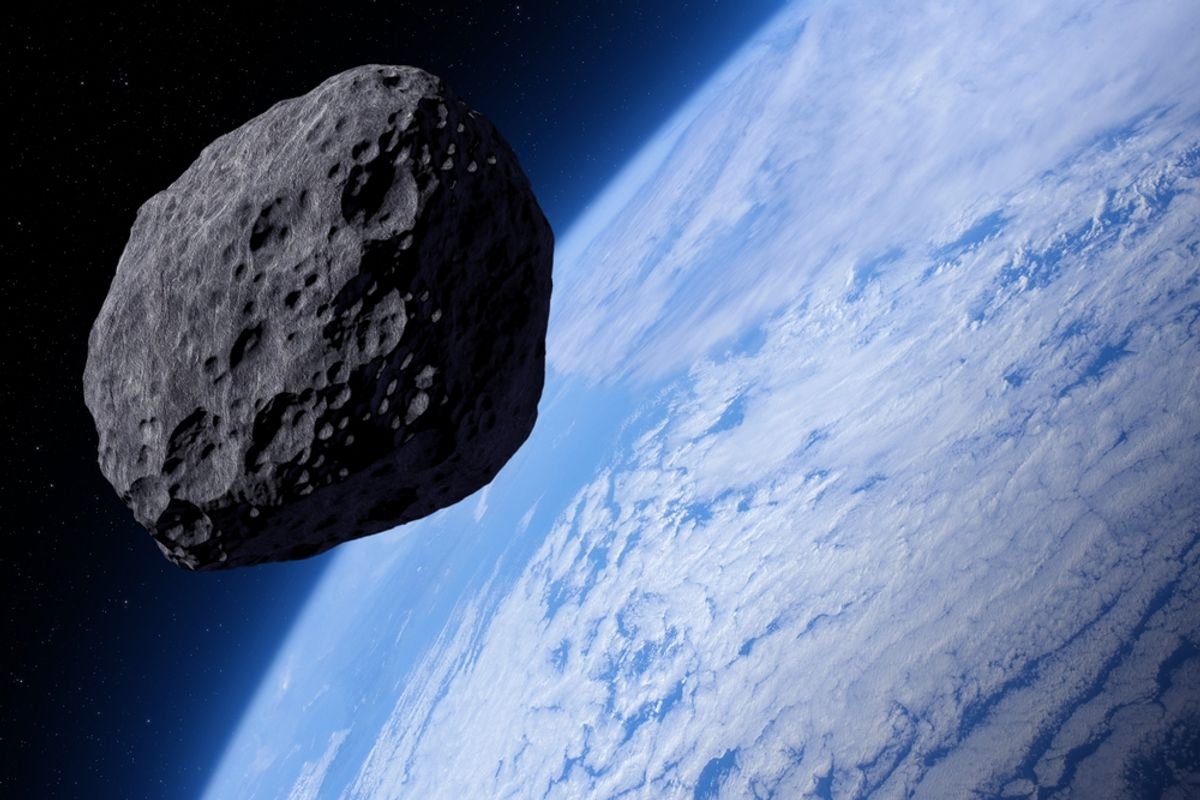
The researchers behind the new study, instead, pin the blame on a fragmented comet that they believe exploded above North America. They claim that this impact caused widespread burning and that smoke, soot, and dust would have blocked the sun, dropping temperatures across the continent.
Signs of a Comet Impact
In an effort to support this hypothesis, previous research has presented evidence in the form of certain minerals common in comets and others that appear to have been melted, cooled, and hardened again. Some scientists, though, have been skeptical about these forms of evidence, claiming that they could be associated with terrestrial processes and not a comet impact.
However, the new study has unveiled evidence that is often considered the best indicator of a cosmic impact in the absence of a crater: shocked quartz, or grains of sand deformed by extreme pressures and temperatures. The researchers found quartz grains with cracks at three North American archaeological sites: Murray Springs in Arizona, Blackwater Draw in New Mexico, and Arlington Canyon in California’s Channel Islands.
“These three sites were classic sites in the discovery and the documentation of the megafaunal extinctions in North America and the disappearance of the Clovis culture,” said author James Kennett, professor emeritus of earth sciences at the University of California, Santa Barbara, in a statement.
Unearthing Shocked Quartz
Using techniques like electron microscopy and cathodoluminescence, the researchers confirmed that the quartz grains were shocked at extremely high temperatures that they say could not have been caused by volcanism or ancient human activity.
The proposed comet impact around 13,000 years ago wouldn’t have left a crater since it is thought to have happened as a “touchdown airburst,” occurring when comets explode aboveground. These cosmic collisions don’t leave much evidence behind on the landscape, yet shocked quartz grains often indicate an airburst event.
The researchers ultimately believe that this shocked quartz could help explain the origin of the Younger Dryas, providing insight into the downfall of North American megafauna and the Clovis culture.
Read More: A Comet Could’ve Caused Rapid Climate Shift Around 12,800 Years Ago
Article Sources
Our writers at Discovermagazine.com use peer-reviewed studies and high-quality sources for our articles, and our editors review for scientific accuracy and editorial standards. Review the sources used below for this article: