
Yellowstone Cleanup Crews Tackle Litter That Causes Hot Springs to Clog and Change Colors

Although Yellowstone National Park is one of the most pristine places in America, even its hot springs aren’t safe from reckless littering. Yellowstone’s vast array of hydrothermal features attracts over 4 million visitors annually, so while the park does its best to educate visitors about park laws, some people inevitably throw debris around, to the detriment of Yellowstone’s natural wonders. Even throwing a stick or a stone into a hot spring has consequences, even if it may seem harmless.
With so many unwanted items ending up in hot springs, park staff need to be constantly cleaning. This process, led by a team of red-vested geologists, is described in Caldera Chronicles, a weekly column written by Yellowstone Volcano Observatory scientists and collaborators. Debris often changes the appearance of hot springs, but it can also jam their internal plumbing, making the cleanup crew’s mission urgent.
Read More: A Mysterious Ground Shift Returns to Yellowstone, and Advanced Tech Is Helping to Monitor It
The Threat of Trash
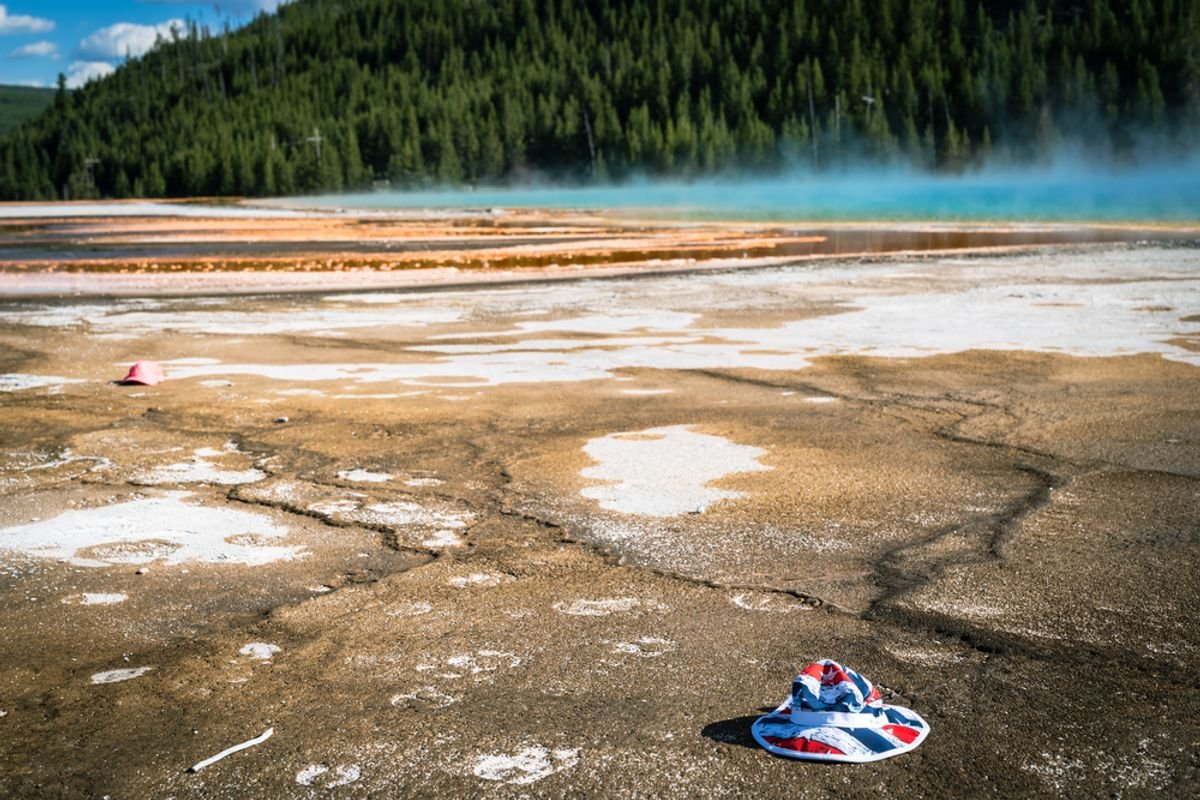
As Yellowstone geologists scout hydrothermal features for any damage, they come across all different kinds of litter; gum wrappers and tissues, for example, have been blown into hot springs by wind over the years. The same goes for hats, whisked off of visitors’ heads as they stroll along boardwalks; in 2025, over 300 hats were recovered from hydrothermal areas, according to the Yellowstone Volcano Observatory.
Visitors have also been throwing rocks and sticks into hot springs for decades; in 1947, Minute Geyser’s west vent became clogged after rocks were tossed in. The geyser once erupted every 60 seconds, but nowadays, its eruptions are irregular and occur only at a smaller east vent. The rocks can’t be removed without causing severe structural damage, and so the geyser remains permanently altered, according to the National Park Service.
A more popular site, the vivid Morning Glory Pool, has changed color because of littering. Back when Yellowstone’s old main road ran through the Upper Geyser Basin, it passed right by the pool, which was originally a deep blue color. However, garbage accumulated at its base, restricting the flow of hot water into the pool. A decrease in temperature left orange and yellow rings around its edge, dulling the original blue color. This indicates that microbes have taken over the pool.
A Constant Need to Clean
To clean up trash at hot springs, geologists need the right tools for the job. And sometimes, they have to get a bit creative and improvise; they’ll use grabber poles (ranging from 2 to 30 feet long), fishing rods, and slotted spoons to remove debris from the water. The job can be dangerous, too, but geologists know exactly how to traverse the landscape without risking their safety or causing additional damage.
Successful cleanups have helped to restore hot springs in recent years; in 2025, geologists removed over 6,000 items from a hot spring near Grand Prismatic Overlook that had been filled with sticks and rocks tossed in by visitors. After the debris was removed, the spring’s water flow and temperatures increased.
The unfortunate reality, though, is that it took only five years for this feature, which had been remediated back in 2020, according to the Yellowstone Volcano Observatory, to be refilled with debris. It goes to show how hot spring cleanups are an ongoing necessity, not just a one-and-done event.
Keeping Yellowstone Litter Free
Hot spring cleaning isn’t the only responsibility of geologists at Yellowstone. They also study the water quality and chemical composition of hydrothermal features, which helps them understand how the features behave.
Geologists also work on remediating hot springs in other ways, whether it’s removing graffiti or fixing damage on microbial mats. As they’re out and about, they will often chat with visitors on boardwalks or trails. These interactions ultimately allow visitors to see why it’s so important to keep all of the park’s features — including its hot springs — clean at all times.
Read More: The World’s Biggest Acidic Geyser Erupts at Yellowstone After Years of Minimal Activity
Article Sources
Our writers at Discovermagazine.com use peer-reviewed studies and high-quality sources for our articles, and our editors review for scientific accuracy and editorial standards. Review the sources used below for this article: