
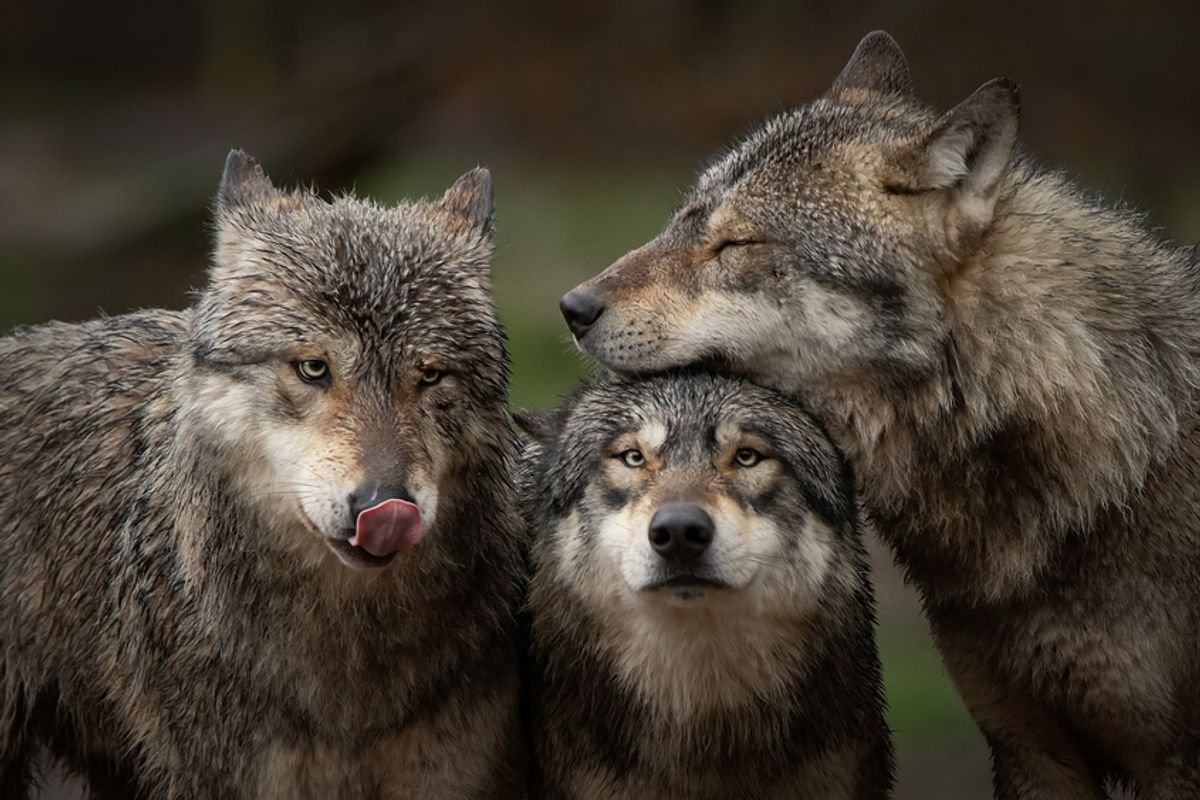
Wildlife With Weaker Social Connections May Face Greater Extinction Risk

Most people understand the value of a social circle. Friends share information, offer protection, and provide support. Without those connections, everyday challenges become harder to manage.
Animals rely on similar networks. Even species that do not live in tight-knit groups benefit from brief encounters — sharing information about food sources, spotting predators more quickly, or improving their chances of reproduction. As wildlife populations shrink, the social encounters that support survival may fade along with them.
In a study published in Trends in Ecology & Evolution, researchers argue that animals that do not live in stable, tightly bonded groups may be more vulnerable to extinction than previously thought. Species such as deer, squirrels, chickadees, and many invertebrates still rely on social contact in subtle ways, even though they do not maintain permanent social groups.
“This finding comes at a moment when many wildlife populations are shrinking or fragmenting due to climate change, habitat loss, and exploitation,” said senior author Michael Gil in a press release. “We provide a new framework for predicting which species are most susceptible to collapse so we can better forecast risk.”
Read More: Feeling Anti-Social When You’re Sick? Signals to the Brain Are Responsible
Rethinking Extinction Risk in Wildlife Populations
Nearly a century ago, ecologist Warder Clyde Allee observed that animals often fare better in larger groups — a pattern now known as the Allee effect.
Researchers assumed that if social behavior drives Allee effects, the most tightly bonded species would be most at risk. Wolves, meerkats, and wild dogs live in stable groups where cooperation clearly shapes survival.
“It’s intuitive that we think the more social a species is, the more vulnerable it is to losing those interactions,” Gil said.
But highly social species can sometimes buffer themselves against regional decline. In African wild dogs, for example, surviving animals reorganize into new packs when members are lost. Population declines may reduce the number of packs, but pack size and the benefits that accompany it can remain relatively stable.
When Interaction Rates Track Population Size
The authors focus on a different mechanism: how often animals actually encounter one another. Ecologists call this experienced density, the frequency of social contact an individual experiences in daily life.
In species that do not actively maintain fixed groups, experienced density often rises and falls directly with overall population size. Fewer animals across a landscape can mean fewer local encounters.
“When you remove individuals, you’re not just removing those individuals from the population; you’re also removing the benefits that they conferred on surviving individuals. That creates a feedback loop,” said Samantha Rothberg, the paper’s first author, in a press release.
In these cases, declining numbers can reduce access to shared information, collective vigilance, or mating opportunities, reinforcing the decline.
A Widespread but Overlooked Pattern
Loose forms of sociality span invertebrates, fish, birds, and mammals. Many species come together seasonally, exchange information while foraging, or cluster in shared habitats without forming permanent groups.
“I’m looking out my window right now, and there are a couple of birds sitting on branches. They’re being social. But those moment-to-moment interactions are easy to take for granted. We now realize that, in aggregate, they can determine whether a population survives or collapses,” Gil said.
In what many researchers call the sixth mass extinction, understanding how species decline has taken on new urgency. Resilience may depend not only on how many individuals remain, but on how often they encounter one another. For conservationists, maintaining opportunities for interaction may be as important as protecting habitat.
Read More: What Bird Brains Can Teach Us About Learning a New Skill
Article Sources
Our writers at Discovermagazine.com use peer-reviewed studies and high-quality sources for our articles, and our editors review for scientific accuracy and editorial standards. Review the sources used below for this article: