
Why Can’t You Tickle Yourself? Your Brain Actually Prevents It From Happening

Key Takeaways on Why You Can’t Tickle Yourself
- While you may be a very ticklish person, your brain will usually not let you tickle yourself because it can anticipate when and where the tickling will occur.
- There are two types of tickling: the first is a light, feather-like touch, while the other is a harder, more aggressive touch.
- Though you laugh while being tickled, and it is supposed to be a form of “play,” there is a hint of anticipatory fear felt as well.
Whether it’s a rough poke to the ribs or a sneak attack on the feet, being tickled often results in an uncontrollable fit of laughter followed by a frantic attempt to get away. But when you try to tickle yourself, you’ll notice that nothing really happens.
So why can’t you tickle yourself? And what does that tell us about how the brain works?
It turns out that tickling involves far more than simply the sense of touch. The reaction is a complex mix of anticipation, surprise, social play, and some well-tuned sensory processing.
Read More: Wincing at Movies? Your Brain Might Be Re-Creating the Pain
The Two Types of Tickling
Tickling is often thought of as a single sensation, but scientists tend to divide tickling into two main types. Neuroscientist Shimpei Ishiyama, who studies the neurobiology of tickling and is group leader of the Neurobiology of Positive Emotions research group at the Central Institute of Mental Health in Mannheim, said that understanding the difference between the two types of tickling is key.
“The distinction is often intuitive if described as a contrast between a light, feather-like touch [known as knismesis]and a more vigorous touch to areas such as the sides of the torso [known as gargalesis]. The former typically produces an itch-like sensation that motivates wiping or withdrawal, whereas the latter can trigger involuntary laughter,” Ishiyama told Discover.
In English and many other languages, “[b]oth sensations are commonly referred to as ‘ticklish,’ yet they differ along several dimensions: the body regions involved, the manner of stimulation, and the behavioral response of the person being tickled,” Ishiyama said to Discover.
But in other languages, such as Turkish, he added, speakers naturally distinguish between the two types of ticklish.
“While this distinction may not be critical in everyday conversation, it is essential in scientific research, because failing to separate the two risks conflating fundamentally different sensory and behavioral phenomena under the same label,” said Ishiyama.
Why Can’t You Tickle Yourself?
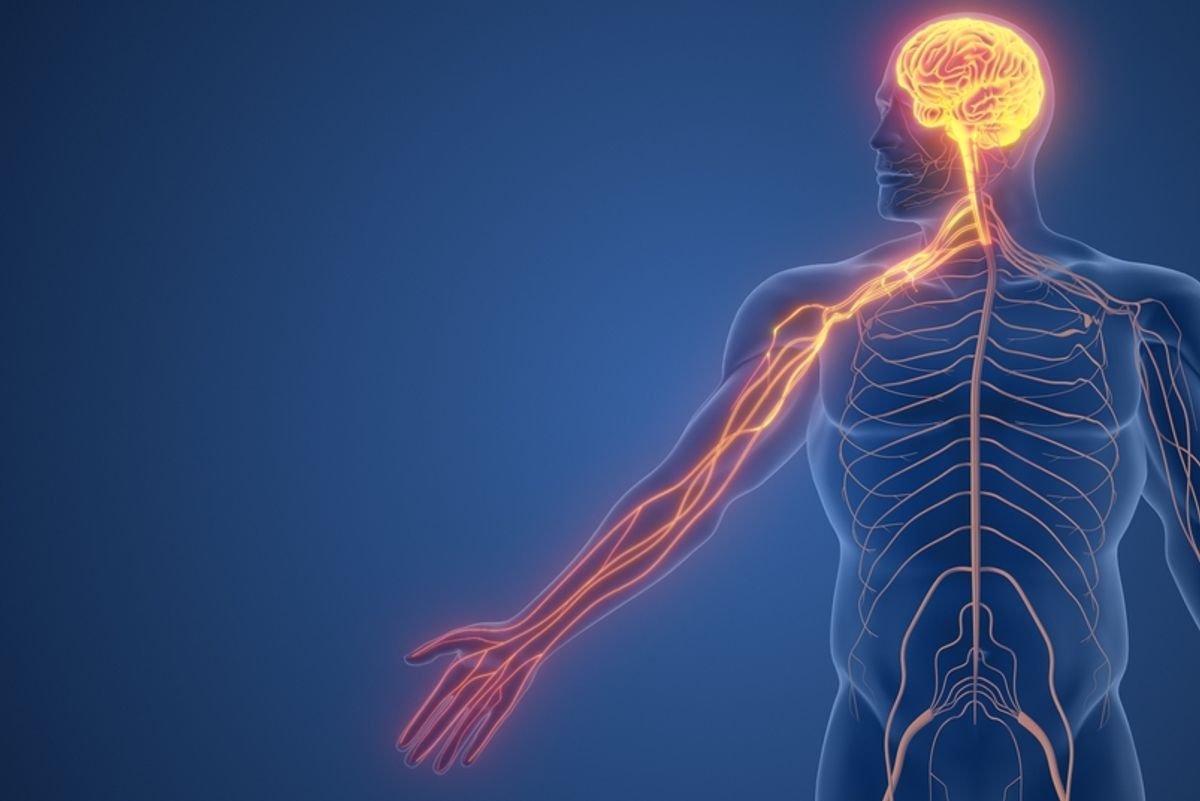
When someone else tickles you, the sensation is unexpected and out of your control. But when you try to tickle yourself, your brain predicts precisely where you are going to be touched and then limits the strength of the sensory signals resulting from that touch.
“The reduced sensation during self-touch compared to touch from others is known as sensory attenuation,” said Ishiyama to Discover. “For many years, this has been interpreted as a consequence of predictive motor signals: When a movement is generated, brain regions including the cerebellum produce what is called an efference copy, an internal copy of the motor command.”
That internal copy is then used to modify the sensory feedback the brain expects from its own movements, a process known as corollary discharge, according to a 2024 study in PNAS.
In experiments with rats, Ishiyama and his colleagues traced this dampening effect to specific cellular mechanisms within the somatosensory cortex.
“Functionally, sensory attenuation during self-touch is thought to help the brain distinguish between self-generated sensations, which are typically less behaviorally relevant or threatening, and externally generated sensations, which are more likely to require attention or defensive responses,” Ishiyama said.
Are You Supposed to Be Able to Tickle Yourself?
Although most people cannot truly tickle themselves, experiments have shown that it’s sometimes possible to trick the brain into feeling a slight self-caused tickle.
For example, in a Journal of Cognitive Neuroscience study, when researchers used robotic tools to introduce tiny time delays or spatial perturbations to self-induced touch, participants rated the sensations as slightly more tickly. And the amount the tickliness increased was found to be proportional to the error between the brain’s predicted sensory feedback and the actual sensory feedback it received.
A 2016 study in Consciousness and Cognition also found that people with schizophrenia-type traits, known as schizotypy, tend to be more successful at tickling themselves.
What Are the Most Ticklish Body Parts?
Not all skin is equally sensitive to tickling. While personal preferences and tolerances vary, some particularly ticklish parts of the body come up again and again in surveys and studies.
The soles of the feet are often ranked as the most ticklish spots, followed by the armpits, neck, and sides of the torso. Many people also rank their stomach and inner thighs as quite ticklish.
Scientists still don’t quite know exactly why these spots are so ticklish. It may have something to do with skin sensitivity, nerve density, or even evolutionary factors such as protecting vulnerable body parts. But whatever the cause, these regions tend to produce the most intense reactions, especially when touched by someone else, according to the Cleveland Clinic.
Tickling Is Play with a Hint of Fear
Tickling is not just a reflex. It’s also a form of social play commonly seen in children and young animals, such as apes and rats.
“What I find most interesting about ticklishness is its ambivalent nature,” said Ishiyama to Discover. “Rather than thinking there are pleasant and unpleasant types of tickling, I see vigorous tickling as a form of ambivalent social play.”
And while our outward reaction to being tickled might appear like we’re having pure fun, the internal feeling is often more complex.
“Play is often assumed to be purely pleasurable, but I think it usually includes some uncertainty or mild fear within a safe context. Tickling is not a pure pleasure like massage,” Ishiyama added. “[And] that small amount of tension may be what makes it fun.”
For example, tickling juvenile rats rarely leads to negative responses, Ishiyama said.
“By contrast, when rats actively initiate tickling, they often show brief fear-related behavior immediately after initiation, before the tickling occurs, similar to how you might feel nervous after buying a ticket to a roller coaster ride,” he added.
The Biggest Mystery in Tickling Research
Even with all that scientists known about brain mechanisms and behavioral patterns, tickling still remains a “relatively niche and understudied topic, so there are many open questions,” Ishiyama told Discover. “If I had to single out one, it would be this: Why does a simple touch to specific body regions reliably trigger bursts of laughter?”
“In other words, how tactile input is transformed into a vocal, emotional response, and why this particular sensory-to-motor conversion has been preserved through evolution, remain largely unexplained,” Ishiyama concluded.
Read More: You May Have Sensitive Teeth Because of This 465-Million-Year-Old Fish
Article Sources
Our writers at Discovermagazine.com use peer-reviewed studies and high-quality sources for our articles, and our editors review for scientific accuracy and editorial standards. Review the sources used below for this article: