
Want to Do Dry January? One Month Without Alcohol Can Benefit Sleep, Mood, and Health

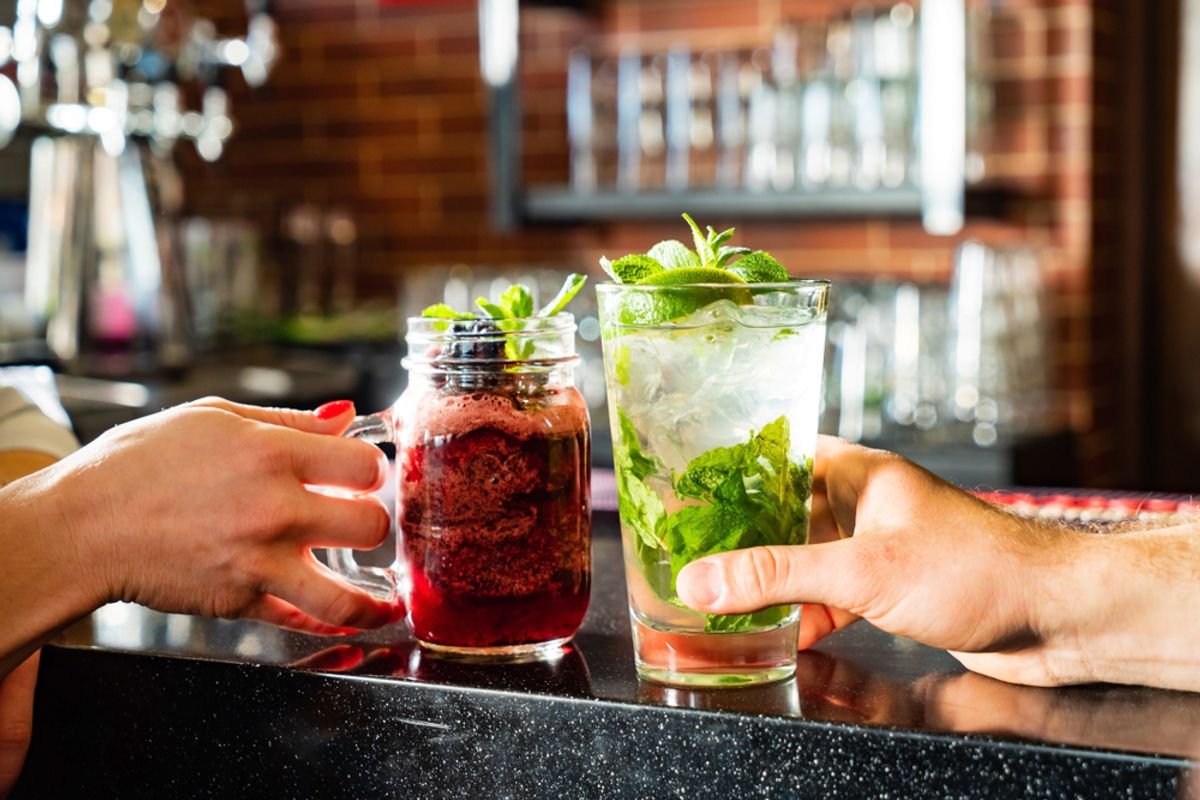
After a month of excess drinking for many, there is good reason to switch your cocktail for a mocktail or try a new zero percent beer during Dry January.
A new review published in Alcohol and Alcoholism found that one month of sobriety is linked to a number of positive physical and psychological health outcomes. This includes better sleep, better mood, and better liver function. Even those who did not quit the booze entirely but simply moderated their intake saw improvements.
What’s more, the research suggests that cutting down on alcoholic drinks in January does not automatically trigger a binge in February. Lead author Megan Strowger, who led the work as a postdoctoral fellow at the School of Public Health at Brown University, explained that taking part can lead to “sustained moderation.”
“Most participants continue to drink less alcohol rather than increasing consumption afterwards,” Strowger, now a post-doctoral research associate at the University at Buffalo, said in a statement. “Overall, participating in Dry January allows people to pause, reflect, and rethink their relationship with alcohol.”
Read More: Why Your Mouth Feels Dry After Wine or Tea, And How That’s Actually Good for You
Dry January: Better Sleep, Better Mood, and Better Health
The review comes off the back of 16 papers studying the impact of Dry January, a challenge that encourages participants to take a month off alcohol.
The papers included a mix of experimental and observational studies, employing qualitative, quantitative, and mixed-methods approaches. Combined, they involved more than 150,000 individuals.
While there are limitations — the majority lack a control group and may be prone to selection bias, for example — the overwhelming conclusion is that temporarily abstaining from alcohol is good for your physical and mental health.
Those who completed Dry January reported improved sleep, greater concentration, and weight loss. The challenge has also been linked to improvements in liver function, insulin resistance, and blood pressure. While participants were more likely than average to report lower well-being at the start of the challenge, signing up was associated with greater happiness, higher self-belief, and more positive overall feelings.
The only downside observed is that participants experienced less social contact than those who continued to drink. There was also a smallish group of participants who did not complete the month and experienced a “rebound effect,” drinking to the point of drunkenness (15 percent) more often in the months after than those who lasted the full month (6 percent).
Who Is Signing Up For Dry January?
Asking “Are you doing Dry January?” is as commonplace as saying “What are your New Year’s resolutions?” but the campaign itself is barely a decade old.
According to Alcohol Change UK, which launched the challenge in 2013, approximately 16 percent of U.K. adults plan to participate in 2026. Those who do are more likely to be young, female, and a college graduate. They are also more likely to have higher incomes and to describe themselves as drinking more than the average.
Hopping On A Trend
It may be that more people are participating in Dry January, but it also seems many more people are abstaining entirely. Results of a recent Gallup poll suggest the number of Americans who say they drink (54 percent) is at an all-time low, while the belief that even moderate drinking is bad for your health (53 percent) is at an all-time high.
Suzanne M. Colby, professor of behavioral and social sciences at Brown University, says there is far more support for people choosing to live alcohol-free now than in the past.
“Social norms have shifted, in part with the help of influencers on social media sharing the benefits of sobriety and reducing the stigma of not drinking,” Colby said in a statement.
If you’re planning to give Dry January a go in 2026, the researchers have some tips. Those who made use of campaign tools and consistently read Dry January messaging were more likely to maintain sobriety for a full 31 days (or more). Successful abstainers also credited social support, self-monitoring activities, non-alcoholic beverages, and social events with helping them stay on track.
This article is not offering medical advice and should be used for informational purposes only.
Read More: Post-Party Depression: Why Holiday Socializing Can Feel Like a Hangover
Article sources
Our writers at Discovermagazine.com use peer-reviewed studies and high-quality sources for our articles, and our editors review for scientific accuracy and editorial standards. Review the sources used below for this article: