
Venice in November: Complete Travel Guide & Photography
Most people picture Venice in summer. Sunshine on the Grand Canal. Gondolas packed three deep. Gelato in every other hand.
I visited in the second week of November.
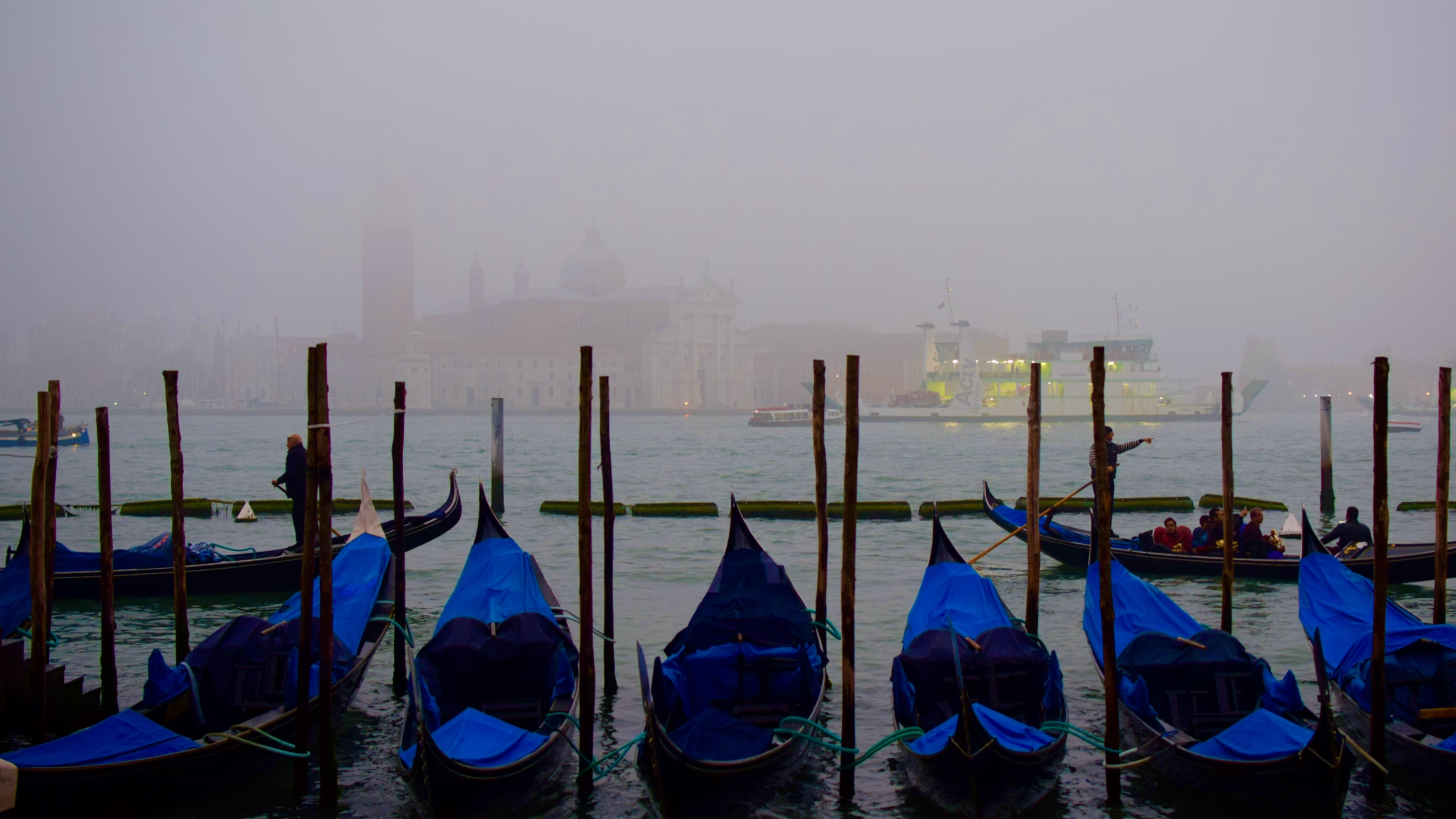
The fog had settled over the lagoon the way it apparently does every year around that time — thick, low, and completely indifferent to any plans you might have had for golden hour photography. The city looked like it had been painted in watercolour and left to dry in the rain.
It was, without question, the most atmospheric place I have ever stood.
This is my honest account of two nights in Venice — what I saw, what I didn’t, what surprised me, and everything you need to know before you go.
Quick Facts: Venice at a Glance
| Best time to visit | November–February (quiet) or April–May (mild) |
| Currency | Euro (€) |
| Language | Italian |
| Getting there | Train to Santa Lucia, or fly to Marco Polo Airport (VCE) |
| Getting around | Vaporetto (water bus) or on foot — no cars |
| Vaporetto single ticket | ~€9.50 (75 min validity) |
| 48-hour pass | ~€35 — best value for most visitors |
| Day trip to Burano | Vaporetto Line 12 from Fondamente Nove, ~45 min |
Top Things to Do in Venice — Summary Table
| Sight / Experience | Cost | Time Needed | Book Ahead? |
|---|---|---|---|
| Walk the calli (alleys) | Free | All day | No |
| Vaporetto Line 1 — Grand Canal | ~€9.50 (or pass) | 45 min ride | No |
| St. Mark’s Basilica | Free entry | 1–2 hours | Yes — timed slot |
| Doge’s Palace | ~€25–30 | 2–3 hours | Yes — skip queue |
| Bridge of Sighs | Free (outside) | 15 min | No |
| Gondola ride | €90/30 min (day) | 30 min | No |
| Classical concert (churches) | €25–40 | 1–1.5 hours | Recommended |
| Day trip to Burano | Vaporetto pass | Half day | No |
| Murano glass shopping | Free to browse | 2–3 hours | No |
Getting to Venice
I arrived from Bled in Slovenia by shuttle service — a route that crosses the border through the Julian Alps and delivers you to Piazzale Roma, the last point in Venice accessible by road. If you’re travelling through Central or Eastern Europe, the Bled–Venice corridor is worth knowing about (around 3–4 hours depending on the service).
By train: The most common route for visitors travelling within Italy. High-speed Trenitalia and Italo trains connect Venice Santa Lucia station from Milan (~2.5 hrs), Rome (~4 hrs), and Florence (~2 hrs). The station sits directly on the Grand Canal — your first view of Venice hits the moment you exit the arrivals hall.
Booking train tickets in advance almost always gets you a cheaper fare. I use Omio to compare routes and prices across operators, and Rail Europe for booking directly. Both cover Italian high-speed trains and international connections.
By plane: Marco Polo Airport (VCE) is the main international gateway, located on the mainland about 8 km from Venice. From the airport:
- Alilaguna water bus (~€15, 75 min) — the most scenic option
- ATVO bus to Piazzale Roma (~€8, 20 min) then vaporetto
- Private water taxi (~€110+, 30 min) — expensive but direct to your hotel’s water entrance
- Pre-booked arrival transfer — if you’re arriving with luggage and want a stress-free start, a pre-booked Marco Polo Airport arrival transfer takes the guesswork out of navigating the water bus network on your first day
Getting Around: The Vaporetto

There are no cars in Venice. No buses, no taxis. You move by boat or on foot.

The main form of public water transport is the vaporetto — a water bus run by ACTV on fixed routes along the canals and out to the islands. The most useful for first-time visitors is Line 1, which runs the entire length of the Grand Canal from Piazzale Roma to San Marco, stopping at every dock along the way. It’s slow, but it’s essentially a free Grand Canal sightseeing cruise.

If you arrive by train, the Ferrovia vaporetto stop is immediately outside the station, right on the Grand Canal. Buy your ticket or pass before boarding and validate it using the machine each time you board — inspectors check regularly.
Ticket options:
- Single ticket (~€9.50, valid 75 min after first validation)
- 24-hour pass (~€25)
- 48-hour pass (~€35) — recommended for most visitors
- 72-hour pass (~€45)
For a 2-night stay using the vaporetto regularly and taking a day trip to Burano, the 48-hour pass almost always pays for itself.

One note: walking is often faster than the vaporetto for short distances. The boats must follow the canals; your legs can cut straight through. Use the vaporetto for the Grand Canal experience, for luggage days, and for the islands. Use your feet for everything else.


Walking Venice: Getting Lost on Purpose
Here is the thing nobody tells you about Venice: the map is almost useless.

The city is a labyrinth. Streets narrow to shoulder-width. They end at canals without warning. A passage that looks straightforward on your phone leads you in a full circle back to a bridge you crossed twenty minutes ago.

The correct response is to stop trying to navigate and just walk.

Venice is small enough that you can’t get truly lost. There are four main orientation points — Ferrovia (train station), Rialto, San Marco, and Accademia — and most alleys eventually lead to one of them. The wall signs pointing “Per Rialto” and “Per San Marco” are everywhere. Trust them loosely and enjoy the detours.


Not every street in Venice is quiet, though. The route between Rialto and St. Mark’s — and the streets immediately around the Piazza — get genuinely busy even in November. This is what the shopping streets look like on a typical afternoon. In summer, they’re near-impassable.

St. Mark’s Square (Piazza San Marco)

St. Mark’s Square is unavoidable and worth every cliché written about it. It is the largest open space in Venice, flanked by the Procuratie arcades and anchored by the Basilica di San Marco — a building so covered in golden mosaics that it seems to generate its own light.

In November, the square is manageable. The cruise ship crowds are gone. You’ll find tourists, but also locals, pigeons, and enough space to actually look at the architecture.

Practical notes: St. Mark’s Basilica is free to enter but requires a timed entry booking online in advance. Queues without a booking can stretch over an hour. Photography inside is not permitted. The Doge’s Palace next door charges ~€25–30 — book skip-the-line tickets in advance.
The most efficient way to do both in one go is this St. Mark’s Basilica, Doge’s Palace and Bridge of Sighs combined tour — skip-the-line access with a guide who contextualises what you’re looking at. If you’d prefer to go independently, you can book a Doge’s Palace skip-the-line ticket or a St. Mark’s Basilica tour with skip-the-line entry separately.
The Bridge of Sighs
A short walk from St. Mark’s Square brings you to the Ponte dei Sospiri, or Bridge of Sighs — one of Venice’s most photographed landmarks.

The bridge connects the Doge’s Palace to the old prison. Prisoners walked across it on their way to their cells, and legend has it the name comes from the sighs they let out as they caught their last glimpse of Venice through the stone-latticed windows.
In November fog, with a single gondolier passing underneath in silence and almost no crowds at the viewpoint, it looked exactly as extraordinary as the guidebooks promise.
No ticket is needed to photograph it from the bridge on the Riva degli Schiavoni. To actually cross it, you need a Doge’s Palace ticket — it’s accessible on the inside tour.
Gondolas: The Honest Guide

The gondola is the symbol of Venice. It is also, for a solo traveller, practically impractical.
A standard gondola ride costs €90 for 30 minutes during the day, rising to €110 after 7pm. The gondola takes up to six people, so solo travellers either pay the full rate or wait to share with strangers. I didn’t take a gondola ride. I photographed them instead, and got more from that.


If you do want the experience, book at an official station, agree the price clearly before boarding, and choose a quiet side canal over the Grand Canal for a more peaceful ride — the small canals, away from the vaporetto wash, are where the experience is closest to what you imagined. Booking in advance locks in a set price and a guaranteed slot; this Grand Canal gondola ride with commentary is one of the better-reviewed options, and the commentary adds genuine context to what you’re floating past.
Music in a Venetian Church
I walked into a church on my second day — somewhere between San Marco and the Accademia — and found a trio of musicians setting up in front of the altar. Three cellos, two baroque marble angels, warm low light.
I didn’t catch the concert. But the image has stayed with me longer than most things I saw in Venice.

Venice has a deep musical heritage — Vivaldi composed here, and classical concerts run year-round in the city’s churches. For a proper performance, check the programme at La Fenice opera house or look for evening concerts at the Frari or La Pietà.
For a proper performance, Vivaldi’s Four Seasons performed live in Venice is one of the most consistently praised concert experiences in the city — staged in a historic Venetian venue with period instruments. Worth booking ahead, especially in the shoulder season when good seats go quickly.
Venice at Night
After 9pm, the day-trippers are gone. The streets empty. This is when Venice is best.


Walk out to the Riva degli Schiavoni after 10pm and look back at the city. The reflection of lights in the canal water is extraordinary — colours that don’t appear during the day emerge once everything else goes dark. It’s worth staying up for.
Shopping: Murano Glass and Carnival Masks
Murano glass originates from the island of Murano, a short vaporetto ride away (Line 12 from Fondamente Nove). The glassblowing tradition has been there since the 13th century, when furnaces were moved from Venice to reduce fire risk. You can watch glass being blown at several workshops for free.
On the main island, glass shops are everywhere — but quality varies enormously. Look for pieces with the “Vetro Artistico Murano” trademark sticker if you want genuine Murano glass.


Venetian carnival masks are the other signature souvenir. The real ones are handpainted papier-mâché made by artisans in small workshops. The cheap ones are made in China. The difference is immediately visible when you hold them.

Where to Stay in Venice
Venice accommodation is expensive — that is not negotiable. But where you stay changes the experience considerably.

Budget
MEININGER Venezia Mestre (Mestre — mainland) The most affordable entry point for Venice. MEININGER is a well-run hostel-hotel hybrid on the mainland in Mestre, a short 10-minute train ride from Venice Santa Lucia. Dorm beds and private rooms available, with a guest kitchen, common areas, and a game zone. A solid choice if you want to save money on accommodation and spend it in Venice instead. Best for: Budget travellers, backpackers, families on a tight budget
Generator Venice (Giudecca island) One of Venice’s best-known hostel brands, Generator sits on Giudecca island with excellent views across the lagoon to San Marco. A 10-minute vaporetto ride from the main sights, considerably cheaper than the main island, and popular with solo travellers who want a social atmosphere. Best for: Solo travellers, social budget-conscious visitors
Mid Range
Hotel San Gallo (near Piazza San Marco) A three-star property tucked into the covered arcade immediately adjacent to Piazza San Marco — the location is unbeatable, two minutes from the Basilica. Rooms are modest in size, as is typical for Venice, but well maintained. The position alone justifies the price for first-time visitors who want to be in the heart of things. Best for: First-time visitors who want St. Mark’s on their doorstep
Ca’ Bragadin Carabba Guest House (Castello, near Rialto) A 14th-century Gothic building on the peaceful Campo Santa Marina, five minutes’ walk from the Rialto Bridge and eight from St. Mark’s Square. Notably, the building is associated with Casanova, who is said to have lived here. Only 16 rooms, decorated with classic 18th-century Venetian furnishings, garden views, and a genuine sense of history. Excellent value for the location and character. Best for: History lovers, couples, those wanting authentic Venetian atmosphere without the luxury price
Hotel Ai Reali (Castello) A solid three-star in Castello, walkable to all the main sights. Good location near the Riva degli Schiavoni waterfront, comfortable rooms, included breakfast. A reliable, no-surprises mid-range pick for first-time visitors. Best for: First-time visitors who want comfort and convenience
Oltre il Giardino (San Polo) A small guesthouse behind a walled garden in San Polo — one of Venice’s most genuinely residential neighbourhoods. Only six rooms, beautifully decorated, feels like staying in a Venetian home rather than a hotel. Books up quickly. Best for: Couples, travellers who want atmosphere over amenities
Hotel Plaza Venice (Mestre — mainland) A four-star property directly opposite Mestre train station — 10 minutes by train or bus to Venice Santa Lucia. 209 comfortable rooms, two restaurants including the well-regarded Soul Kitchen, buffet breakfast, and free parking available nearby. A significantly cheaper base than the main island with easy connections. Best for: Families, car travellers, those wanting four-star comfort at mainland prices
Hotel Panorama (Lido di Venezia) A four-star property on the famous beach island of Lido, directly opposite the vaporetto stop, with lagoon views of Venice from the upper rooms and terrace. About 15 minutes by water bus to San Marco. Quieter and more residential than the main island — a genuinely different way to experience Venice, particularly good in spring and autumn. Best for: Those wanting to escape the main island crowds, beach access in warmer months
Upper Range
Ca’ Sagredo Hotel (Cannaregio, Grand Canal) A 15th-century palazzo directly on the Grand Canal in Cannaregio, with original frescoes on the ceilings and canal-facing rooms that justify the price entirely. One of the most authentic palazzo hotel experiences in Venice — genuinely historic rather than merely historic-themed. Best for: Special occasions, those wanting the real Grand Canal palazzo experience
Palazzo Barbarigo sul Canal Grande (San Polo, Grand Canal) Muranese glass mosaics on the facade, Murano glass chandeliers in the rooms, a Grand Canal position between the Rialto and the Accademia. Boutique, personal, and visually exceptional. A hotel that feels like it was designed rather than assembled. Best for: Design-conscious travellers, honeymooners
Hyatt Centric Murano Venice (Murano island) The first and finest hotel on Murano — housed in a former 14th-century glass factory with Venini glass fittings throughout, 119 rooms including duplex suites, a restaurant in a bioclimatic greenhouse, and a vaporetto stop directly outside. Venice is 15 minutes away by boat, Burano 20. A genuinely different base that trades the main island’s crowds for Murano’s quieter, more artisanal character. Best for: Design lovers, those combining Venice with Murano and Burano, anyone wanting a peaceful lagoon experience
Splurge
The Gritti Palace (San Marco, Grand Canal) The most famous address in Venice. A 15th-century palazzo near San Marco, now a Marriott Luxury Collection property — Hemingway stayed here. The terrace bar overlooking Santa Maria della Salute is one of the finest places to have a drink in the city, whether or not you’re staying. Best for: Bucket-list stays, honeymoons, those for whom price is not the primary consideration

Neighbourhood guide:
- San Marco — most central, most expensive, busiest
- Cannaregio — quieter, more residential, near the station, better value. Best for first-time visitors
- Castello — between San Marco and the Arsenale, local feel, walkable to everything
- San Polo / Dorsoduro — atmospheric, good vaporetto connections, popular with return visitors
- Giudecca — across the water, cheaper, excellent views, vaporetto dependent
- Lido — beach island, peaceful, 15 min by boat, good for spring/summer
- Murano — island base, quieter, best for those combining Venice with the lagoon islands
- Mestre (mainland) — cheapest option, 10 min by train, no canal views but significant savings
Where to Eat in Venice
The golden rule: do not eat in Piazza San Marco. Prices there are two to three times higher than five minutes away and the quality rarely justifies it.
Bacari (Wine Bars / Cicchetti)
All’Arco (San Polo, near Rialto Market) A tiny standing bar that has been feeding locals for decades. The cicchetti — small topped crostini — are made fresh each morning from Rialto Market produce. Arrive before noon for the best selection. Cash only. Order: Sardines in saor, baccalà mantecato on crostini.
Cantina Do Spade (San Polo) One of Venice’s oldest bacari, dating to the 1400s. Dark wood, low ceilings, good house wine, proper cicchetti at standing-room prices. Order: Baccalà mantecato, meatballs.
Al Mercà (San Polo, near Rialto) An outdoor wine bar popular with locals at aperitivo hour (~6pm). No seating, everyone stands, the spritz is cheap and good. Order: Aperol spritz, whatever cicchetti is available.
Sit-Down Restaurants
Trattoria da Jonatan (Cannaregio) A neighbourhood trattoria away from the tourist circuit. Good pasta, honest prices. The kind of place that doesn’t advertise because it doesn’t need to. Order: Bigoli in salsa — thick pasta with anchovy and onion sauce, a classic Venetian dish.
Osteria alle Testiere (Castello) One of Venice’s best seafood restaurants. Only 22 covers, menu changes with the catch. Booking essential. Not cheap, but this is the benchmark for a proper sit-down seafood dinner in Venice. Order: Whatever the day’s pasta is.
Trattoria ai Cugnai (Dorsoduro) Reliable, unpretentious, popular with academics and budget-conscious locals near the Accademia. Order: Risotto al nero di seppia (squid ink risotto).
Fine Dining & Michelin-Starred Venice
Venice has a serious fine dining scene that most travel guides reduce to a footnote. If you have one special-occasion meal in your trip, the options below are the ones worth knowing about — ranging from Venice’s pinnacle two-star experience to an extraordinary island restaurant that pairs a Michelin meal with a trip to Burano.
All of these require advance booking, sometimes weeks ahead.
Ristorante Glam (Palazzo Venart, Santa Croce — 2 Michelin stars) The only restaurant in Venice with two Michelin stars, and one of the most exciting fine dining experiences in Italy. Set inside the 15th-century Palazzo Venart, with tables in a glazed dining room overlooking a courtyard shaded by a century-old magnolia tree. The kitchen is led by resident chef Donato Ascani under the direction of multi-starred Enrico Bartolini — the cooking draws on lagoon herbs, Rialto Market fish, and vegetables from Venetian island gardens, reinterpreted with precision and occasional theatre. Two tasting menus: “Art, Gardens and Lagoon” and “The Classics of Glam.” Open Wednesday to Sunday. Tasting menus from €250, à la carte from €200. Book well in advance. You can also arrive by water taxi directly to the palazzo.
Ristorante Wistèria (San Polo, near the Frari — 1 Michelin star) Tucked along the quiet Rio de la Frescada canal, a short walk from the Basilica dei Frari and five minutes from Piazzale Roma. Wistèria is run by long-time partners Andrea and Max, with chef Valerio Dallamano producing contemporary dishes built on Upper Adriatic seafood and seasonal Venetian produce. In good weather, tables are arranged in the wisteria-draped garden — one of the most quietly beautiful dining settings in Venice. Six or eight-course tasting menus only. An excellent choice for couples or anyone wanting a genuinely romantic, unhurried dinner away from the tourist circuit. Reserve the garden table when booking if the season allows.
Ristorante Local (Castello — 1 Michelin star) The most approachable of Venice’s starred restaurants in terms of atmosphere — a laid-back, effortlessly chic space with washed-out turquoise walls and rustic wooden finishes in Castello. Chef Salvatore Sodano elevates the cicchetti concept into something more ambitious, using local ingredients to transform Venice’s traditional snacking culture into a full tasting experience. Sommelier Manuel Trevisan’s wine list is widely praised. The energy here is warm and unaffected — less formal than Glam, which makes it particularly good for solo diners or first-timers at Michelin-level restaurants.
Venissa (Mazzorbo island — 1 Michelin star + Green Michelin star) The most extraordinary restaurant in the Venice lagoon, and the one I would most strongly recommend combining with a trip to Burano. Venissa sits inside a medieval walled vineyard on the tiny island of Mazzorbo, connected by a footbridge to Burano — so you can walk to the colourful houses and lace shops after lunch, or eat dinner before catching the last vaporetto back. The restaurant holds both a Michelin star and a Green Michelin star for sustainability. Chefs Chiara Pavan and Francesco Brutto practice what they call cucina ambientale — environmental cooking — using wild herbs from the lagoon’s salt marshes, vegetables from the estate garden, and lesser-known lagoon fish that most restaurants ignore. The estate produces its own Dorona wine from a rare native Venetian grape. Seven or ten-course tasting menus. The setting — medieval belltower, vineyard rows, lagoon views — is unlike anywhere else in Italy. Mazzorbo is 40 minutes by vaporetto from Fondamente Nove (Line 12), or about 20 minutes by water taxi. Book ahead — it fills up. Read my full Burano day trip guide for how to combine the two.
Osteria Da Fiore (San Polo — 1 Michelin star) One of Venice’s most enduring fine dining institutions — owner and chef Mara Martin has been running this understated San Polo restaurant for decades, and the Michelin star has been consistent throughout. The menu changes daily based on what arrives from the fish market; the focus is traditional Venetian seafood done with absolute confidence and no gimmicks. The setting is quiet and elegant without being stiff. Open Monday to Friday evenings and Saturday lunch, closed Sunday. Order: Whatever the day’s pasta is. The wine list rewards attention.
Not sure where to start with Venice’s food scene? A guided introduction removes all the guesswork. This Venice sunset walking tour with food and wine tastings takes you through the bacari and cichetti bars at the best time of day — early evening, when locals eat and the tourist restaurants are still half-empty. A good option for solo travellers or first-timers who want to eat well without spending an hour researching.
Day Trip: Burano
If you’re spending two or more nights in Venice, a half-day trip to Burano is one of the best decisions you can make.
Burano is a small fishing island in the Venetian Lagoon, 45 minutes from Fondamente Nove on Vaporetto Line 12. It is famous for its extraordinarily colourful houses — each painted a different shade, protected by local ordinance — and for its handmade lace tradition dating to the Renaissance.
In November, fresh from two days of Venice fog, the colour when you step off the vaporetto is genuinely startling. Nothing could have prepared me for the contrast.
I’ve written a full guide to the Burano day trip, including how to get there, what to see, where to eat, and photography tips: Day Trip to Burano from Venice: The Colourful Island That Surprised Me.
If you’d rather have transport and a guide taken care of, this Murano and Burano guided day trip from Venice combines both islands in one organised excursion.
Practical Information
Best time to visit: November to February for fewer crowds and lower prices. The fog is a feature, not a flaw — Venice in winter has an atmosphere that summer simply cannot replicate. Acqua alta (high water flooding) is possible in autumn and winter; the city handles it, but bring waterproof footwear just in case. April–May is the other sweet spot: mild weather, longer days, before the summer crush.
What to pack for Venice in November:
- Waterproof shoes or ankle boots — cobblestones and occasional acqua alta
- Layers — it’s cold and damp, especially on the water
- A camera strap that keeps your gear secure (canals are everywhere)
- Cash — smaller bacari and some shops don’t take cards
- Portable phone charger — you’ll photograph everything
Money: Card payments are widely accepted in restaurants and larger shops. Carry some cash for bacari, small markets, and the occasional ticket machine that won’t accept foreign cards.
Transport summary:
- Train to Santa Lucia → Ferrovia vaporetto stop → Line 1 or Line 2
- Airport → Alilaguna water bus → Grand Canal stops
- Burano day trip → Line 12 from Fondamente Nove
FAQ — Venice Travel Guide
Yes — emphatically. November is one of the best months to visit. The summer crowds are gone, prices drop, and the famous fog gives the city an atmosphere that photographs and travel writing struggle to capture. You’ll see more, walk more freely, and spend less than in summer.
Two nights gives you enough time to cover the main sights, get properly lost in the alleys, and make a day trip to Burano or Murano. Three nights is ideal. One day is possible but rushed.
Yes, more than most Italian cities. Accommodation is the biggest cost. Food can be managed by eating at bacari and avoiding Piazza San Marco. Vaporetto passes are good value if you use them for multiple trips. Entry to the main sights (Doge’s Palace, St. Mark’s Basilica) is reasonable but should be booked online in advance.
November to February for the fewest crowds, lowest prices, and the famous lagoon fog that gives the city its most atmospheric quality. April and May are the other sweet spot — mild temperatures, longer days, and manageable tourist numbers before the summer surge. July and August are the most crowded and expensive months, and the heat makes walking uncomfortable. If you visit in autumn or winter, bring waterproof shoes in case of acqua alta (high water flooding).
On foot for short distances — it’s almost always faster than the vaporetto due to the boats’ canal routing. Vaporetto for the Grand Canal, luggage days, and the islands. A 48-hour pass is the best value for a 2-night stay.
€90 for 30 minutes during the day, €110 after 7pm. The gondola takes up to 6 people. For solo travellers it’s expensive unless you share. Book at an official “Servizio Gondole” station.
The Ponte dei Sospiri connects the Doge’s Palace to the old prison. Prisoners walked across it to their cells — legend says they sighed at their last view of Venice. It’s viewable for free from the embankment; you can cross it inside on the Doge’s Palace tour.
Almost always yes. A 48-hour pass covers Line 1, Line 2, the night services, and the island lines including Burano and Murano. If you take three or more vaporetto trips, it pays for itself.
High water — a seasonal flooding phenomenon caused by tides, winds, and atmospheric pressure that temporarily raises canal levels above the embankments. It usually lasts a few hours. The city provides raised walkways in affected areas. November is one of the more common months for acqua alta, so bring waterproof shoes.
Absolutely. Venice is very navigable independently. The vaporetto is simple to use, the main sights are clearly signposted, and getting genuinely lost is part of the experience. A guided tour of the Doge’s Palace adds real value; everything else is fine on your own.
Cannaregio is the best choice for first-time visitors — it’s quieter, more residential, closer to the train station, and better value than San Marco. Dorsoduro is excellent for a more local feel. Giudecca offers the best views and cheapest prices but requires a vaporetto every time you head to the main island.
Glass made on the island of Murano using traditional methods dating back to the 13th century. The island is famous for intricate, colourful glassware — chandeliers, vases, jewellery, and decorative pieces. Look for the “Vetro Artistico Murano” trademark to ensure authenticity. Many shops in Venice sell Chinese-made glass at Murano prices.
Cicchetti (small snacks at bacari wine bars), bigoli in salsa (thick pasta with anchovy and onion), risotto al nero di seppia (squid ink risotto), baccalà mantecato (whipped salt cod), sarde in saor (sweet-sour sardines). Avoid tourist menus near San Marco.
Is Venice Worth It?
People complain about Venice. Too crowded. Too expensive. Too touristy. All true — in August.
In November, in the fog, with the day-trippers gone and the city half-asleep, it was one of the most quietly extraordinary places I have walked through. The streets that go nowhere. The canals that appear suddenly between buildings. The sound of water everywhere and the complete absence of engine noise.
There is nowhere else like it. That’s not a cliché. It’s a fact. And visiting in the off-season is the closest you’ll get to experiencing what that actually means.
Go in November. Walk until you’re lost. Sit in a bacaro with a glass of something cheap and watch the light change on the canal outside. Let the fog do its work. Venice doesn’t need your help to be beautiful — it just needs you to show up at the right time of year and get out of your own way.
Planning a day trip to the islands? Read my full guide: Day Trip to Burano from Venice: The Colourful Island That Surprised Me
If you’re travelling through Italy, also see my guides to Greece, Ireland, and other European destinations on the blog.