
This Cat Parasite Can Infect Humans, and You Can Get It From Litter Boxes or Unwashed Veggies

Key Takeaways on Cat Parasite That Can Infect Humans
- A cat parasite that can infect humans is called toxoplasma and it’s a parasite that can live in all cat species. The parasite can spread to almost all other birds and mammals, not just humans, on Earth, especially through contact with infected feces or consuming raw meat.
- This cat parasite can cause serious illness, similar to severe food poisoning, and even death.
- Toxoplasma can cause behavioral changes in a host, including increasing the host’s tendency to take risks.
A deadly parasite that depends on cats can infect humans, and lead to health problems for some with weakened immune systems, even killing people when they eat infected meat. It can also pass along to a mother’s unborn child.
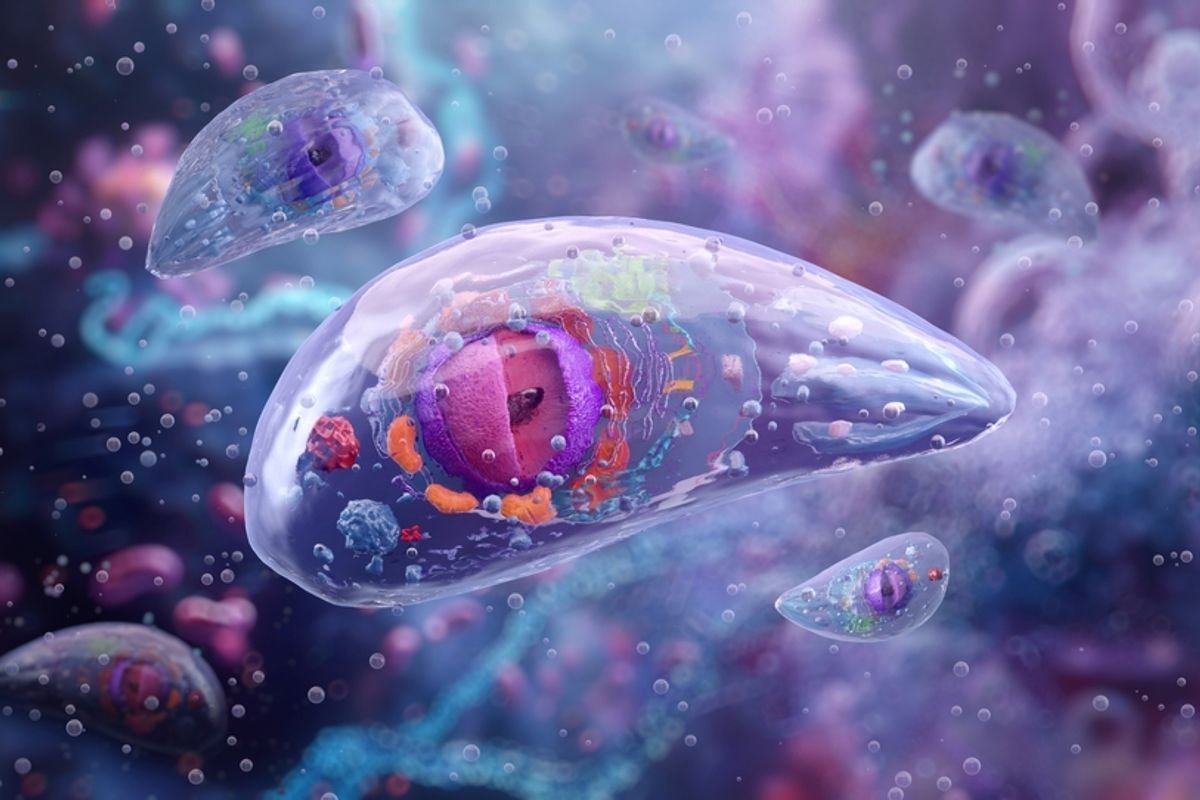
The Toxoplasma parasite is a protozoan that belongs to the same family as other one-celled organisms, such as Plasmodium — the organism that causes malaria. Like malaria, Toxoplasma has a very complicated life cycle that involves multiple hosts, causing a disease called toxoplasmosis. It also has multiple reproduction strategies — Toxoplasma can both sexually reproduce and clone itself.
Toxoplasma’s definitive host is felines — everything from lions and tigers to domestic house cats. They are called definitive because cats are the only hosts in which Toxoplasma can sexually reproduce. The parasites go through their sexual stages inside the guts of felines, producing eggs, which in protozoans are called oocysts.
Oocysts get out into the environment via cat poop, and once out there, they stay there for one to two years.
“These parasite eggs are so sturdy in the environment — they thoroughly contaminated our planet,” says Bill Sullivan, a microbiologist at Indiana University who studies toxoplasmosis.
The Cat Parasite That Transfers to Humans
Secondary hosts, which include virtually every bird and mammal on the planet, can get infected by ingesting the oocysts.
This could happen by eating unwashed fruits or vegetables from a garden where an infected cat has pooped, or kids could get them on their hands while playing in the sandbox, ingesting them by accident by touching their face, or eating without washing their hands. People with cats can also contract it from changing cat litter boxes.
If the parasites find themselves in non-cat hosts, they have another strategy to reproduce. In other mammals or birds, the parasites form cysts in the tissue or organs. If humans eat undercooked or raw meat that contains these microscopic cysts, they can become infected with the parasite. This usually just causes milder cases of food poisoning, but if too many cysts are consumed, it can kill people.
“That is one of the deadliest food poisonings in the world,” Sullivan says.
How the Parasite Infects Its Host
Humans — and any warm-blooded animals — that contract the parasite by eating infected, undercooked meat or ingesting the eggs from the environment will have it forever.
“The parasite usually doesn’t make the animal very sick, but you’re stuck with it for life after that,” Sullivan says.
For a select few animals that haven’t evolved resistance to the parasite, the disease can be deadly. This is the case with many Australian animals, and with marine mammals, Sullivan says. As for humans, some sources estimate that approximately one-third of the world’s population is infected with Toxoplasma.
Read More: Thanks to a Tapeworm Parasite, European Ants Live Long, Cushy Lives
What Are the Signs of Toxoplasmosis in Humans?
In mild cases, it’s hard to tell that people are infected with Toxoplasma parasites, as food poisoning can resemble other kinds of stomach bugs. But sickness after consuming raw meat is one sign of infection.
Usually, the parasite remains latent in most infected humans — it infects cells, embedding itself in microscopic cysts — and stays there for the most part. They can clone themselves and proliferate in humans with compromised immune systems, though. For example, doctors saw a lot of cases of severe toxoplasmosis in AIDS patients during the pandemic of the 1980s and 1990s.
“When HIV patients lost their immune system, those that had toxoplasmosis cysts in their brains and hearts had toxoplasmosis flare up again and again,” Sullivan says.
When reactivated, symptoms of toxoplasmosis include fever, fatigue, numbness, seizures, or facial paralysis. When it infects the eyes, Toxoplasma can cause blurry vision, blindness, and eye pain.
Can Toxoplasmosis Affect Pregnancy?
If women have contracted the parasite well before pregnancy, their unborn children aren’t usually at risk, as they develop antibodies against the more serious effects. But when women contract the disease for the first time during pregnancy, the parasite can cross the placenta, causing serious lifelong problems for children. In the worst cases, it can cause miscarriage, congenital birth defects, stillbirths, and infant death.
Problems after birth for infected children can include vision impairment or blindness, cognitive issues, and hydrocephalus — a swelling of the brain.
While rare, an estimated 400 to 4,000 children are born with congenital toxoplasmosis in the U.S. every year.
To avoid this risk, Sullivan advises that pregnant women who are uninfected should take extra precautions, such as avoiding changing the cat’s litter box when possible and washing their hands after gardening, for example. The U.S. Centers for Disease Control and Prevention (CDC) recommends a number of other measures to prevent infection during pregnancy.
Despite these risks, doctors in the U.S. usually don’t screen for toxoplasmosis the way doctors in other countries do in pregnant women. Sullivan sees this as a mistake.
“There is a very easy and cheap blood test,” Sullivan says.
Does a Cat Parasite Affect Human Behavior?
Other than the potential health risks that the toxoplasma can cause, evidence in rodents shows that the parasite can also affect the behavior of infected hosts.
Tests have revealed that rodents infected with the parasite are less likely to be afraid of cats and more likely to take risks. This likely serves the parasite well, as it brings the life cycle full circle.
“If the parasite gets into a rodent brain and modifies the animal to take more risks and be less afraid of things, that rodent is more likely to be eaten by a cat,” Sullivan says.
It’s possible this also works for humans, who may also be targets of this behavioral shift. There’s reason to believe that humans — or more likely our distant ape ancestors — were much more often on feline menus, especially in the days when giant saber-toothed cats still prowled the Earth.
In these prehistoric times, smaller human ancestors infected with the parasite may have made an easier meal for large felines, so it’s possible that we weren’t just accidental targets. Toxoplasma had everything to gain by inducing Homo erectus or our older ancestors to take more risks around giant predators. Sullivan says there are examples of infected chimpanzees that are less afraid of cheetahs or leopards, for example.
Aside from risk-taking, toxoplasmosis has also been linked with other problems. Toxoplasma cysts in the brain, in particular, may not be benign.
“More recent reports have correlated those latent cysts in the brain with schizophrenia and behavioral changes,” Sullivan says.
Does Toxoplasmosis Have a Cure?
In a word, no — there is nothing that can permanently remove Toxoplasma from human bodies. The parasite is very good at hiding when it goes into its latent cyst phase. Since the cysts are microscopic, it’s nearly impossible to spot them, though specialists may see signs of scarring in the brain and eyes if the parasites have been there.
Treatment using antibiotics and antiparasitics can control the parasites in your body when the symptoms are more severe, but in most people, no treatment is needed.
There are ways to prevent contracting it in the first place.
“You can certainly help your cat from acquiring it by keeping it indoors and not feeding it raw meat,” Sullivan says.
Avoiding undercooked or raw red meat — dishes like steak tartare, for example — can also reduce your chances of contracting the disease. Those who are immunocompromised in particular should take extra precautions when gardening or changing cat litter.
This article is not offering medical advice and should be used for informational purposes only.
Read More: The Biggest Parasite Can Grow up to 30 Feet Long, and Live in Your Stomach
Article Sources
Our writers at Discovermagazine.com use peer-reviewed studies and high-quality sources for our articles, and our editors review for scientific accuracy and editorial standards. Review the sources used below for this article: