
These Seals Remember Their Old Rivals by Voice — Even After a Year at Sea

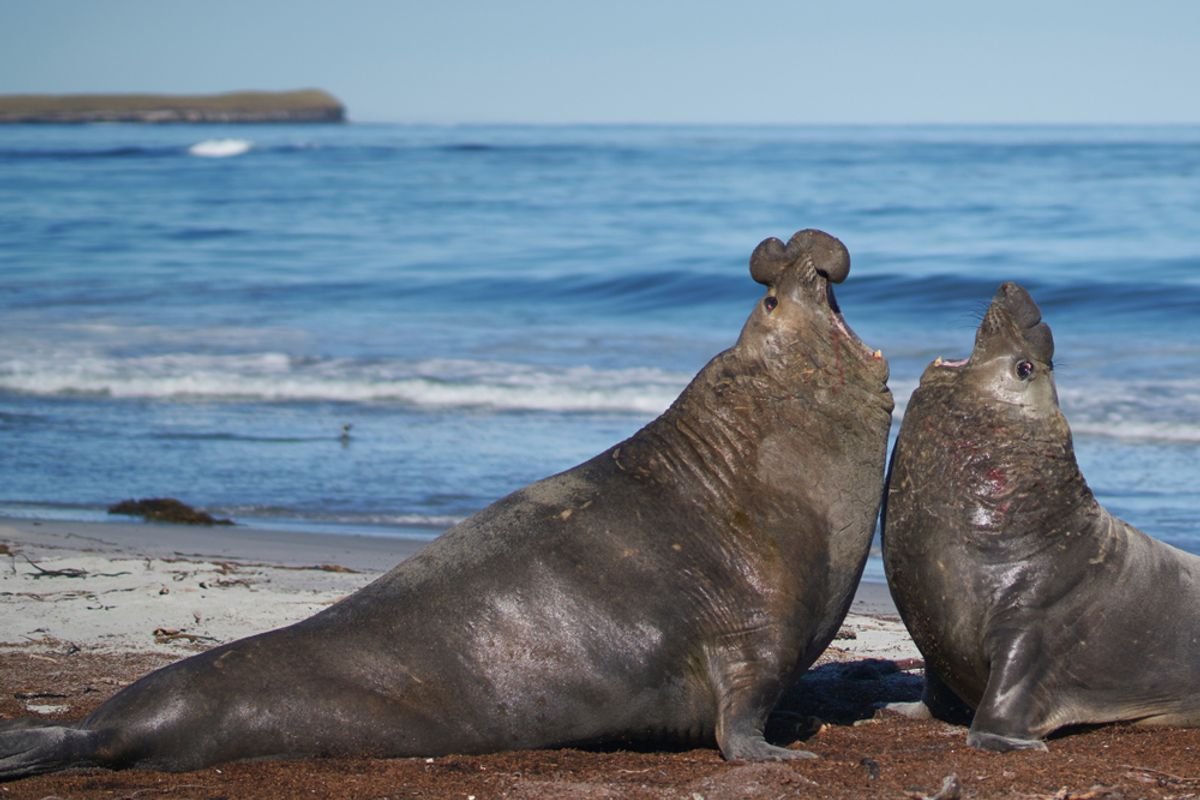
Each winter, the beaches of central California become arenas of force. Male northern elephant seals rise, collide chest to chest, and hurl their roars across the sand in battles that decide rank, territory, and access to mates. It’s one of the loudest and most violent breeding spectacles in the animal world.
But when the same males return the following year, do those past battles vanish with the season — or do they linger in memory?
Now, a team of researchers has found that these confrontations are shaped not just by size and strength, but by memory. Male elephant seals can recognize the voices of rivals they encountered the previous year — and adjust their behavior accordingly. By sound alone, they appear to remember who once dominated them and who they defeated, shaping whether they retreat, challenge, or hold their ground.
“Male elephant seals come back to the exact same breeding location year after year and engage in competitive interactions with a number of familiar individuals,” said Caroline Casey, who led the team, in a press release. “It would make sense, then, that they would retain some memory of past rivals over multiple seasons.”
Elephant Seals’ Vocal Calls
Male northern elephant seals produce calls with distinctive rhythms and tones that allow other seals to recognize them as individuals. Over time, their voices become tied to identity — so much so that researchers have likened them to names, according to reporting in Nature.
That vocal identity matters most during the breeding season, when beaches fill with hundreds of massive males competing for dominance and access to mates. The animals fast for weeks, relying on stored fat, and because physical fights carry such heavy energetic and injury costs, many conflicts are avoided before escalating, according to earlier behavioral research published in Open Science.
Instead of settling every dispute with force, seals frequently rely on sound. Through their calls, males broadcast status as well as identity. A familiar dominant voice can discourage challengers before a fight begins, while the call of a weaker rival may invite confrontation. The fine structure of those identity signals was mapped in a 2017 study in Current Biology, which showed that seals don’t just detect aggression in a call, but recognize specific individuals.
Read More: Are Leopard Seals as Dangerous as You Think?
Testing Seal Memory Through Recordings
To test whether those vocal identities persist beyond a single breeding season, the team turned to playback experiments. At the start of the season, they located returning males and played recorded calls from rivals the seals had encountered the year before. Some recordings came from dominant competitors, others from subordinates, and a third set from unfamiliar males at distant colonies.
“When males heard their most familiar dominant rival from last year, they tended to orient faster, exhibit a faster posture change, and often would retreat from the speaker,” said Casey. “Their responses were less severe when they were presented with their subordinate rival from the previous season, and sometimes they would even approach the speaker.”
When the team played unfamiliar voices recorded at other colonies, those sounds triggered little reaction. The seals were not responding to random strangers or generic threat calls — they were recognizing and remembering specific individuals they had encountered the year before.
What Makes an Alpha
The researchers are now turning their attention to the traits that lead to reproductive success.
“Right now, we are working on a project evaluating the traits that lead to eventual reproductive success in male elephant seals,” said Casey. “Essentially, what does it take to become an alpha seal? We are measuring lots of different aspects of behavior and physiology and linking it to true reproductive success in this species.”
Read More: How Can Seals Hold Their Breath for an Hour or More?
Article Sources
Our writers at Discovermagazine.com use peer-reviewed studies and high-quality sources for our articles, and our editors review for scientific accuracy and editorial standards. Review the sources used below for this article: