
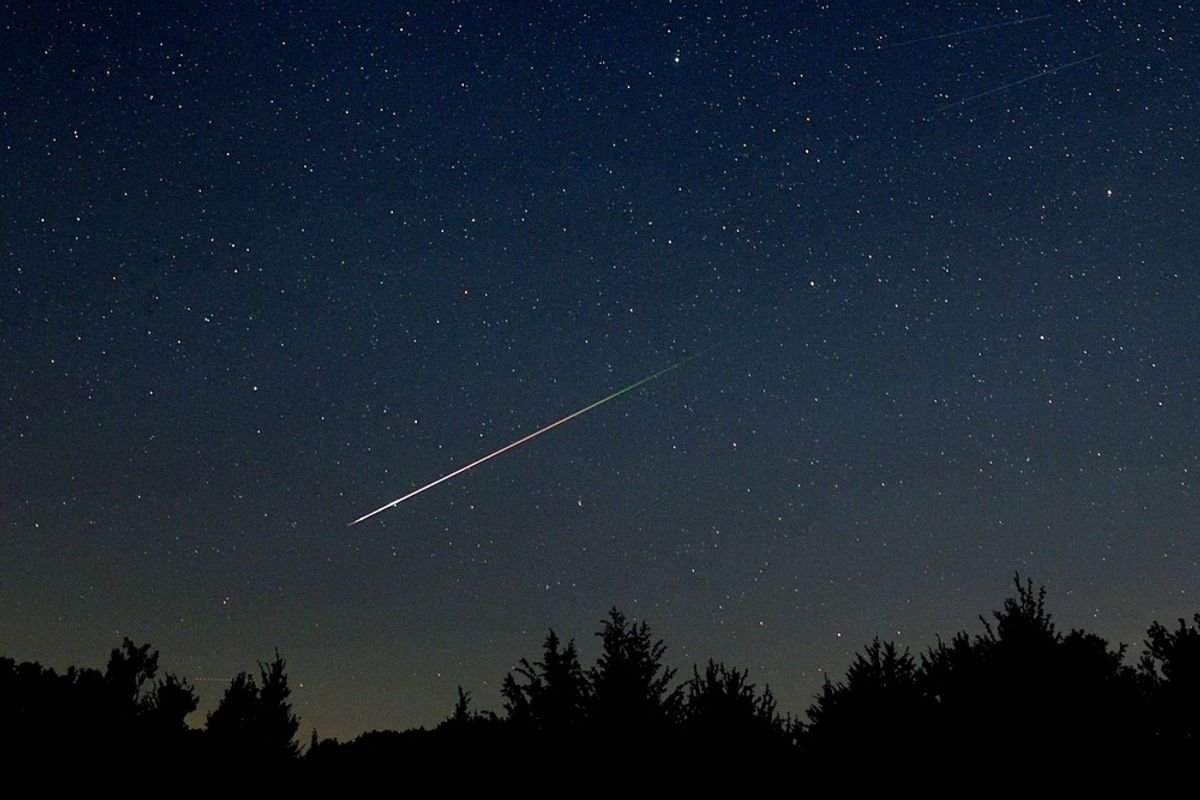
The Taurid Meteor Showers Are Already Shining, and May Flash Shimmering Fireballs This Fall 2025

Once a year, our planet passes through two separate streams of debris. Discarded by an ancient comet, the debris smashes into our atmosphere at around 65,000 miles per hour and burns brightly, creating a cascade of meteors in the sky. In fact, it is these collisions that cause the annual appearance of the Southern and Northern Taurids.
Typically, these two meteor showers are subtle, but sometimes, they set off a dazzling display of fireballs. So, find out when and where to spot the Southern and Northern Taurids this year, and why they’re there in the first place.
Read More: Thousands of Meteorites Hit Earth Each Year — Here’s What They Bring
The Southern and Northern Taurids
In 2025, the Southern Taurids are set to span from around September 20 to November 20, while the Northern Taurids are set to shine from around October 20 to December 10. Though the showers are more stunning when they coincide (it makes sense that the two meteor showers are typically more mesmerizing when they’re together), they’ll peak separately. According to the American Meteor Society, the Southern Taurids are predicted to reach their maximum on November 4 to November 5, while the Northern Taurids are predicted to culminate on November 11 to November 12.
During the two peaks, celestial sightseers could spot as many as 5 meteors shooting through the sky per hour, all from the same shower. That said, the full moon during the Southern Taurid maximum and the half moon during the Northern Taurid maximum could outshine the meteors, obscuring them from sight. Your best bet for spotting something is to turn toward the Taurus constellation during the two peaks, which is where the meteors will be concentrated.
Taurid meteors are best seen at around midnight and tend to be both slow and bright in the sky. Not only that, the Southern and Northern Taurids are famous for their fireball meteors — meteors that appear as bright as Venus to observers (or brighter). According to NASA, these fireball meteors can create longer-lasting flashes of light and color than most meteors can, since they come from bigger bits of debris, anywhere from a few inches to a few feet across.
Read More: Near-Earth Asteroids Could Supply Future Meteor Showers
A Spectacle From An Ancient Source
Whether small or large, the debris that fuels the Taurids comes from two separate streams of an ancient comet — one that split apart in space around 20,000 years ago. At that time, something slammed into the comet, or its ice started to melt, and the orbiting object broke into bits — a collection of smaller comets and asteroids called the Encke Complex.
While the trail of debris from one of the objects in this complex, Comet 2P/Encke, produces the Southern Taurids, it is the debris from another object, Asteroid 2004 TG10, that prompts the Northern Taurids. Still, it is also possible that the other asteroids in the system also play a part in this shower, too, contributing to its spectacle.
So, look up in the sky this fall, and you’ll see the debris shine. If you’re lucky, the ancient comet that once traveled through space will continue to sparkle, in bits and bobs, that flash like fireballs through the sky.
Read More: Swarm of Near-Earth Comets Linked to Recent Ice Giant Breakup
Article Sources
Our writers at Discovermagazine.com use peer-reviewed studies and high-quality sources for our articles, and our editors review for scientific accuracy and editorial standards. Review the sources used below for this article: