
The Sapo Concho Is the Only Native Toad to Puerto Rico, and It’s Endangered

Spectators at the 2026 Super Bowl saw a certain amphibian during Bad Bunny’s halftime show performance. Before transitioning into the song “Monaco,” the camera briefly captures Concho, a toad on the stadium’s Jumbotron.
Concho has appeared frequently in Bad Bunny’s recent work, including the DeBÍ TiRAR MáS FOToS short film. Concho represents the sapo concho, or Puerto Rican crested toad, the only native toad species found in Puerto Rico and the U.S. Virgin Islands, according to the U.S. Fish and Wildlife Service (USFWS).
Unfortunately, sapo concho is listed as endangered on the IUCN Red List, but Bad Bunny is bringing the species into the international spotlight, and hopefully, this awareness can help this tiny yet magnificent species.
Read More: Three Newly Discovered Toads Give Birth to Live Young in a Bizarre Evolutionary Twist
What We Know About Sapo Concho
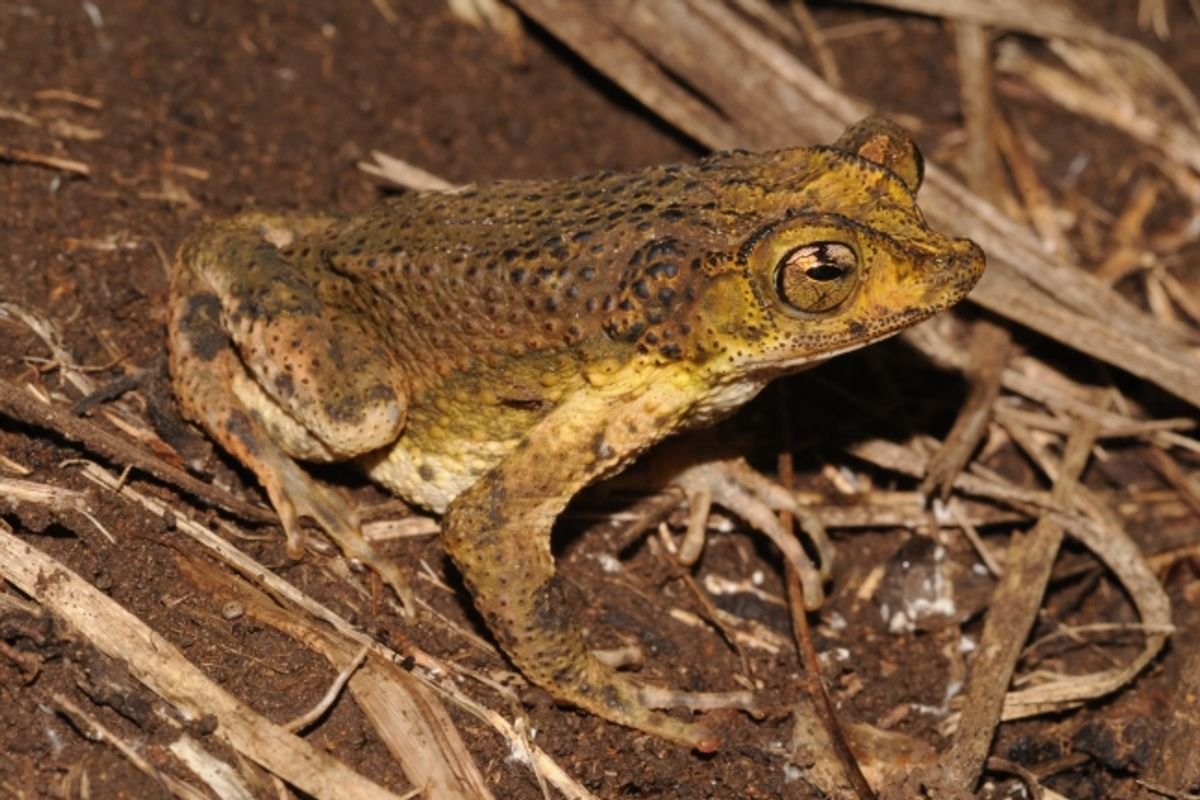
Sapo conchos are medium-sized toads, ranging in size from about 2.5 inches to 4.5 inches, according to the USFWS. They have a bumpy snout and rigid crests that form from their nose to the back of their head, creating an arch over their large eyes. They have a distinctive brown color pattern, making them easy to identify.
The toads, as usually most active in the evening, from about 7:30 p.m. to 1 a.m., and can sometimes take shelter in small holes and crevices during the day. They prefer to live in drier areas, like rocky outcrops and well-drained soil; however, in more forested areas, the toads live in dead logs, and some have even been seen living in abandoned tarantula nests, according to the USFWS.
Science first identified the species in 1868, according to the Puerto Rican Crested Toad Conservancy, and just over 100 years later, in 1987, the USFWS listed it as threatened, leading to its IUCN listing as endangered. (Multiple sources list the toad as critically endangered, but the IUCN site lists it as endangered, though this has not been updated since 2021.)
Why Are Sapo Concho Endangered?
Sapo concho is a delicate species, and due to human interference, it has experienced a major population decline. One cause for the decline is the invasive cane toad (Rhinella marina). The cane toad, introduced to the island during the early to mid 20th century, was initially supposed to help reduce agricultural pests in sugar cane fields, according to the USGS. This toxic toad quickly took over most breeding grounds and key resources.
Another issue that endangers the sapo concho is habitat loss from construction, especially in coastal areas where the species primarily lives. Climate change also impacts the toads, since they can be particular about breeding, according to a study published in the Caribbean J. of Science. They typically breed in rainfall-created pools, but can delay breeding if there is drought or shifts in rainfall.
Who Is Helping Sapo Concho?
Although these toads are endangered, several organizations have been working to help bring this species back from the brink.
The Fort Worth Zoo in Texas, for example, has helped in the conservation of the sapo concho since 1984. In 1989, the zoo implemented a breeding program to help reestablish the population. The zoo works alongside the USFWS and the Puerto Rican Department of Natural and Environmental Resources (PRDNER) to implement conservation measures, including establishing protected habitat areas, developing construction guidelines, and raising awareness of toads that may cross roadways.
Between the breeding and reintroduction efforts, the work these organizations have done — which falls under the Puerto Rican Crested Toad Conservancy — is the longest continuous reintroduction of an amphibian in the world. Through the conservancy, there are 17 breeding facilities that help maintain adult sapo conchos whose offspring are eventually used for reintroduction.
According to the Fort Worth Zoo, the Puerto Rican Crested Toad Conservancy has released 830,000 sapo concho tadpoles, and their work only continues.
Thanks to Bad Bunny and his half-time performance, more people are aware of sapo concho today than they were yesterday. With a spotlight like that and the dedication of conservationists, this species could have a real chance at rebounding.
Read More: Detective Dogs, Toads, and Artificial Intelligence Can Help Control Invasive Species
Article Sources
Our writers at Discovermagazine.com use peer-reviewed studies and high-quality sources for our articles, and our editors review for scientific accuracy and editorial standards. Review the sources used below for this article: