
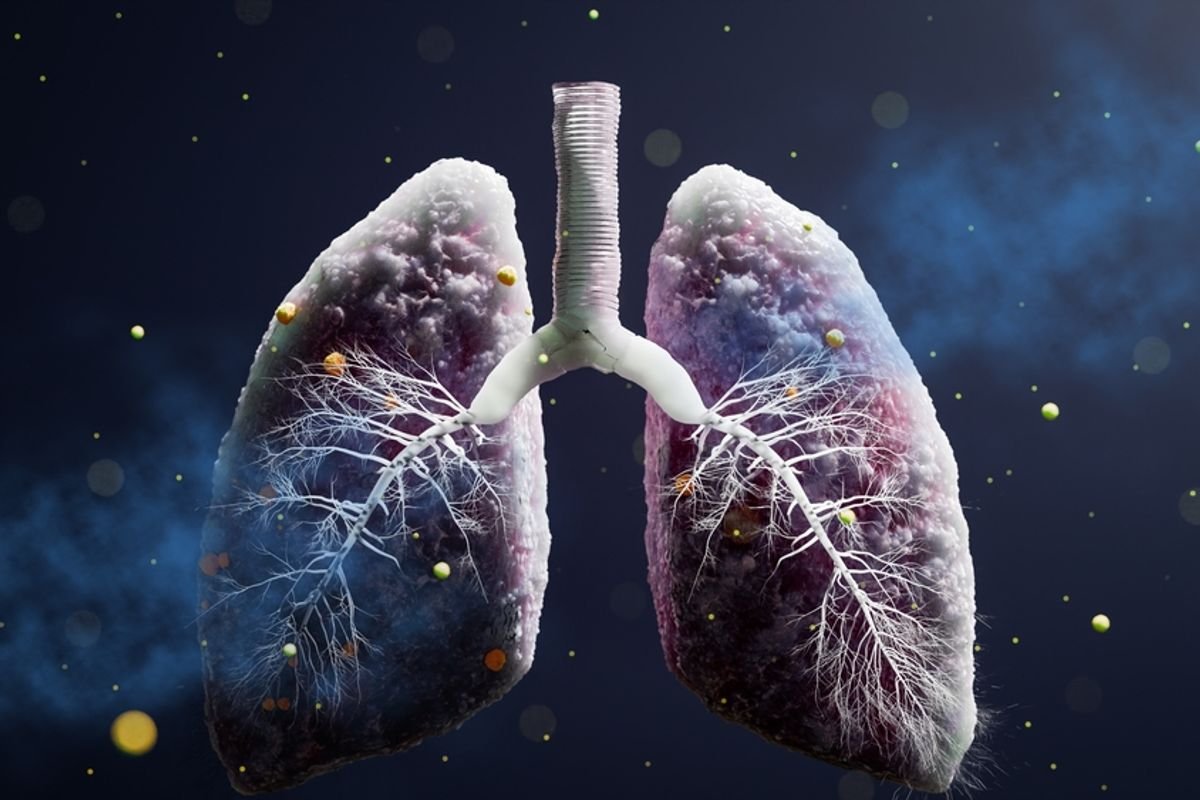
The Lung Microbiome Is Also Beneficial to Our Health — And Harmful Dust Can Alter It

When it comes to the microbiome, researchers have extensive knowledge of the microbial community living in our guts. The lungs, however, are a different story. While it may sound odd, microbes do live in our lungs, and breathing in certain substances, like certain dust, can cause harm to the lung microbiome.
A new study in mSphere examines how dust from the evaporating Salton Sea in California — a saline, landlocked lake — may be irritating the microbes in the lungs and altering the immune response.
The Lung Microbiome
Though researchers know much more about the gut microbiome than the microbes in the lungs, they still believe the lung microbiome is beneficial to our health. While genetic factors or bacterial infections can contribute to a weakened lung microbiome, researchers from the University of California, Riverside (UC Riverside) have found, for the first time, that environmental exposures can also have adverse effects.
In the mSphere study, the UC Riverside team exposed lab mice to dust collected from the evaporating lake and noted surprising results.
“Even Salton Sea dust filtered to remove live bacteria or fungi is altering what microbes survive in the lungs,” said Mia Maltz, UCR mycologist and lead study author, in a press release. “It is causing deep changes to our internal environment.”
Read More: Wildfire Smoke Harms Not Just Lungs, But Impacts Mental Health, Too
Stinky Dust and Respiratory Issues
Before the experiment could begin, researchers already had a notion that environmental factors could be contributing to a decline in lung health. As the research team was in the field collecting dust samples, they noted lung discomfort.
“Salton Sea residents have ongoing suspicions that the environment is linked to respiratory illness, and our lab has definitely felt the effects of the heat, dustiness, and pungent air while out there on field work,” said Talyssa Topacio, UCR graduate student and co-first author of the paper, in a press release.
Some of the researchers even noted that the dust has a foul odor.
Signs of Infection
During the experiment, the researchers found that the populations of Pseudomonas and Staphylococcus bacteria spiked in mice exposed to the dust. Both of these bacteria are known to cause lung inflammation. The team also noted that the most affected dust samples contained bacteria that produced LPS, a molecular membrane that triggers an immune response.
“We think microbial products like LPS are part of what’s causing the inflammation,” Maltz said. “It’s like breathing in a chemical fingerprint of dead bacteria.”
Mice exposed to some of the most potent dust samples showed a 60 percent increase in lung immune cells with neutrophil markers, which are key to fighting infections. The mice breathing the neutral air only had immune cell levels at about 10 to 15 percent.
Altering the Lung Microbiome
According to the study, the results challenge what science previously knew about pulmonology.
“We’ve seen these kinds of microbial shifts in people with cystic fibrosis or infections,” Aronson said. “But these mice had no pre-existing conditions. This was a clean slate, and it still happened.”
As Salton Lake continues to dry and more harmful dust is released into the atmosphere, the research team wonders what that could mean for the health of the local population.
“Breathing in the dust over time may have chronic impacts in the lung, and these studies on the potential for altering the lung microbiome are an important first step in identifying factors that could lead to asthma and other chronic diseases,” said David Lo, a UCR distinguished professor of biomedical sciences and study author, in a press release.
The research team also wondered, if the dust can alter the lung microbiome, then what impacts do wildfire smoke, cigarettes, vapes, and exhaust have on the lungs?
“We’ve only just begun to understand how dust exposure changes the lung microbiome,” Maltz said. “We don’t yet know how long the changes last, or whether they’re reversible. That’s another big question.”
This article is not offering medical advice and
should be used for informational purposes only.
Read More: 6 Respiratory Illnesses That Could Mean Trouble for Your Lungs
Article Sources
Our writers at Discovermagazine.com use peer-reviewed studies and high-quality sources for our articles, and our editors review for scientific accuracy and editorial standards. Review the sources used below for this article: