
Sreemangal Travel Guide: Bangladesh’s Tea Capital, Rainforests & 7-Layer Tea
The train arrived at Sreemangal past midnight.
The platform was surprisingly alive for that hour. Travellers in winter jackets pulling bags off the train, vendors hovering at the edges with tea and snacks, the blue-green Sreemangal station sign glowing overhead. We had boarded in Dhaka after dinner, half-asleep before the train left the city, and woken here: the tea capital of Bangladesh, 190 kilometres northeast of the capital, smelling already of something cooler and greener than anything Dhaka offers.

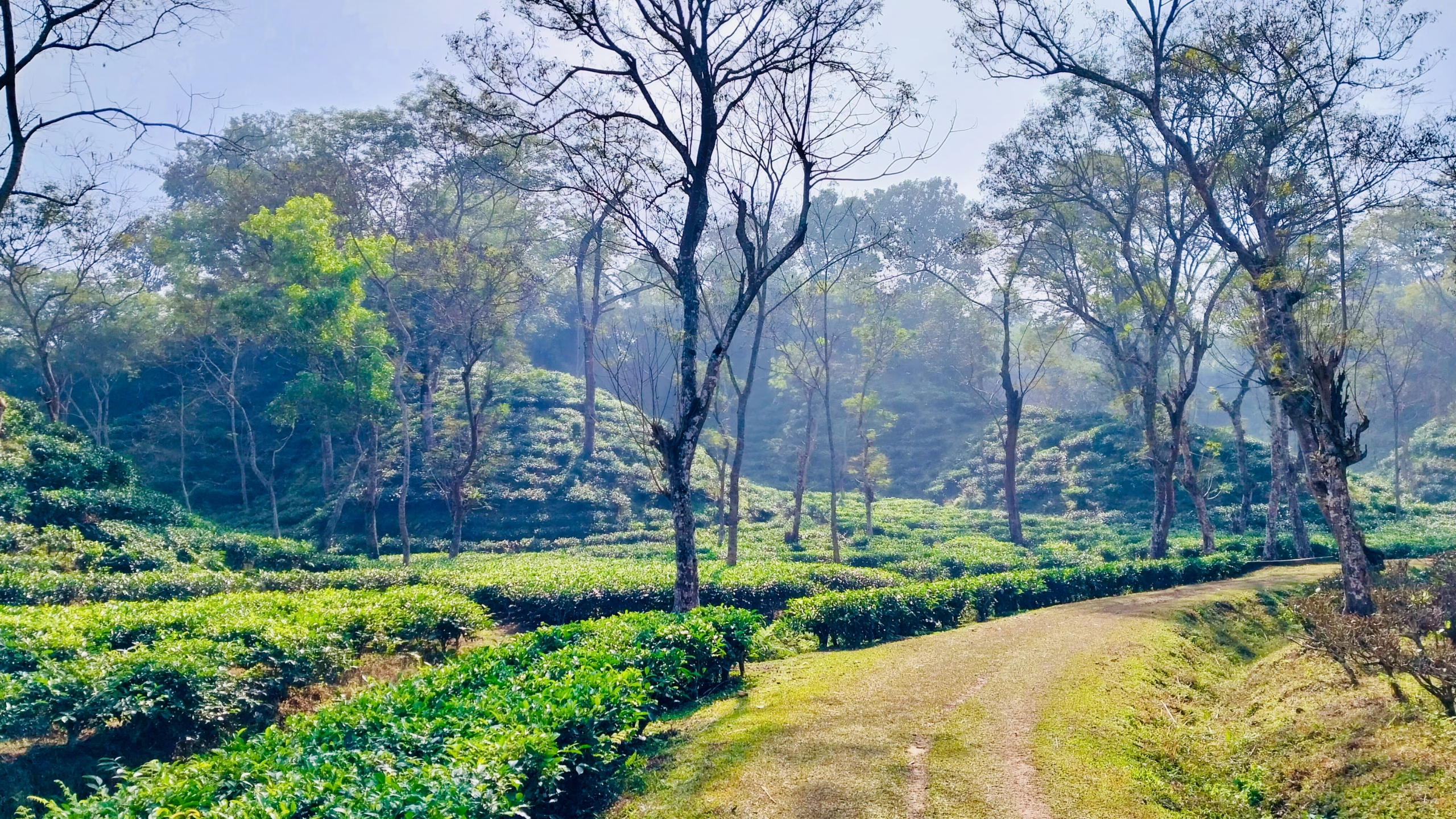
We checked into a hotel near the station for a few hours, and by morning, Sreemangal had completely revealed itself. Standing outside at first light, the hills in every direction were covered in tea. Not patches of tea — miles of it, rolling green over every rise and hollow, punctuated by the tall shade trees the British planted alongside their Camellia sinensis bushes over a century ago. It is one of those landscapes that does not translate to what you expect until you are standing inside it.
Srimangal — as it is sometimes spelled — sits in Moulvibazar district of Sylhet Division, close to the Indian state of Tripura. It is home to over 160 tea estates producing the majority of Bangladesh’s tea, one of the country’s last tropical rainforests, a remarkable bird sanctuary, indigenous tribal communities, and a glass of tea with seven distinct layers that will make you question everything you thought you knew about tea.
This is your complete guide to visiting Sreemangal in 2026.
Quick Facts: Sreemangal at a Glance
| Location | Moulvibazar District, Sylhet Division, NE Bangladesh |
| Distance from Dhaka | ~190 km |
| Best time to visit | October – February (cool, dry; best for birdwatching and hiking) |
| Train from Dhaka | 4–5 hours (Parabat, Upaban, Jayantika, Kalni Express) |
| Bus from Dhaka | 5–6 hours |
| Getting around | CNG auto-rickshaw, rented bicycle |
| Currency | Bangladeshi Taka (BDT). 1 USD ≈ 110 BDT |
| Famous for | Tea gardens, Lawachara National Park, Baikka Beel, 7-layer tea |
| Minimum stay | 2 days / 1 night (2 nights strongly recommended) |
Why Sreemangal Deserves Your Time
Most visitors to Bangladesh spend their time in Dhaka, Cox’s Bazar, and perhaps Saint Martin’s Island. Very few make it to Sreemangal, and that is precisely why you should.
Where the coast and capital offer density, noise and scale, Sreemangal offers something rarer in Bangladesh: space. Space to walk through tea gardens for an hour without reaching a road. Space to sit by a wetland and hear only the birds. Space to walk an actual forest trail inside an actual rainforest and have a monkey appear on the path in front of you, entirely uninterested in your presence.
It is also one of the most photogenic places in the country. The combination of landscapes — rolling tea fields, tropical rainforest, still wetlands at sunset, mist-covered hills at dawn — produces images that look unlike anything else in South Asia. Your camera will not stop.
And it is easy to reach from Dhaka. Four hours by train. One overnight. An entirely achievable weekend trip that will feel, on the other end of it, like you have been away for a week.
Best Time to Visit Sreemangal
October – February (recommended): The coolest and driest months. The air is clear, the trails are not muddy, and this is peak birdwatching season at Baikka Beel when migratory birds arrive from the north. Temperatures range from 12–25°C. December and January are the most popular months — book accommodation 2–3 weeks ahead for weekends.
March – May: Warmer and increasingly humid, but the tea gardens remain beautiful and the crowds are thinner. The tea leaves are more actively being picked in the warmer months — you may see the pluckers at work in the gardens.
June – September (monsoon): The hills turn intensely vivid green and the waterfalls are at their most powerful (notably Madhabkunda, not covered on this trip but accessible from Sreemangal). The downside: trails can be muddy, leeches are active in the forest, and the humidity is high. Experienced travellers willing to accept these trade-offs find monsoon Sreemangal visually extraordinary.
📌 Weekend warning: Sreemangal has become very popular with Dhaka-based tourists. Friday–Saturday (the Bangladeshi weekend) sees hotels fill up completely. If you can visit mid-week, the difference in crowd levels — particularly at Lawachara and Baikka Beel — is significant.
Getting to Sreemangal
By Train from Dhaka (Recommended)

The train is the definitive way to reach Sreemangal. The journey from Dhaka’s Kamalapur Railway Station is 4–5 hours of some of the finest rail scenery in Bangladesh — the flat city periphery giving way to greener countryside, then the low hills of Sylhet Division, then suddenly the tea.
Key trains on the Dhaka–Sreemangal route:
| Train | Dhaka Departure | Sreemangal Arrival | Off Day |
|---|---|---|---|
| Upaban Express (739) | ~10:00 PM | ~2:00 AM | Wednesday |
| Kalni Express (773) | ~3:00 AM | ~8:20 AM | None |
| Jayantika Express (717) | ~2:00 PM | ~6:45 PM | Sunday |
| Parabat Express (709) | ~6:40 AM | ~11:30 AM | Tuesday |
The Upaban Express is the classic Sreemangal overnight option — depart Dhaka late, arrive in Sreemangal around 2:00 AM, check into your hotel, and be fresh for a full first day. If the midnight arrival sounds inconvenient, it genuinely is not: Sreemangal station has plenty of activity at that hour and hotels near the station are easy to walk to.
Ticket prices: BDT 265 (Shovan non-AC) to BDT 1,099 (AC). Book online at eticket.railway.gov.bd or via the Rail Sheba app up to 10 days in advance. Weekend trains sell out — book early.
Return from Sreemangal:
| Train | Sreemangal Departure | Dhaka Arrival |
|---|---|---|
| Kalni Express (774) | 8:20 AM | 12:55 PM |
| Jayantika Express (718) | 2:45 PM | 7:15 PM |
| Parabat Express (710) | 6:02 PM | 10:40 PM |
By Bus from Dhaka

Several operators run direct buses from Dhaka to Sreemangal — Hanif Enterprise is one of the most well-known, with its counter right in Sreemangal town. Journey time is 5–6 hours. Fares range from BDT 400–700 depending on operator and seat class. The bus drops you near the town centre, making it convenient for the first night.
Where to Stay in Sreemangal

Sreemangal has a wide range of accommodation — from comfortable guesthouses in the heart of the tea estate area to full resort experiences. Your choice of accommodation significantly shapes the experience.
💡 Starting your Bangladesh trip from Dhaka first? Before heading to Sreemangal, consider staying at the author’s own Airbnb in Dhaka — two personally hosted properties with the kind of local knowledge and transport tips that make a trip like this run smoothly from the start.
Luxury / Tea Estate Resorts
Grand Sultan Tea Resort & Golf — The flagship luxury property in Sreemangal, located near Lawachara with five-star service, swimming pools, a golf course, and views over the tea estates. Starting from BDT 16,000/night — worth it for a special occasion. Book Grand Sultan
Mid-Range — Our Stay: Heed Bangladesh Sreemangal
Heed Bangladesh Sreemangal — This is where we stayed, and it made an excellent base for the entire trip. The rooms are comfortable and clean — twin beds, AC, ceiling fan, en-suite bathroom — and the guesthouse is well-positioned for reaching Lawachara, Baikka Beel, and the tea gardens without long drives. The staff genuinely know the area and will help you arrange a local guide for Lawachara, a CNG for Baikka Beel, or any other logistics you need sorting. If you want accommodation that feels connected to the place rather than sealed off from it, Heed is the right call. Book Heed Bangladesh Sreemangal
Mid-Range
Paragon Hotel & Resort — Located on Radhanagar Road, this is consistently recommended for its balance of comfort and price (BDT 5,500–6,500/night including breakfast). Clean rooms, garden views, reliable service.
Balishira Resort — On Ispahani Road near Paragon. Modern amenities, AC rooms, in-house restaurant and café. Good value for the standard it offers.
Tea Resort and Museum (Bangladesh Tea Board) — Over 25 acres of rolling hills with modern design. A unique option for those who want to fully immerse themselves in the tea experience.
Budget
Basic guesthouses near Sreemangal Railway Station are perfectly functional for an overnight stay after a late train. They won’t win design awards, but they are clean, cheap (BDT 500–1,200/night), and within walking distance of the platform — useful if your train arrives after midnight.
⚠️ Book ahead for weekends and public holidays. Sreemangal is Bangladesh’s most popular domestic weekend destination in the cooler months. Without a reservation, you will struggle to find a room on Friday and Saturday nights in December–January.
Getting Around Sreemangal

Sreemangal town itself is small and walkable, but most attractions require transport:
CNG auto-rickshaws are the standard option and are everywhere in town. Negotiate the fare before you get in. Typical fares: BDT 200–300 for a round trip to Lawachara National Park (including waiting time), BDT 300–400 to Madhabpur Lake, BDT 500–700 to Baikka Beel. Many drivers offer full-day rates covering multiple sites — BDT 1,200–2,000 for a full day tour is a reasonable starting point for negotiation.
Bicycles can be rented from a shop in town for BDT 300–500 per day — excellent for the Lawachara area (8 km from town) on the days when you want to move at your own pace through the tea estates. The road from town to Lawachara passes through some of the most beautiful tea garden stretches in the region.
Hired car with driver — your hotel can arrange for around BDT 2,500–4,000 for a full day. More comfortable and faster, particularly if covering Lawachara, Madhabpur Lake, and Baikka Beel in a single day.
Lawachara National Park — Rainforest, Gibbons & Tribal Villages

Eight kilometres east of Sreemangal town, Lawachara National Park is one of the last remaining fragments of tropical rainforest in Bangladesh. Spanning 1,250 hectares, it was established as a national park in 1996 — though the British first planted trees here in 1922 as a managed forest reserve, initially to supply timber for the railway.

That colonial-era railway still runs through the park. And walking along its tracks through the forest canopy is one of the most memorable things you will do in Bangladesh.
The Rainforest Itself

Step through the park entrance — a green leaf-shaped sign in Bengali marks it — and the temperature drops immediately. The canopy closes overhead and the light changes to that particular dappled green that characterises proper rainforest. Bamboo groves, orchids, strangler figs, and over 400 plant species fill the understorey. The air smells of damp earth and something alive and ancient.
The trails are well-marked for the main circuit (about 2.5 hours at a relaxed pace) and require no technical ability — this is a walk, not a trek. The highlight for most visitors is the railway line that bisects the park. The British cut this line through the forest in the early 20th century to transport tea from the estates. Walking along it today — sleepers underfoot, jungle pressing in from both sides, the tracks disappearing into the green distance — feels like stepping into a different era.
Stay alert on the rail line: trains still use it. We had a close and memorable encounter with a locomotive coming directly toward us through the forest — a blue Bangladesh Railway engine filling the entire narrow cutting with noise and wind before we stepped aside onto the narrow bank.

The Hoolock Gibbons
Lawachara is home to approximately 48 Western Hoolock Gibbons — the only apes found in Bangladesh, and a globally endangered species. Hearing them before you see them is the experience: a haunting, high-pitched call that carries through the forest like nothing else. On a good morning, you may see them swinging through the canopy overhead.
The gibbons are most active in the early morning — another reason to arrive at the park by 8:00 AM rather than later. A local guide (available at the park entrance, fee negotiable but typically BDT 300–500) will dramatically improve your chances of a sighting and explain the forest’s biodiversity along the way.
Other wildlife you may encounter: capped langurs, pig-tailed macaques, slow loris, barking deer, Burmese pythons, and over 250 bird species.
The Monkeys Along the Park Road


Along the main park road — the white-painted tree-trunk avenue — macaques are a regular and brazen presence. On our visit, a small family group was sitting directly on the path, entirely unbothered by our approach. The mother was carrying a baby; they barely looked up. They are accustomed to visitors and will accept fruit from your hand — though the guides sensibly advise against feeding them to preserve natural behaviour.
The Tribal Village Inside the Park

Within Lawachara’s boundaries live two indigenous communities — Khasia and Tripura villages that have been part of this landscape far longer than the national park designation. Walking into one of these villages is one of the quietest and most affecting things Sreemangal offers.
The Khasia are a matriarchal community — women own the land and run the household economy, primarily through pan (betel leaf) cultivation. The betel gardens are beautiful: trained vines climbing bamboo poles in neat rows, tended by women in traditional dress. The houses are simple mud-and-thatch constructions shaded by areca palms and banana trees.
Take time here. Walk slowly. Ask your guide to introduce you properly. The hospitality is genuine — and the perspective on life in the forest, lived at a pace entirely different from Dhaka’s, is worth more than any attraction fee.
Practical details for Lawachara:
- Distance from Sreemangal town: 8 km (20 minutes by CNG, 40 minutes by bicycle)
- Entrance fee: BDT 50 (Bangladeshis) / BDT 500 (foreigners)
- Best time: 7:00–10:00 AM for wildlife and light; avoid midday heat
- Guide: Strongly recommended — available at the entrance gate
- What to bring: Water, insect repellent, shoes with grip, a light layer for the forest shade
The Tea Gardens of Sreemangal

Sreemangal has over 160 tea estates. The British began planting here in the 1850s, recognising that the Sylhet hills — with their heavy rainfall, acidic soil, and year-round warmth — were ideal for Camellia sinensis. Today this region produces the majority of Bangladesh’s total tea output, and the industry employs hundreds of thousands of workers, many of them women from indigenous communities.

Walking through the estates is a pleasure that requires no itinerary. The best approach is to find a road that goes into the gardens and simply walk. The tea bushes grow to about waist height, meticulously pruned into flat-topped hedgerows by the pluckers. Above them, tall shade trees — silver oak, albizzia, and others — spread their canopies to protect the bushes from direct sun. The combination creates a layered, park-like landscape of extraordinary depth.

Duncan Brothers Tea Estate

The estate we visited on the second morning — is one of Sreemangal’s oldest and most scenic. Originally established under British colonial management, it now operates under Bangladeshi ownership and covers some of the most photogenic terrain in the area. The estate roads wind between the Madhabpur Lake area and the Lawachara forest, making it a natural connector between two of the region’s major attractions.

The workers you pass in the gardens are the unseen infrastructure of Bangladesh’s tea industry — men and women who have worked these estates for generations, often earning wages that have not kept pace with the country’s broader economic growth. A nod, a smile, and a genuine interest in what they are doing is always welcomed.
Photography tip:

The tea gardens photograph best in low, oblique light — early morning (7:00–9:00 AM) or late afternoon (4:00–6:00 PM). Overcast days produce beautiful even light without harsh shadows on the bushes. The misty mornings of December–January, when fog sits between the hills, are the most photographically rewarding.
Madhabpur Lake — The Lake Ringed by Tea

Ten kilometres from Sreemangal town, at the heart of Madhabpur Tea Estate in Kamalganj Upazila, lies a lake that is simultaneously one of the least-known and most beautiful places in Bangladesh.

Madhabpur Lake is not large — perhaps 20 acres — but what surrounds it makes it remarkable. On all sides, tea garden hills rise directly from the water’s edge, their green rows reflected perfectly in the still surface on calm mornings. The path that circles the lake takes you through variations of that view: the reflection changing with every step as the angle of the hills shifts, the tea bushes sometimes vivid green, sometimes misty grey-green depending on the light and cloud.

Midway around the path, a smaller pond adjacent to the main lake is covered in pink water lilies (shapla) — Bangladesh’s national flower. In the right season (roughly November–February), the lilies bloom so densely that the water beneath them is invisible, replaced by a floating carpet of pink. The morning light through the trees behind the pond turns the whole scene golden. It is one of those photographs that feels impossible to do justice to without standing in front of it.
The view from the hilltop

A short but steep climb — earth steps cut directly into the clay hillside — takes you to a high point above the lake. From up here, you can see the lake and its lily pond cradled in a bowl of green jungle, the tea estate paths threading through the trees below, and the hills of the Indian border in the hazy distance. It is worth every step.

Practical details for Madhabpur Lake:
- Distance from Sreemangal: ~10 km (25 minutes by CNG; BDT 300–400 round trip including wait)
- Entry: The lake is inside Madhabpur Tea Estate — you typically pay a small fee to the estate (BDT 20–50) or enter with your guide
- Best time: 7:00–10:00 AM for the reflection shots; the estate closes to visitors at 6:00 PM
- Combine with: Duncan Brothers Tea Garden (on the same road) and the hilltop viewpoint above the lake
Baikka Beel — Birds, Golden Light & a Walk to Remember

If Lawachara is Sreemangal’s morning attraction, Baikka Beel is emphatically its afternoon and evening destination. Leave by 3:00 PM and you will be rewarded with one of the finest sunsets Bangladesh has to offer — and Bangladesh is not a country short of spectacular sunsets.
Baikka Beel is a permanent wetland sanctuary covering 170 hectares at the southern end of Hail Haor. It was designated a protected sanctuary in 2003, and the conservation effort has been visibly effective: over 215 species of birds have been recorded here, and the beel is now listed as one of Bangladesh’s key sites on the Central Asian Flyway — one of the world’s great bird migration routes.
The Walk In — A Path Worth Remembering

Nobody told us the walk to Baikka Beel would be this beautiful.
The path runs along a narrow raised bank between the lake on one side and open green haor on the other. The late afternoon light comes in low and sideways, catching the water, burning through the tree canopies in long golden shafts, turning even the shadows into something worth stopping for. You walk slowly — not because the path demands it, but because speeding up would feel like a mistake.
There is no noise here except birds and wind and the soft crunch of your own footsteps. After days in the tea gardens and the forest, this openness — sky in every direction, the flat haor stretching to the horizon — feels like a different kind of breathing.

On another part of our Sreemangal walks, we came across a path of wonderfully gnarled and twisted trees.

Branches interlacing overhead, a sunburst splitting through the canopy, dry leaves carpeting the earth below. It had the quality of a place that exists just outside the normal world. We stood there for longer than was strictly necessary. Some places simply ask you to stay.
The Approach — Village Life on the Haor

The road to Baikka Beel passes through the haor landscape — a world quite different from the tea-garden hills. The land is flat and wide, the horizon low, the sky enormous. Cattle graze on grass islands between channels of water. Fishing boats are pulled up on grassy banks. Farmers move between fields on narrow raised paths. This is Bangladesh’s wetland heartland, and it is beautiful in its own expansive way.

Arriving in the late afternoon, the light on the water is already extraordinary. The beel is still and reflective in the dry season — the trees on the far bank appearing as a perfect upside-down duplicate in the surface. Walk the paths around the beel’s edge slowly. Stop when you see the light shift. The birds will be everywhere.
Birdwatching at Baikka Beel — Including Visitors from Siberia

This is the finest birdwatching site in the Sreemangal area and one of the best in Bangladesh. What makes it particularly special is the migration story: Baikka Beel sits on the Central Asian Flyway, one of the world’s great bird migration corridors. Every year, birds travel extraordinary distances — from Siberia, Mongolia, the Tibetan plateau, and the Himalayas — to spend winter in the warmth of Bangladesh’s wetlands, and Baikka Beel is one of their key stops.

They begin arriving in October, and the population peaks through November to February, before the birds make the long journey home in March as winter ends in the north. Think about that for a moment: a bird that left Siberia weeks earlier is now resting on a sandbar in front of you in Sreemangal.
In winter, you may see: lesser adjutant storks (threatened), open-bill storks, purple herons, little cormorants, Indian pond herons, cotton pygmy geese, Northern pintail, common teal, ruddy shelduck, and numerous warblers and kingfisher species. With luck: the globally threatened grey-headed fish eagle and the great white-bellied heron, one of the world’s rarest birds, have both been recorded here.
The observation tower at the centre of the beel gives an elevated view that dramatically improves sighting opportunities. Bring binoculars if you have them. A local guide who knows the bird species is worth the fee — they will spot things you will walk straight past.
The Sunset

We were standing at the edge of the beel when the sun began to drop. It happened faster than expected — the orange deepening to amber to red, the water catching and holding the colour long after the sky had shifted, the silhouettes of marsh grass in the foreground turning black against the glow.
It is one of those sunsets that stops conversation. Everyone around us fell quiet, raised their cameras, then quietly lowered them and just watched.
The Baikka Beel sunset is the single greatest reason to stay in Sreemangal for two nights rather than one. You need the second afternoon for this. Do not attempt Sreemangal as a single-day trip.
Practical details for Baikka Beel:
- Distance from Sreemangal: ~18 km (40 minutes by CNG; BDT 500–700 round trip)
- Entry fee: BDT 20–50 per person
- Best time to arrive: 3:30–4:00 PM for the golden hour and sunset (typically around 5:30 PM in winter)
- What to bring: Binoculars, insect repellent for the evening, a light jacket for after dark
The Seven Layer Tea — Sreemangal’s Most Famous Cup
No article about Sreemangal is complete without it. The seven-layer tea — sat rang cha in Bengali, literally “seven colour tea” — is Sreemangal’s most celebrated creation and one of the most remarkable things you will drink anywhere in Bangladesh.
Each layer in the glass has a distinct flavour and colour, achieved by carefully floating different tea preparations — made from different tea varieties, milk concentrations, and spices — on top of each other without mixing. The result, when held up to the light, is a banded glass of amber, brown, cream, orange, and deep red.
The creator of this technique was Romesh Ram Gour, a tea stall owner in Sreemangal who developed it over years of experimentation. The original stall is Nilkantha Tea Cabin — there are now three branches in and around Sreemangal, including one near the Lawachara National Park entrance. The tea costs BDT 70–100 per glass.
📌 Tip: Some stalls offer five or seven layers; the preparation is the same basic technique, just more layers of complexity. Drink it slowly — the flavour shifts as you move through the layers, and mixing it defeats the purpose.
What to Eat in Sreemangal
Sreemangal’s food is deeply Sylheti in character — meaning rice-centred meals with freshwater fish, aromatic meat curries, a strong emphasis on bhorta (mashed vegetables and dried fish), and quantities that will challenge even hearty appetites. The freshness of the produce here — fish from the haor, vegetables from local farms, fruit from the estates — is noticeable at every meal.
Visit the Morning Market — A Destination in Itself

Before you eat anything in Sreemangal, go to the morning market first. Not to buy — just to see.
The fish sellers set up before dawn, arranging large round trays of freshwater fish on plastic crates along the roadside: rui, katla, boal, varieties you may not recognise. They came out of the haor last night. By 9:00 AM, most of them will be in someone’s kitchen.

The vegetable vendors arrive alongside them — towers of cauliflower, winter tomatoes, bundles of spinach, purple aubergine, green beans, onions — everything grown within a few kilometres of where you are standing, everything absurdly cheap and vividly fresh.
This is where Sreemangal’s food begins. Understanding the market makes the meal that follows taste different — you eat with the knowledge of where it came from and how recently.
Sreemangal is also famous for pineapples. In May–June, local farms produce small, intensely sweet varieties available from roadside vendors for pennies. If your visit coincides with pineapple season, buy one from a vendor near Radhanagar Road.
📌 Best time to visit the market: 6:30–8:30 AM, when the fish is freshest and the light is best for photography. The market is near the town centre, a short walk or rickshaw ride from the main hotels.
Panshi Restaurant — The First Choice

We ate at Panshi on the first evening after arriving by train, and it was exactly what a late-arrival meal should be: abundant, hot, honest, and surprisingly affordable.
Panshi is part of the larger Panshi chain from Sylhet — a name that carries serious weight in northeast Bangladesh dining. The Sreemangal branch on Bhanugachh Road near the bus stand is busy at all hours. The menu is broad Bangladeshi: rice, fish curries, dal, meat dishes, kebabs and grills with naan, and a selection of bhortas that are the real reason to visit.
What to order: The chicken roast (tender, spiced gravy — BDT 150–180) and mutton curry are their signature meat dishes. The bhorta selection — mashed potato, mashed dried fish (shutki bhorta), dal bhorta — is excellent: earthy, punchy, and the perfect foil to plain rice. The special malai tea is a must after your meal — rich, creamy, and warming after a day in the hills.
📍 Bhanugachh Road, near Bus Stand, Sreemangal | ☎ +880 1768-773377 | Open daily, early morning to midnight
Paachvai Restaurant (Pach Vai — পাঁচ ভাই)

The sign is right there on the Hanif Enterprise bus counter building — পাঁচ ভাই রেস্টুরেন্ট, “Five Brothers Restaurant.” We ate here for lunch on the second day, and it was a different kind of pleasure from Panshi: busier, louder, more chaotic, and with an almost theatrical energy.
Paachvai is on the Dhaka-Sylhet Highway and draws as many passing travellers as it does Sreemangal residents. The food is reliably good and the pace is fast. Like Panshi, the bhortas are the standout — the dal bhorta in particular — alongside classic rice-and-curry combinations. The seasonal fruit juices are excellent: mango, guava, and pineapple depending on the season.
What to order: Mixed bhorta platter (ask for the selection — they’ll bring four or five varieties), fish curry with steamed rice, chicken grilled with naan, and finish with whatever the seasonal juice is. The dessert we had — a pink fruit yogurt bowl topped with mixed fruits and almonds — was an unexpected pleasure.
📍 Dhaka-Sylhet Highway, Sreemangal town | Open daily
Suggested Sreemangal Itineraries
1 Day in Sreemangal (Day Trip from Dhaka — Minimum)
- Take the 6:40 AM Parabat Express from Dhaka; arrive Sreemangal ~11:30 AM.
- Lunch at Panshi.
- Afternoon: Lawachara National Park (3 hours). Drive to Baikka Beel for sunset.
- Take the 6:02 PM Parabat Express back to Dhaka; arrive ~10:40 PM.
A long day — but it works.
2 Days / 1 Night (Recommended Minimum Stay)
Night 0: Take overnight Upaban Express from Dhaka; arrive ~2:00 AM. Check into station-area hotel.
Day 1 — Lawachara:
Morning: Check into Heed Sreemangal or your main hotel. Head to Lawachara National Park by 8:00 AM. Walk the trail, walk the railway line, visit the tribal village. Lunch at Panshi.
Afternoon: Drive to Baikka Beel by 3:30 PM. Golden hour and sunset. Dinner at Paachvai.
Day 2 — Tea & Lakes:
Morning: Duncan Brothers Tea Estate walk and Madhabpur Lake (lily pond, hilltop view). Lunch en route.
Afternoon: Seven-layer tea at Nilkantha Cabin. Free time in the tea gardens before taking the Parabat Express (6:02 PM) back to Dhaka.
3 Days / 2 Nights (Ideal)
Add Day 3 for: cycling through the tea estates at dawn, a second visit to Baikka Beel for the morning birds, exploring Sreemangal town and market, or a trip to Madhabkunda Waterfall (40 km away — best in monsoon season but worth the journey if the flow is good).
Packing for Sreemangal
A short trip to Sreemangal is less demanding than the more remote Bangladesh destinations, but a few things make a real difference:
- Light jacket or fleece — December–January evenings are genuinely cool; the forest is cooler still
- Walking shoes with grip — the tea estate paths and forest trails are earthy and can be slippery after rain
- Insect repellent — particularly for the Baikka Beel evening visit; mosquitoes and midges are active after dark
- Binoculars — if you care about birds at all, you will wish you had them at Baikka Beel
- Cash — most tea estate entry fees, small restaurants, and CNG drivers are cash-only. ATMs exist in Sreemangal town (Dutch-Bangla Bank is the most reliable)
- Power bank — hotel power can be unreliable
- Sunscreen — the open tea garden paths have little shade at midday
FAQ — Sreemangal Travel Guide
Absolutely. It is one of the most accessible and rewarding destinations in Bangladesh for international visitors. The scenery is genuinely beautiful, the attractions are well-defined, and the experience of walking through a working tea estate or tropical rainforest is unlike anything else in the country. English is limited but the warmth of local interactions more than compensates.
Two days and one night is the minimum to experience Lawachara, Baikka Beel, and the tea gardens without rushing. Three days is ideal. One day (as a trip from Dhaka) is possible but leaves you feeling you have barely scratched the surface.
Yes, for the town, tea estates, Madhabpur Lake, and Baikka Beel. For Lawachara National Park, hiring a local guide at the entrance (BDT 300–500) is strongly recommended — they know where the gibbons are, which trails are open, and can introduce you to the tribal villages in a culturally respectful way.
Regular buses and shared CNGs run between Sreemangal and Sylhet (about 80 km, 2 hours). Alternatively, take the train. Sylhet is a natural extension of a Sreemangal trip, with its own tea gardens, the historic Hazrat Shah Jalal shrine, and the turquoise waters of Lalakhal and Jaflong nearby.
The railway line walk through Lawachara is a popular activity, but it is an active line — trains do pass through. Walk on the tracks only when clearly visible in both directions, step off immediately when you hear or see a train, and follow your guide’s instructions. We had a memorable encounter with an oncoming locomotive, and stepping aside onto the narrow bank with seconds to spare is not an experience you want to repeat.
The seven-layer tea (sat rang cha) is a glass of seven distinct tea preparations carefully floated on top of each other, each with a different flavour. It was invented by Romesh Ram Gour at Nilkantha Tea Cabin in Sreemangal. There are three Nilkantha branches — the most convenient is near the Lawachara National Park entrance. One glass costs BDT 70–100. Do not leave without trying it.
Explore More of Bangladesh
Sreemangal makes a natural part of a broader Bangladesh itinerary:
- Places to Visit in Dhaka — the capital’s 30 must-see attractions, from Mughal forts to Louis Kahn’s parliament building
- Old Dhaka in Photos — a photography guide to the ancient lanes and markets of Puran Dhaka
- National Monument of Bangladesh — the architectural memorial to 1971’s martyrs; the best day trip from Dhaka
- Sajek Valley — the Chittagong Hill Tracts at their most dramatic; mist, mountains, and indigenous culture
- Cox’s Bazar — the world’s longest natural beach, 414 km south of Dhaka
- Saint Martin’s Island — Bangladesh’s only coral island; clear turquoise water and genuine quiet
- Birishiri — the Garo Hills village that almost no international traveller has visited
A Final Word
Sreemangal is Bangladesh compressed into a weekend: the labour of the tea workers, the stillness of the forest, the wild abundance of the wetland birds, the generosity of a plate of bhorta at Panshi when you are hungry and tired. It is a place that gives you back something the city takes away.
The train home from Sreemangal departs just as the light is going gold. You will sit at the window watching the tea gardens recede into the distance, thinking about when you can come back.
Go before the word completely gets out.
Visited Sreemangal? Share your experience in the comments below — and pin this guide to help other travellers find Bangladesh’s green heartland.