
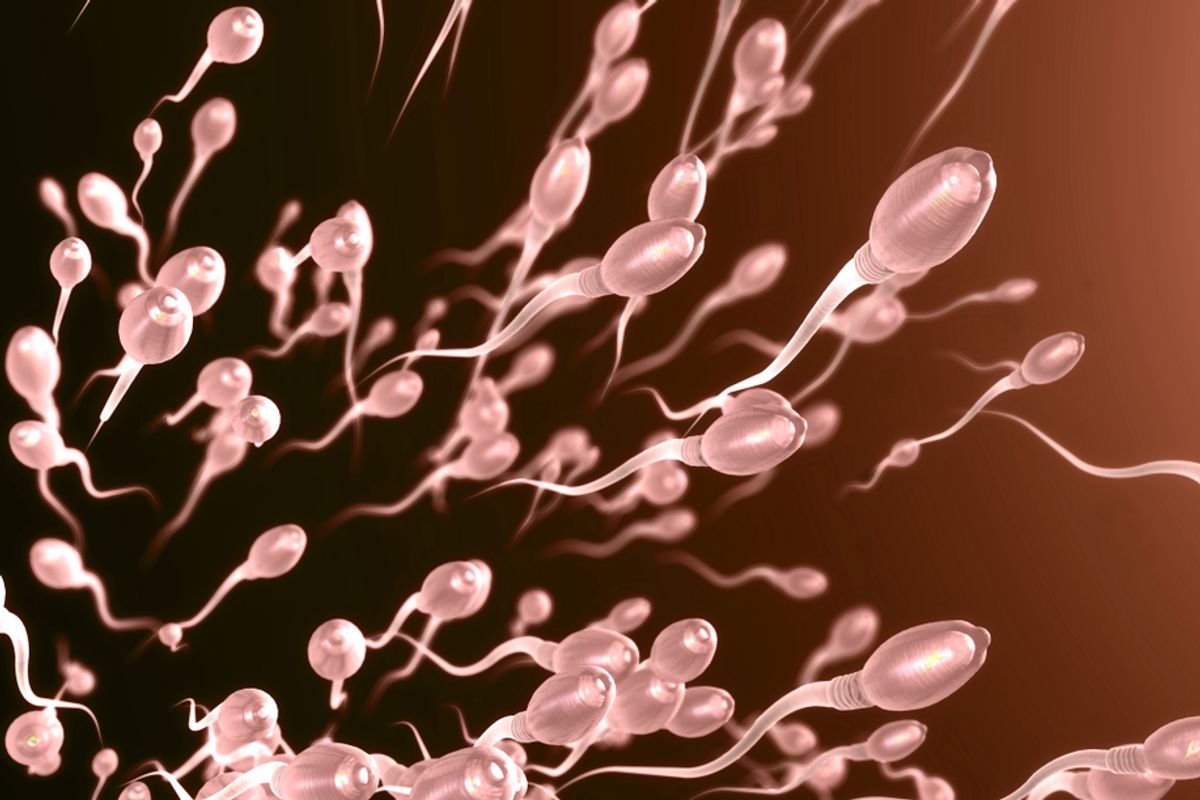
Sperm May Hit a Hidden, Middle-Age RNA Drop-Off — What’s the Generational Impact?

Children of older fathers are at increased risk of health complications, including higher rates of stillbirth and obesity. Most research aimed at understanding this link focuses on the DNA in sperm and how it changes in older males.
But sperm don’t just carry DNA
Now, a team at the University of Utah has identified important age‑related changes in sperm RNA in mice. Early in life, these RNA shifts are small and steady — but at mid‑life, they rapidly accelerate, forming a dramatic “cliff‑like” drop‑off. This “old” RNA appears to affect how cells function, potentially impacting the health of the next generation. The research is published in The EMBO Journal.
“It’s like finding a molecular clock that ticks with age in both mice and humans, suggesting a fundamental, conserved molecular signature of sperm aging,” said Qi Chen, a study co-author, in a statement.
Chen’s lab had previously published research in Author Manuscripts showing that changes in a father’s environment, such as diet, could alter sperm RNA. They also showed these changes could be passed on to the next generation.
Read More: Neanderthals Boasted Larger Jaws Than Humans Due to a Tiny Difference in DNA
Understanding RNA in Sperm
Difficulties hampered this previous research in detecting the most informative RNA molecules. To overcome these obstacles, Chen’s team developed a sequencing method, PANDORA-seq, that could reveal previously hidden RNAs in sperm samples.
Under PANDORA-seq’s eye, a pattern emerged in Chen’s data. In mice aged 50 to 70 weeks, sperm RNA underwent a dramatic shift. This age is roughly equivalent to that of humans aged 38 to 47, according to the Jackson Laboratory.
Outside of this sudden shift, a molecular aging clock slowly ticked along as the mice aged. The team noted that short RNA fragments became rarer, while longer fragments increased in frequency. RNA in human sperm aged in the same way. This finding marked a sharp break with what we know about how DNA ages.
“At first glance, this finding seems counterintuitive,” Chen said. “For decades, we have known that as sperm age, their DNA becomes more fragmented and broken. One might expect RNA to follow this pattern. Instead, we found the opposite: specific sperm RNAs actually become longer with age.”
Alleviating Fertility Concerns for the Future
To test how these shifts might affect subsequent generations, the team added “old mouse dad” RNA to embryonic stem cells, which resemble the early stages of embryos. The team noted changes in the cells’ gene expression levels. These changes were linked to metabolism and neurodegeneration.
To detect their new findings, the team needed to go further than developing PANDORA-seq. They also had to be careful where they sampled the RNA from. That’s because some of the changes were only present in RNA taken from the sperm head, the critical region of the sperm that delivers genetic material into the egg. Other RNAs, in the long sperm tail, had previously obscured this new signal.
The team now hopes their findings will pave the way for diagnostic improvements that could alleviate fertility concerns.
“This could be an important step for translational andrology,” said James Hotaling, a study co-author, in a statement. “This discovery, made possible by PANDORA-seq, could lay the groundwork for future diagnostics to help guide informed reproductive decisions and improve fertility outcomes.”
The team will next explore the proteins that direct these changes in the RNA.
“If we can understand the enzymes driving this shift, they could become actionable targets for interventions to potentially improve sperm quality in aging males,” Chen concluded.
This article is not offering medical advice and should be used for informational purposes only.
Read More: Turning Skin Cells Into Viable Human Eggs Could be a Milestone in Treating Infertility
Article Sources
Our writers at Discovermagazine.com use peer-reviewed studies and high-quality sources for our articles, and our editors review for scientific accuracy and editorial standards. Review the sources used below for this article: