
Some Orcas Are Flipping Juvenile White Sharks and Devouring Their Livers
White sharks are used to sitting at the top of their ocean food chain. But even these feared predators occasionally find themselves as prey rather than predator. Pods of orcas, or killer whales, have been known to hunt weaker or younger sharks. But evidence of white shark attacks, and exactly how these two fearsome sea dwellers interact has been slim.
Now, a new study published in Frontiers in Marine Science has revealed how a pod of shark-hunting orcas that roam the Gulf of California track down and kill white sharks.
Read More: Orcas May Devour Marine Mammals, But They Typically Avoid Harming Humans
Why Orcas Are Hunting Sharks
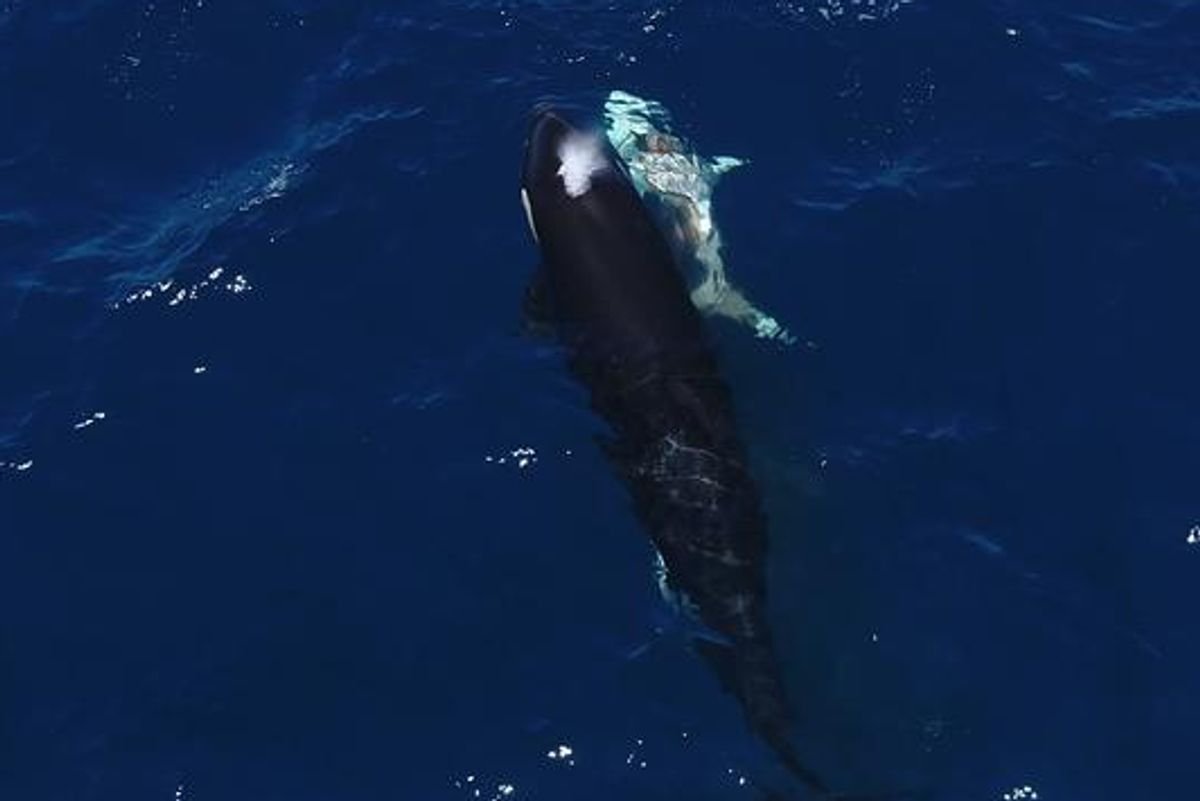
The researchers found that in two separate incidents, a bull named Moctezuma led a group of orcas to zero in on young sharks that were too inexperienced to know to flee. The orcas stunned the sharks by flipping them upside down, leaving them helpless.

An orca subdues a white shark. Image by Marco Villegas.
(Image Credit: Marco Villegas)
Next, they submerged the sharks and ate their fatty liver. According to a separate Frontiers in Marine Science from 2024, this pod has previously been observed hunting whale sharks — the world’s biggest fish — but this is the first evidence of these orcas targeting white sharks.
“This behavior is a testament to orcas’ advanced intelligence, strategic thinking, and sophisticated social learning, as the hunting techniques are passed down through generations within their pods,” said study co-author and marine biologist Erick Higuera Rivas in a press release.
Shark Hunting Pedigree
Higuera and his team reported on two hunts in their paper that took place two years apart. In the first attack in August 2020, five orcas hunted a young white shark and flipped it upside down. Flipping a shark triggers a state called tonic immobility, which reduces its awareness of its surroundings. Marine biologists often flip sharks to study them, as they are unlikely to bite or thrash in this state.
“This temporary state renders the shark defenseless, allowing the orcas to extract its nutrient-rich liver and likely consume other organs as well, before abandoning the rest of the carcass,” said Higuera. The shark’s huge liver, which can represent up to a quarter of the fish’s total body weight, is packed with nutrient-rich oils. The predatory pod passed the removed organ around, making sure that even young calves got a bite.
The second hunt, seen in August 2022, also featured five orcas and followed the same pattern, suggesting the orcas had learned that inducing tonic immobility could help them feast on the shark without getting bitten. The study authors suggest that the orcas may also be selectively targeting younger, naïve sharks. Documented in South Africa, adult sharks will flee areas where orcas are seen, not returning for months.
It was only subsequently that careful analysis of the orcas involved revealed they were members of Moctezuma’s pod, which has now acquired a pedigree for hunting big sharks.
Changing Temperatures Offer Opportunities For Hunting Orcas
The researchers think that warming water temperatures, driven by climate change and weather events like El Niño, may have pushed the areas where sharks rear their young farther into the Gulf of California, increasing the opportunity for orcas to hunt.
The authors add that this handful of lone observations isn’t sufficient to say with certainty whether orcas regularly hunt white sharks or only opportunistically target young sharks.
“Generating information about the extraordinary feeding behavior of killer whales in this region will lead us to understand where their main critical habitats are, so we can create protected areas and apply management plans to mitigate human impact,” said co-author Francesca Pancaldi of the Instituto Politécnico Nacional Centro Interdisciplinario de Ciencias Marinas in a press release.
Read More: Instead of Hunting in Groups, Orcas May be Attacking Great White Sharks Alone
Article Sources
Our writers at Discovermagazine.com use peer-reviewed studies and high-quality sources for our articles, and our editors review for scientific accuracy and editorial standards. Review the sources used below for this article: