
Revived 40,000-Year-Old Microbes in the Arctic Could Release Greenhouse Gases

For tens of thousands of years, ancient microbes have lain dormant in the Alaskan permafrost, stuck in a state of suspended animation much like characters in Sleeping Beauty.
Now, a team of geologists writing in JCR Biogeosciences has awoken 40,000-year-old microorganisms and watched them grow into flourishing communities.
Resurrecting Ancient Microorganisms
Vast swathes of the Northern Hemisphere are covered in frozen ground composed of ice, rock, and soil, known as permafrost. These habitats offer a snapshot of the past by preserving the remains of animals, plants, and even microbes.
Not only are the microbes frozen in time, but some have survived millennia in these harsh and uncompromising environments by entering a state of dormancy. Indeed, previous studies have shown that certain microorganisms can be revived — and remain infectious — after spending more than 40,000 years in this cryogenic state.
Aside from demonstrating the extreme hardiness and impressive longevity of these tiny creatures, scientists’ ability to resurrect ancient microbes has real-world implications. Human-caused climate change is driving up temperatures in regions of the world covered in permafrost, with the Environmental Protection Agency (EPA) reporting some parts of Alaska are warming at a rate of 1.5 degree Fahrenheit per decade. As the temperatures warm and the permafrost thaws, these ancient microbes could be released.
Read More: Permafrost Thaw and Wildfires Are Raising CO2 Emissions in Arctic Tundras
Microbial Communities Growth
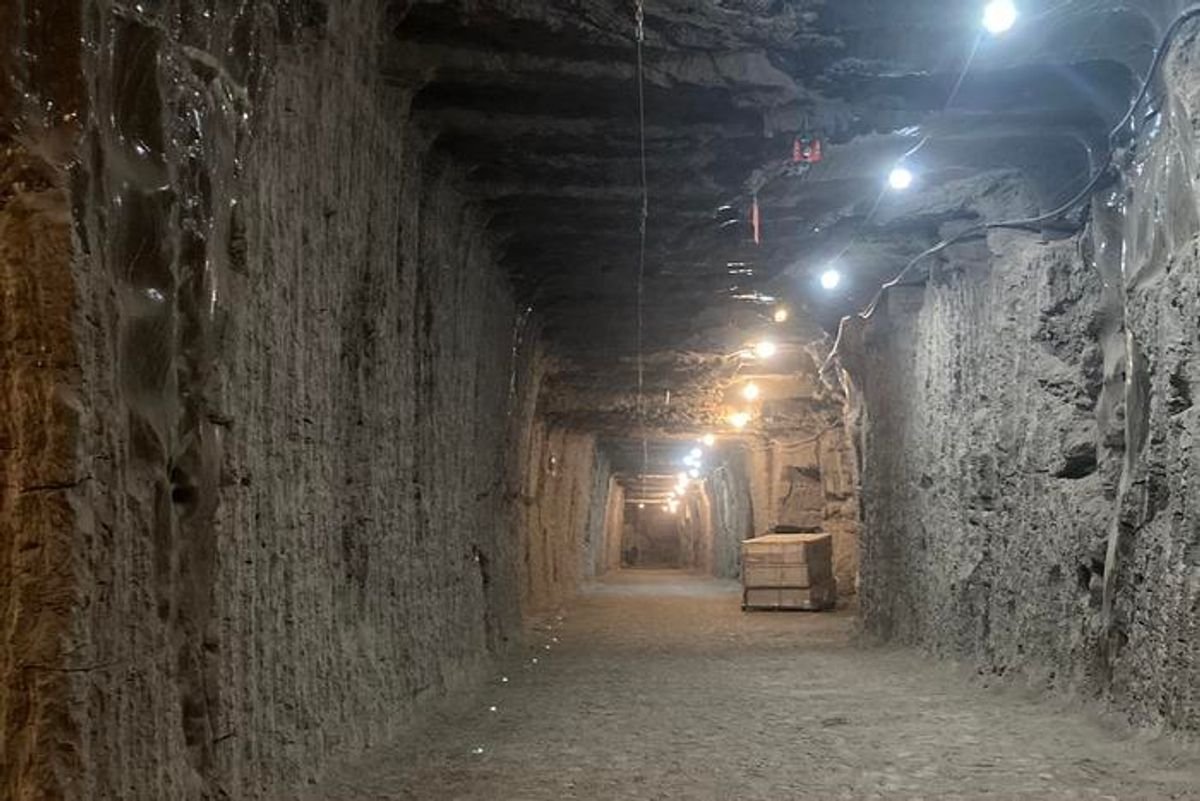
To find out what might happen if Alaskan summers continue to warm, researchers from the University of Colorado Boulder (CU Boulder) collected near-surface and subsurface samples of permafrost from the Permafrost Research Tunnel in Alaska. These samples varied in age, ranging from a few thousand years to the late Pleistocene (37,900 years to 42,4000 years ago).
“The first thing you notice when you walk in there is that it smells really bad. It smells like a musty basement that’s been left to sit for way too long,” lead author Tristan Caro, a former graduate student in geological sciences at CU Boulder, said in a statement. “To a microbiologist, that’s very exciting because interesting smells are often microbial.”
These samples were given water and incubated at temperatures of 39 degrees Fahrenheit (4 degrees Celsius) or 54 degrees Fahrenheit (12 degrees Celsius). Using “heavy hydrogen” (deuterium), the team was able to monitor how quickly lipid compounds were growing and, therefore, the rate at which the microbial community as a whole was multiplying.
To quote Hemingway, the microbial communities grew “gradually, then suddenly.” For the first month after thawing, the study authors report microbial growth was “exceedingly slow” — on some days, only one in every 100,000 cells was replaced. The researchers concluded that “temperature may drive which taxa are active, but not growth rates.”
However, around the half-year mark, things changed. Microbial communities undergo dramatic restructuring after six months, often with previously trace microbial constituents becoming dominant members of the community,” the researchers wrote in the JCR Biogeosciences study.
The findings suggest that the temperature at the time of thawing may have less influence on microbial growth than other factors, such as nutrient availability and the composition of different taxonomic groups. In the real world, it means that it may take months for microbes to resurrect after a heatwave. As such, the length of summer (thaw season) may be more important than the temperatures themselves.
“You might have a single hot day in the Alaskan summer, but what matters much more is the lengthening of the summer season to where these warm temperatures extend into the autumn and spring,” Caro said.
From Carbon Sink To Carbon Emitter
While some studies have looked at the health implications of resurrecting ancient microbes, Caro and his team emphasize the environmental repercussions. Once released, these microbial communities break down organic matter in the environment, producing greenhouse gases including carbon dioxide and methane.
The world’s permafrost is estimated to hold twice as much carbon as is currently in the atmosphere. As such, permanent thawing turns what was once a carbon sink into an emitter. This is only likely to exacerbate warming trends, though the full extent to which it will is uncertain — “It’s one of the biggest unknowns in climate responses,” co-author Sebastian Kopf, professor of geological sciences at CU Boulder, said in a statement.
The team hopes future research will look into different types of permafrost found in Alaska and elsewhere.
Read More: How a Worm Came Back to Life After 46,000 Years Frozen in the Siberian Permafrost
Article Sources
Our writers at Discovermagazine.com use peer-reviewed studies and high-quality sources for our articles, and our editors review for scientific accuracy and editorial standards. Review the sources used below for this article: