
Repairing the Blood Brain Barrier Reversed Alzheimer’s Disease in Mice, a Hopeful Result for Humans

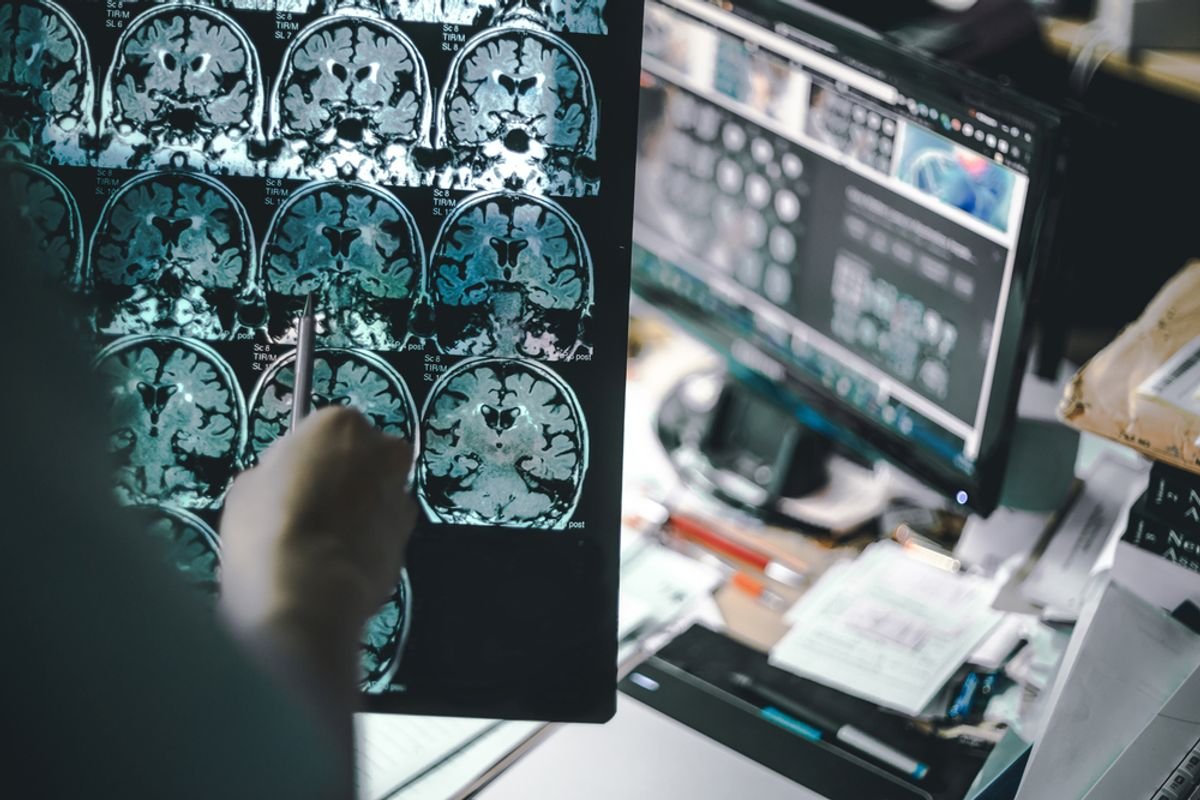
Alzheimer’s disease can, in simple terms, be seen as a buildup of waste in the brain that disrupts neural activity. This accumulation leads to the loss of neural connections and brain matter integrity, resulting in familiar symptoms such as severe memory loss and emotional dysregulation.
As research into the disease’s origins, treatment, and prevention advances, scientists are exploring new ways to enhance the brain’s ability to remove the toxic debris that accumulates in Alzheimer’s.
In a new study, a team from the Institute for Bioengineering of Catalonia (IBEC), West China Hospital at Sichuan University (WCHSU), and colleagues in the UK significantly reversed Alzheimer’s disease in mice by improving the brain’s vascular waste removal system using bioactive nanoparticles.
Their findings, published in Nature’s Signal Transduction and Targeted Therapy, pave the way for better treatment options for Alzheimer’s in humans.
Alzheimer’s Is a Waste Removal Problem
Our brains are not only protected by the skull but also by a delicate, semipermeable membrane called the blood–brain barrier (BBB). This barrier creates a stable environment to support critical neuronal functions, acting as a guardian between the brain’s capillary network, nourishing every single neuron, and the body’s broader vascular system. It shields the brain from toxins and pathogens, regulates the passage of essential nutrients, and expels harmful compounds that naturally accumulate during normal metabolism.
One of these compounds is amyloid beta (Aβ), a key contributor to Alzheimer’s disease. Although everyone produces Aβ throughout life, its accumulation into plaques increases with age. When the BBB’s ability to clear Aβ declines, its toxic concentration rises, triggering the neurodegenerative cascade characteristic of Alzheimer’s.
Previous research has identified several molecular components involved in this clearance process, including lipoprotein receptor-related protein 1 (LRP1). This molecule maintains BBB integrity and helps clear Aβ, but when its function is impaired, Aβ builds up to dangerous levels.
Drawing on this insight, the team designed a nanoparticle that mimics LRP1, allowing it to “ferry” Aβ across the BBB into the bloodstream, where it can be safely removed.
Read More: Alzheimer’s Disease Blood Test Could Lead to Earlier, More Effective Treatment
Nanoparticles Reduced Amyloid Beta by 50 Percent
To test the therapy, researchers injected three doses of the nanoparticle into mice genetically modified to overproduce Aβ, leading to cognitive decline similar to Alzheimer’s in humans.
“Only one hour after the injection we observed a reduction of 50–60 percent in Aβ amount inside the brain,” explained the study’s first author Junyang Chen, a researcher at West China Hospital of Sichuan University and Ph.D. student at University College London (UCL) in a press statement.
To evaluate the treatment’s long-term effects, the team monitored the mice’s behavior and memory capacity over several months. The results were striking: one 18-month-old mouse — equivalent to a 90-year-old human — returned to the behavior of a healthy mouse after receiving the nanoparticle treatment six months earlier.
“What’s remarkable is that our nanoparticles act as a drug and seem to activate a feedback mechanism that brings this clearance pathway back to normal levels,” said Giuseppe Battaglia, professor at IBEC and leader of the study in the release.
Using Biophysics to Advance Alzheimer’s Research
“The long-term effect comes from restoring the brain’s vasculature. We think it works like a cascade: when toxic species such as Aβ accumulate, disease progresses. But once the vasculature is able to function again, it starts clearing Aβ and other harmful molecules, allowing the whole system to recover its balance,” added Battaglia.
The new drug acts like a molecular “switch,” rebooting the brain’s waste management system by imitating LRP1’s properties. It has the rare ability to cross the BBB, bind to Aβ, and transport it back out, reestablishing the vasculature’s role as the brain’s waste “highway.” This process supports the restoration of healthy neuronal function.
“Our study demonstrated remarkable efficacy in achieving rapid Aβ clearance, restoring healthy function in the blood–brain barrier and leading to a striking reversal of Alzheimer’s pathology,” said study co-author Lorena Ruiz Perez, a researcher at IBEC.
Given the devastating impact of this neurodegenerative condition, this innovative therapeutic approach could one day improve Alzheimer’s treatment in humans by combining biophysical principles with our growing understanding of brain physiology.
Read More: Lower Alzheimer’s Risk With the MIND Diet
Article Sources
Our writers at Discovermagazine.com use peer-reviewed studies and high-quality sources for our articles, and our editors review for scientific accuracy and editorial standards. Review the sources used below for this article: